
ACC News Brief
Climate Impacts Global
Urban growth could add another layer of local heat by 2100
What happened
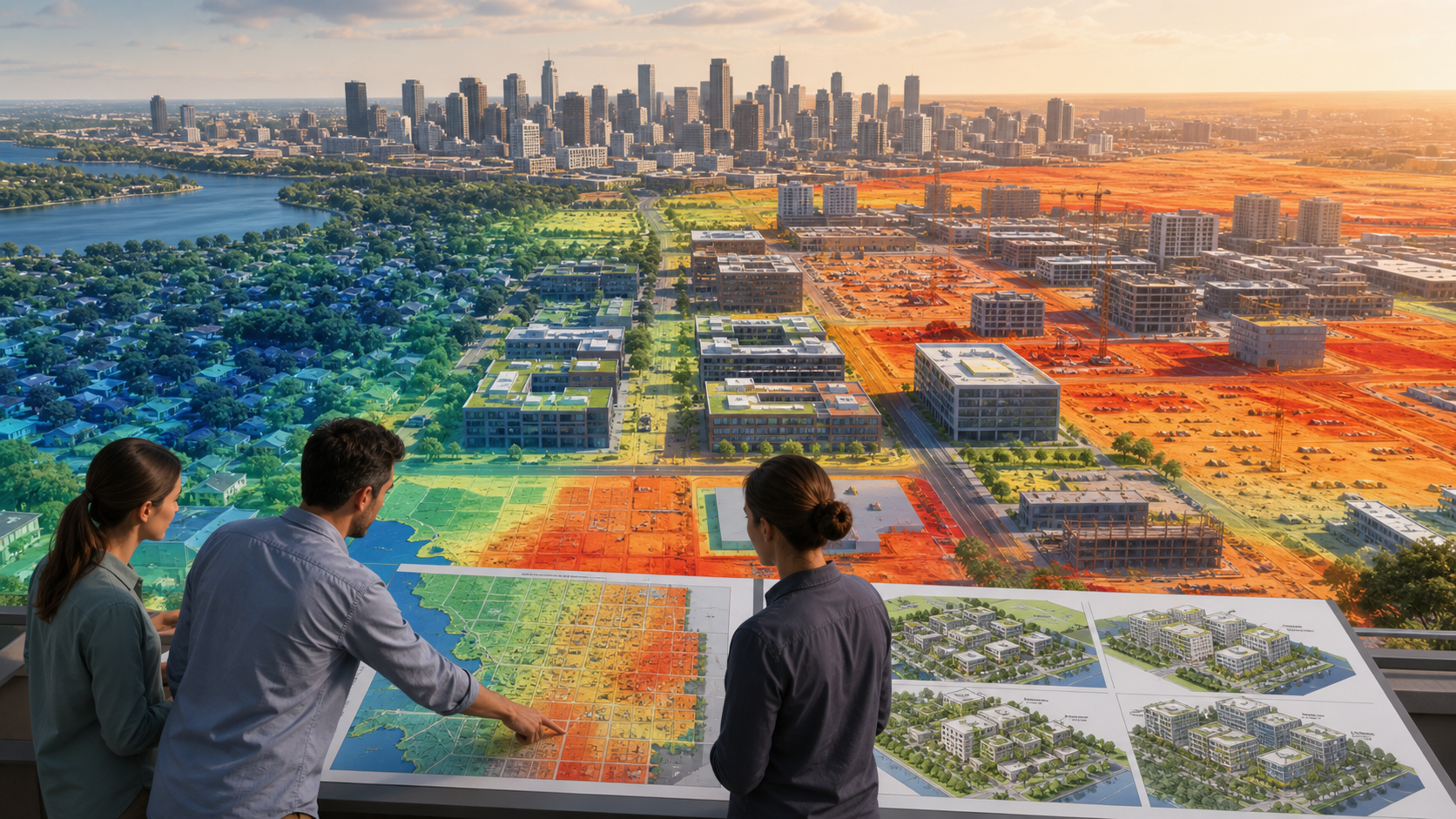
A peer-reviewed study produced a 1-kilometer global land-surface-temperature dataset at five-year intervals from 2020 through 2100 by combining CMIP6 projections with modeled urban growth. The authors estimate that added impervious cover contributes about 0.1 degrees Celsius of average local surface warming by 2100, while 10 to 16 percent of urban areas exceed 1 degree Celsius of additional local surface warming. These are modeled land-surface temperatures, not direct measurements of the air temperature people experience.
Why it matters
Global warming and local urbanization can compound each other. Neighborhood-scale planning for shade, trees, reflective materials, ventilation, and heat-health services needs to account for both forces, especially where rapid expansion is expected.
What to watch
- Whether future projections add building height, greenspace, anthropogenic heat, and other city features omitted from this model.
- Validation against new observations as cities expand and the projected years arrive.
- Whether local planners pair surface-temperature maps with air temperature, humidity, exposure, health, and equity data before targeting interventions.
Sources & evidence
- Urbanization is projected to increase local surface temperature by 2100Peer-reviewed, open-access Communications Earth & Environment article published December 2, 2025. DOI: 10.1038/s43247-025-02947-1. The paper explicitly treats the result as modeled land-surface temperature and describes limits in the urban representation.
- High-resolution global land surface temperature projection dataset (2020-2100)Version 4 of the authors' supporting Figshare dataset, with 1-kilometer projections at five-year intervals under the study scenarios.
Continue learning with ACC
Explore practical resilience measures for rising heat and other climate risks