ACC News Brief
Energy Policy European Union
Model links faster renewables and electrification to steep cuts in EU gas demand
What happened
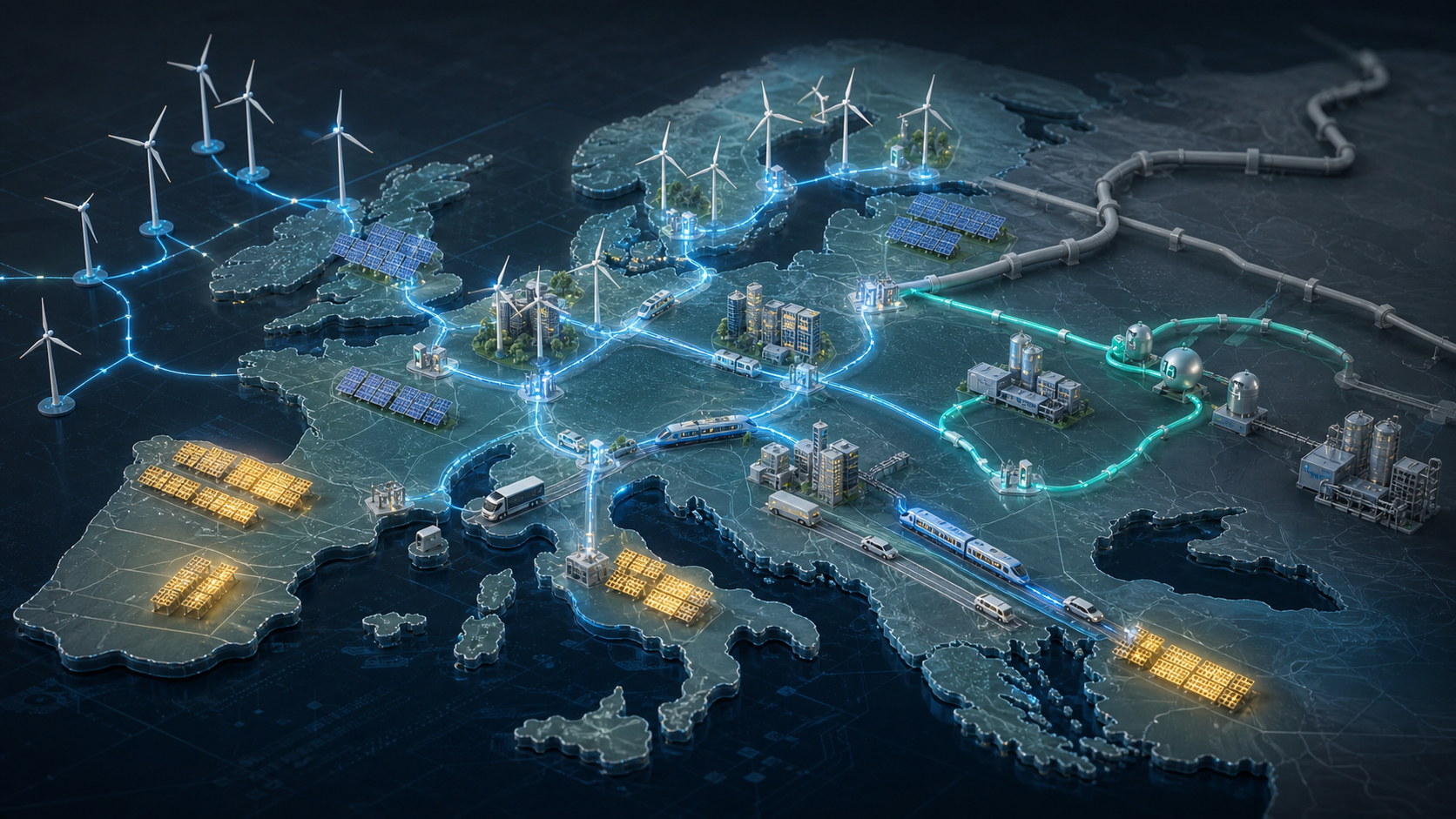
A peer-reviewed energy-systems study modeled European Union scenarios through 2050 using different wind and solar expansion paths, sector electrification, green hydrogen, infrastructure, and technology-cost trajectories. In the most ambitious scenarios, electrification was estimated to displace up to 50.9% of gross inland natural-gas consumption by 2050, with green hydrogen contributing up to another 10.3%; the combined framework reports reductions of up to 61.3%. These are scenario results tied to deployment and cost assumptions, not measured savings or an adopted EU implementation plan.
Why it matters
Replacing gas in buildings, light industry, transport, and selected heavy-industry uses can reduce both climate pollution and exposure to fuel-supply shocks. The model also shows that capacity targets alone are insufficient: grids, storage, heat pumps, electrolyzers, industrial conversion, finance, permitting, supply chains, and regional policy all shape whether modeled potential becomes reality.
What to watch
- Measured progress toward EU wind, solar, grid, storage, heat-pump, and electrification targets rather than capacity announcements alone.
- Green-hydrogen use focused on hard-to-electrify sectors, with lifecycle emissions, additional renewable supply, infrastructure cost, and water demand tracked.
- Independent model comparisons and updated scenarios reflecting demand, prices, energy efficiency, transmission constraints, social impacts, and changing policy.
Sources & evidence
- Aligning EU energy security and climate mitigation through targeted transition strategiesPeer-reviewed open-access Article in Nature Communications, published January 7, 2026. It models EU energy-system scenarios through 2050; the reported gas reductions are estimated potential under renewable-expansion, electrification, hydrogen, infrastructure, and cost assumptions rather than observed deployment results.
- EU Energy Project data and code archiveZenodo archive cited by the study for the code used to evaluate its conclusions; the authors also provide data and code through the PEESEgroup EU-Energy-Project repository.
Continue learning with ACC
Explore ACC's renewable electricity and grid guide