
ACC News Brief
Ecosystems China
Model finds smarter forest placement could lift China's carbon storage
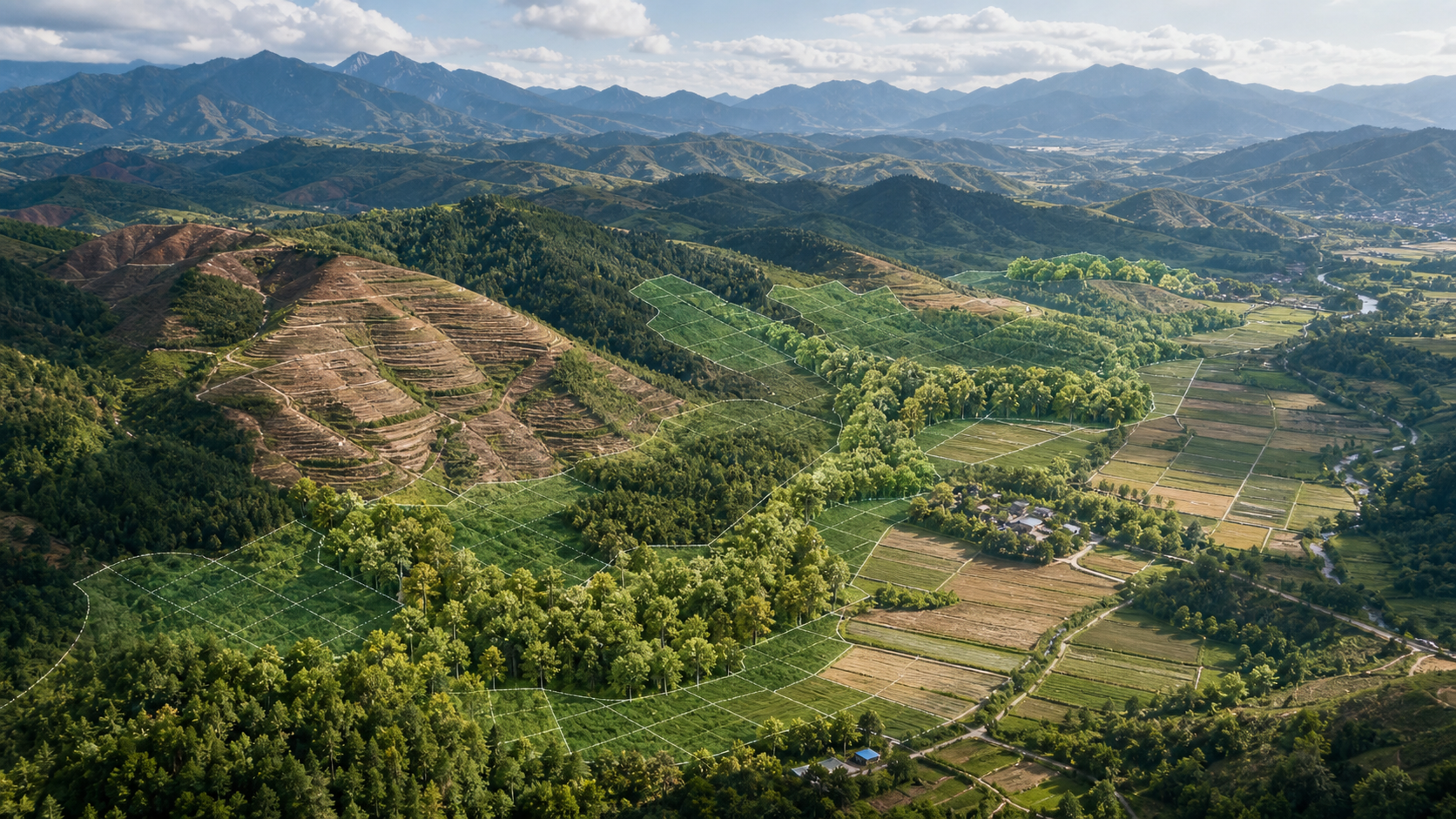
What happened
Using more than 3 million tree records from 37,147 forest plots, researchers found lower biomass carbon near disturbed forest edges and modeled where China could place the same planned 49.5 million hectares of new forest more effectively. By 2060, the optimized scenario stored an estimated 986.3 ± 22.2 teragrams more biomass carbon than a non-optimized planting scenario, with gains coming from both new forests and reduced edge pressure on existing ones.
Why it matters
Tree-planting totals do not capture whether new forests are fragmented, suited to local conditions, or likely to persist. Spatial planning may improve carbon storage, but the reported gain is a model estimate—not measured future sequestration—and carbon cannot substitute for native biodiversity, water security, land rights, or rapid fossil-emissions cuts.
What to watch
- Field tests of the edge-effect estimates as planted forests age under drought, fire, pests, and disease.
- Use of native species, habitat connectivity, water limits, food production, and community and Indigenous land rights in siting decisions.
- Independent monitoring that separates durable additional carbon storage from modeled technical potential.
Sources & evidence
- Enhancing carbon sinks in China using a spatially-optimized forestation strategyPeer-reviewed open-access Article in Nature Communications, published January 12, 2026. The 2060 carbon difference is a machine-learning scenario estimate based on national forest-inventory plots and equal total planting area, not an observed outcome or operating program result.
Continue learning with ACC
Explore ACC's ecosystems and biodiversity guide