ACC News Brief
Solar China
Perovskite cell retains over 95% of its initial efficiency after 1,500 hours
What happened
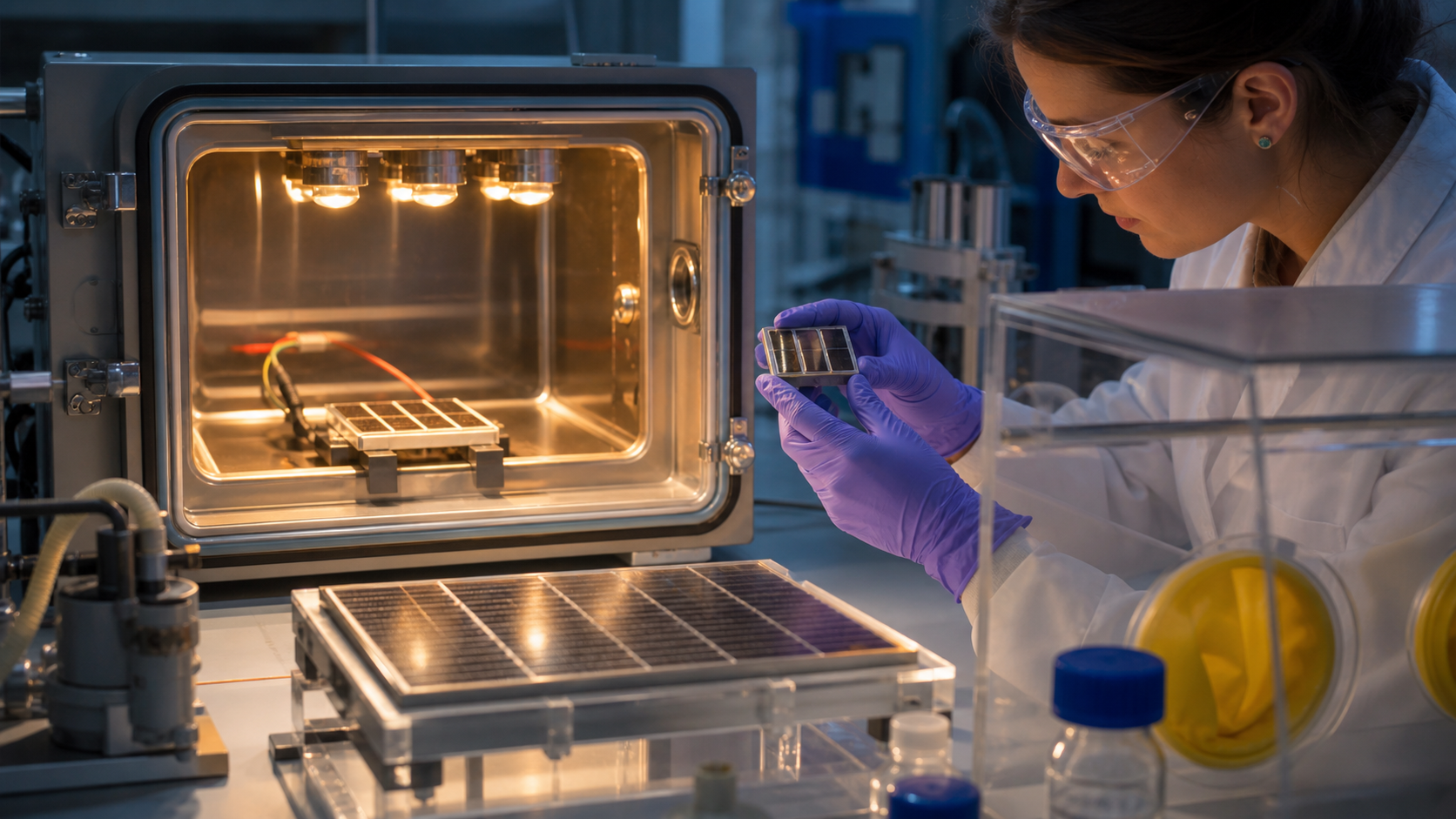
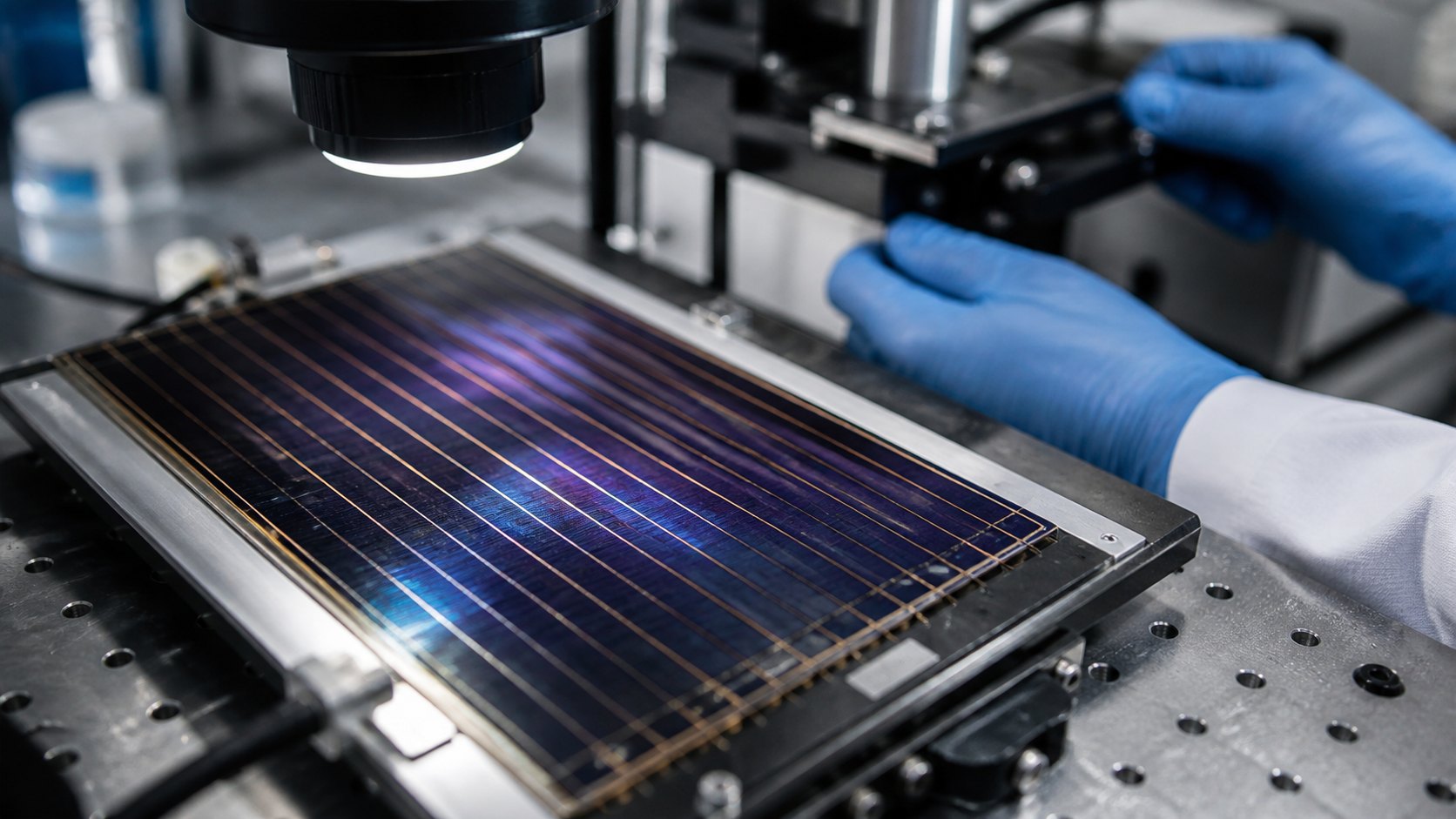
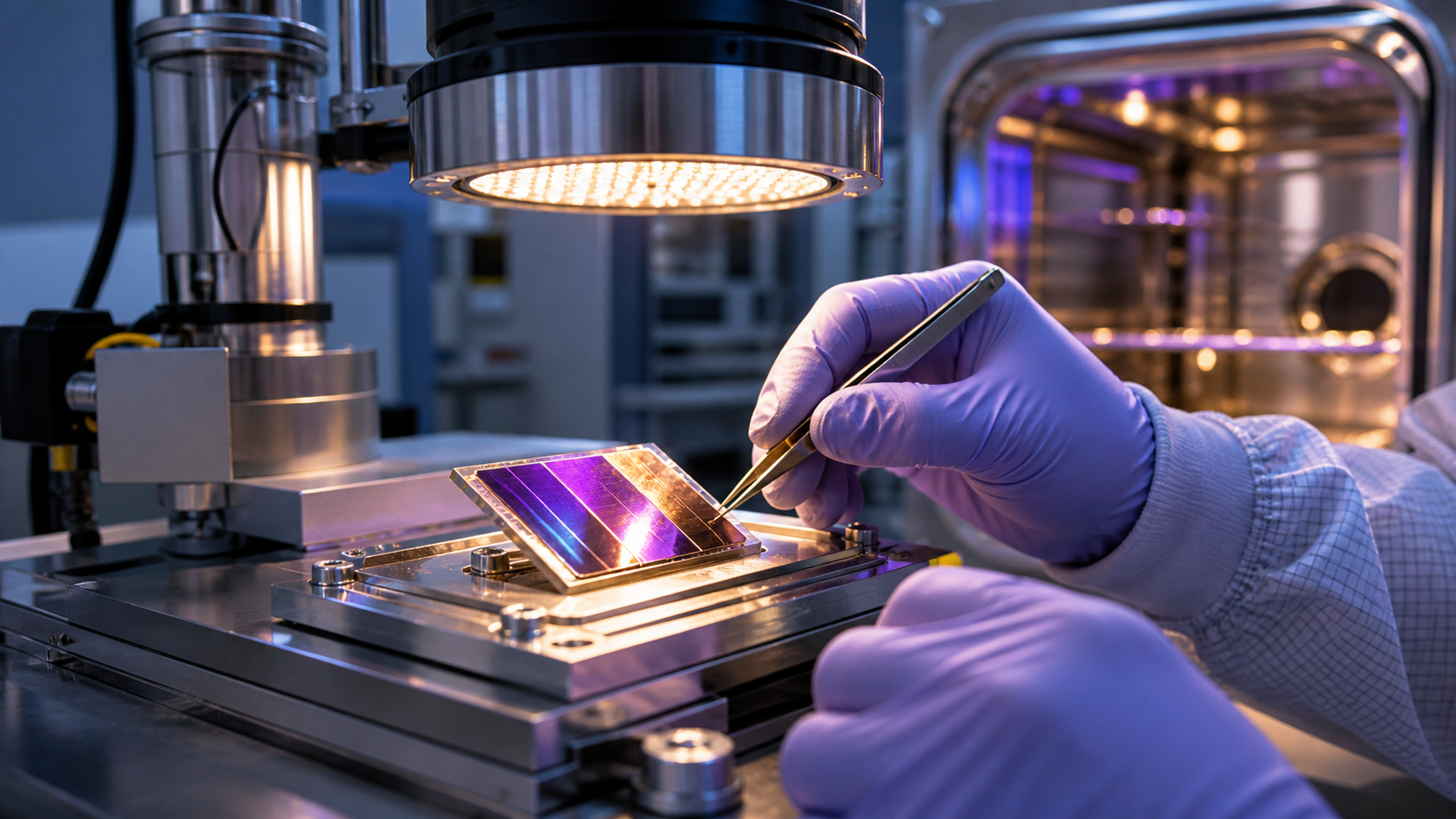
A research team engineered a donor-acceptor interface beneath an inverted perovskite solar cell to reduce energy losses and improve light stability. The laboratory cell reached 27.28% power-conversion efficiency, certified at 27.19%, and retained more than 95% of its initial efficiency after 1,500 hours of illumination under the ISOS-L-2 testing protocol.
Why it matters
Perovskite cells could support high-efficiency solar manufacturing if researchers can turn small-cell performance into durable, safe, affordable modules. A certified efficiency and standardized illumination test are meaningful progress, but 1,500 controlled hours are not equivalent to decades outdoors and the study does not demonstrate commercial production.
What to watch
- Independent outdoor, damp-heat, thermal-cycle, ultraviolet, and mechanical-stress testing.
- Certified performance and manufacturing yield for larger cells and complete modules.
- Lead containment, material sourcing, encapsulation, repair, and end-of-life recovery.
Sources & evidence
- Photostable donor-acceptor interface for minimizing energy loss in inverted perovskite solar cellsPeer-reviewed Article in Nature Photonics, published January 14, 2026. It reports a certified 27.19% laboratory cell and more than 95% retained efficiency after 1,500 hours under ISOS-L-2 illumination; it is not a fielded module or commercial deployment.
Continue learning with ACC
Explore ACC's renewable electricity and grid guide