ACC News Brief
Clean Energy Africa
Weather-aware siting could make Africa's wind and solar buildout more reliable
What happened
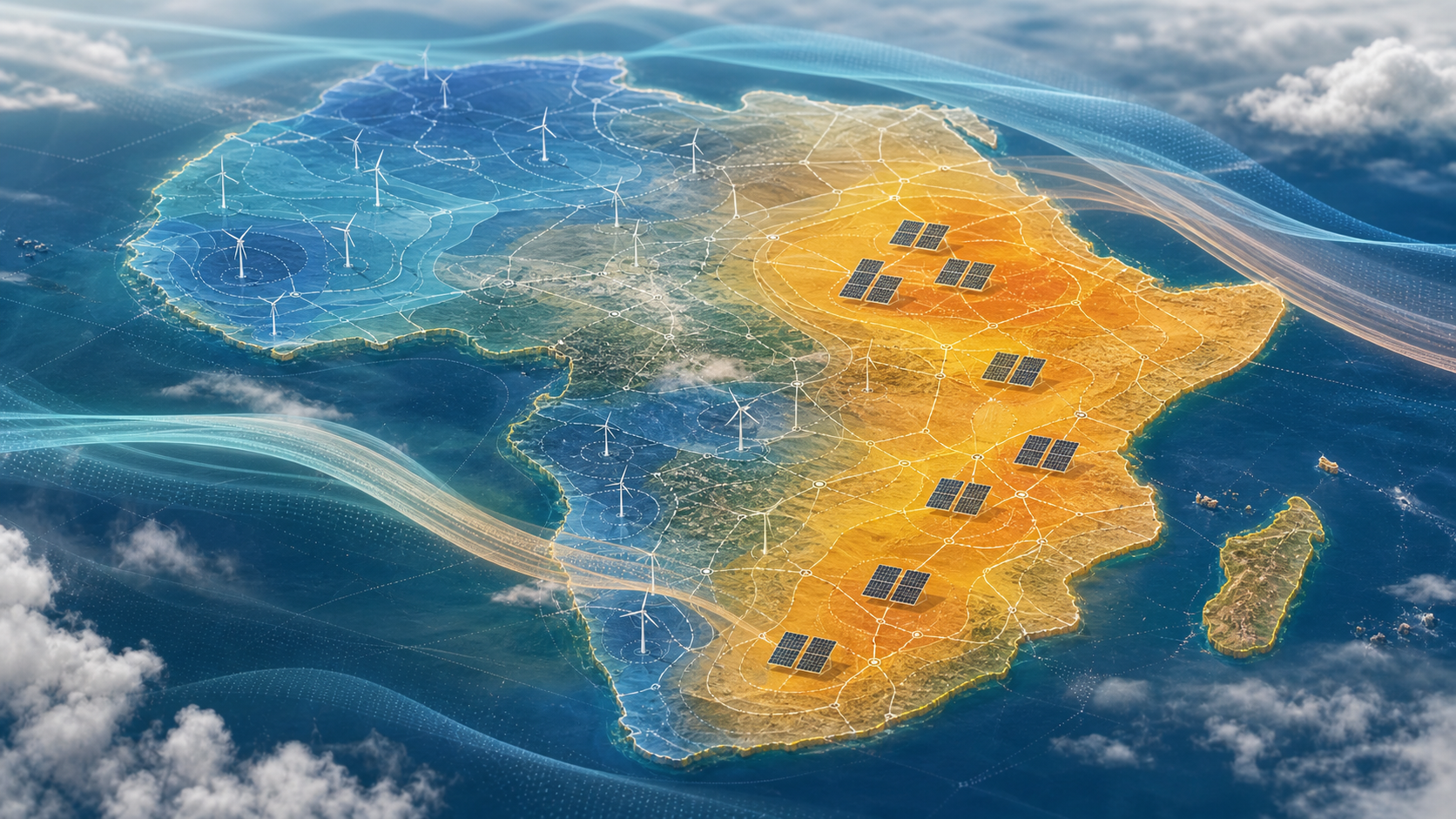
Researchers combined 45 years of hourly climate data with terrain, conservation, population, road, and grid constraints to model more resilient locations for African wind and solar development. The framework shows that a site with strong average resources can still face large swings under recurring weather regimes; it is a planning model, not evidence of completed deployment.
Why it matters
Wind and solar projects operate for decades, so siting decisions need to account for variability as well as average output and cost. Better climate-aware planning could reduce reliability and financing risks, especially where long-term ground observations remain limited.
What to watch
- Independent comparisons with ground-station and operating-project data across different African climate regions.
- Formal tests of whether the identified weather regimes can improve usable power forecasts.
- Whether national planners combine the framework with transmission, storage, affordability, and community-impact studies.
Sources & evidence
- Towards resilient renewable energy deployment in Africa through a weather-aware optimization frameworkPeer-reviewed npj Clean Energy research article published February 2, 2026. DOI: 10.1038/s44406-026-00019-7. The modeled framework uses hourly ERA5 climate data covering 1980 through 2024.
Continue learning with ACC
Explore ACC's renewable energy and grid guide