ACC News Brief
Climate Solutions Four United States cities
Old weather files can mis-size net-zero homes for today's climate
What happened
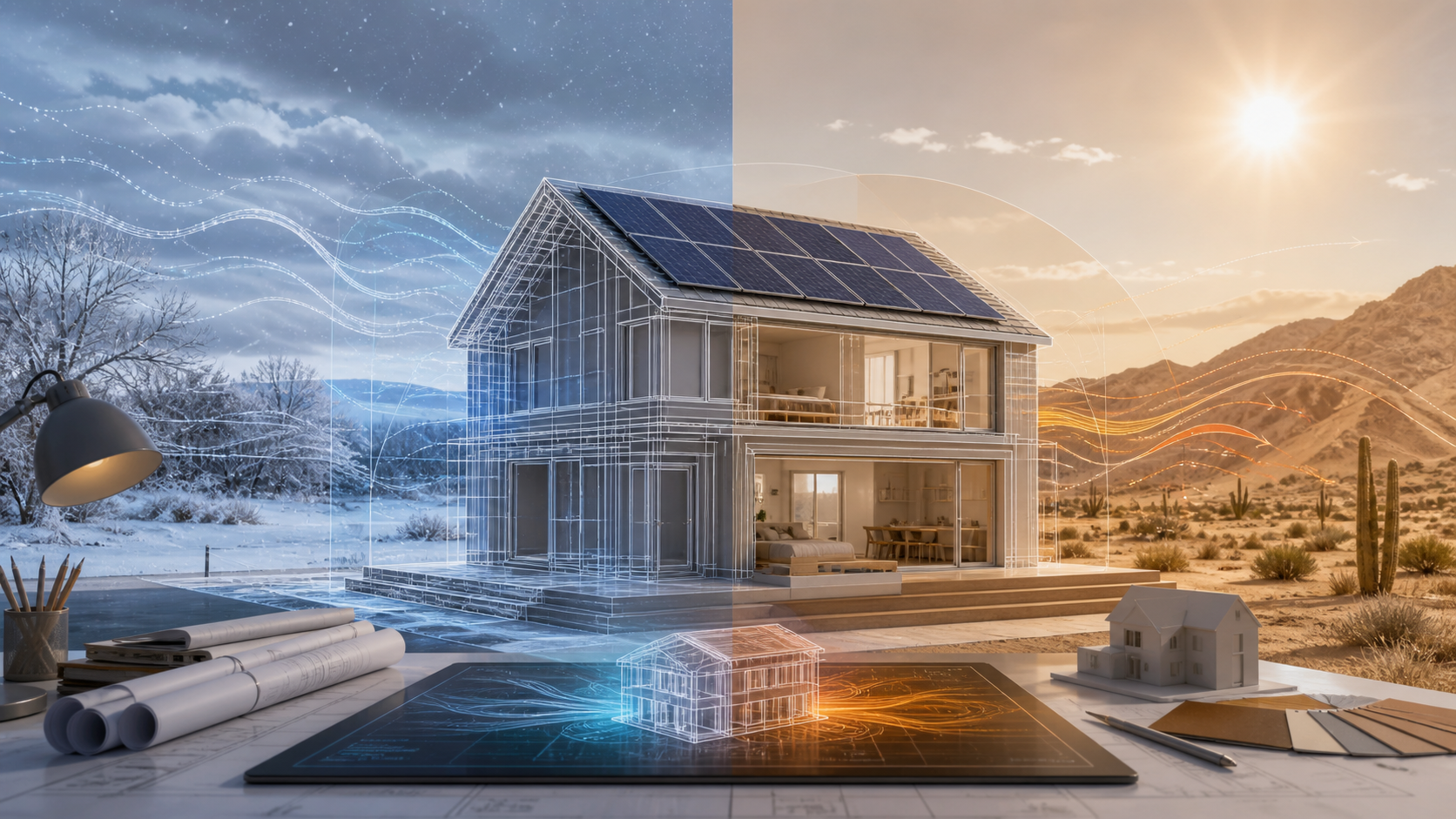
A residential-building simulation compared successive typical-weather datasets and 2025 conditions for prototype homes in Minneapolis, Chicago, San Francisco, and Phoenix. Changing the weather input shifted modeled annual energy use by as much as an 8.2 percent decrease or a 5.0 percent increase and changed the photovoltaic capacity calculated for net-zero source-energy performance by as much as 9.5 percent downward or 11.7 percent upward.
Why it matters
Design weather that no longer reflects current conditions can lead engineers to under- or over-size efficiency and solar systems. These results come from modeled prototype homes, not occupied buildings, and the 2025 weather files are not forecasts of future climate.
What to watch
- Use of updated and future-adjusted weather files in building codes, engineering practice, and retrofit planning.
- Measured performance in occupied homes plus sensitivity to tariffs, net metering, equipment costs, embodied carbon, and local grid emissions.
Sources & evidence
- Evaluation of Impact of Change in Climatic Conditions on Net-Zero Energy Designs for Residential BuildingsPeer-reviewed modeling study in Energies 19, published February 12, 2026. Researchers simulated a prototype residential building in Minneapolis, Chicago, San Francisco, and Phoenix using successive typical-meteorological-year files and 2025 weather conditions, then recalculated energy use, photovoltaic sizing, and life-cycle cost. The results are MODELED / ESTIMATED design guidance, not measured savings or future-climate projections; prototype assumptions, four-city scope, weather-file construction, utility rates, discounting, solar costs, and net-metering rules affect the estimates.
Continue learning with ACC
Explore ACC's renewable energy and grid guide