ACC News Brief
Climate Impacts Western North America
The 2021 heat dome triggered cascading damage across land and sea
What happened
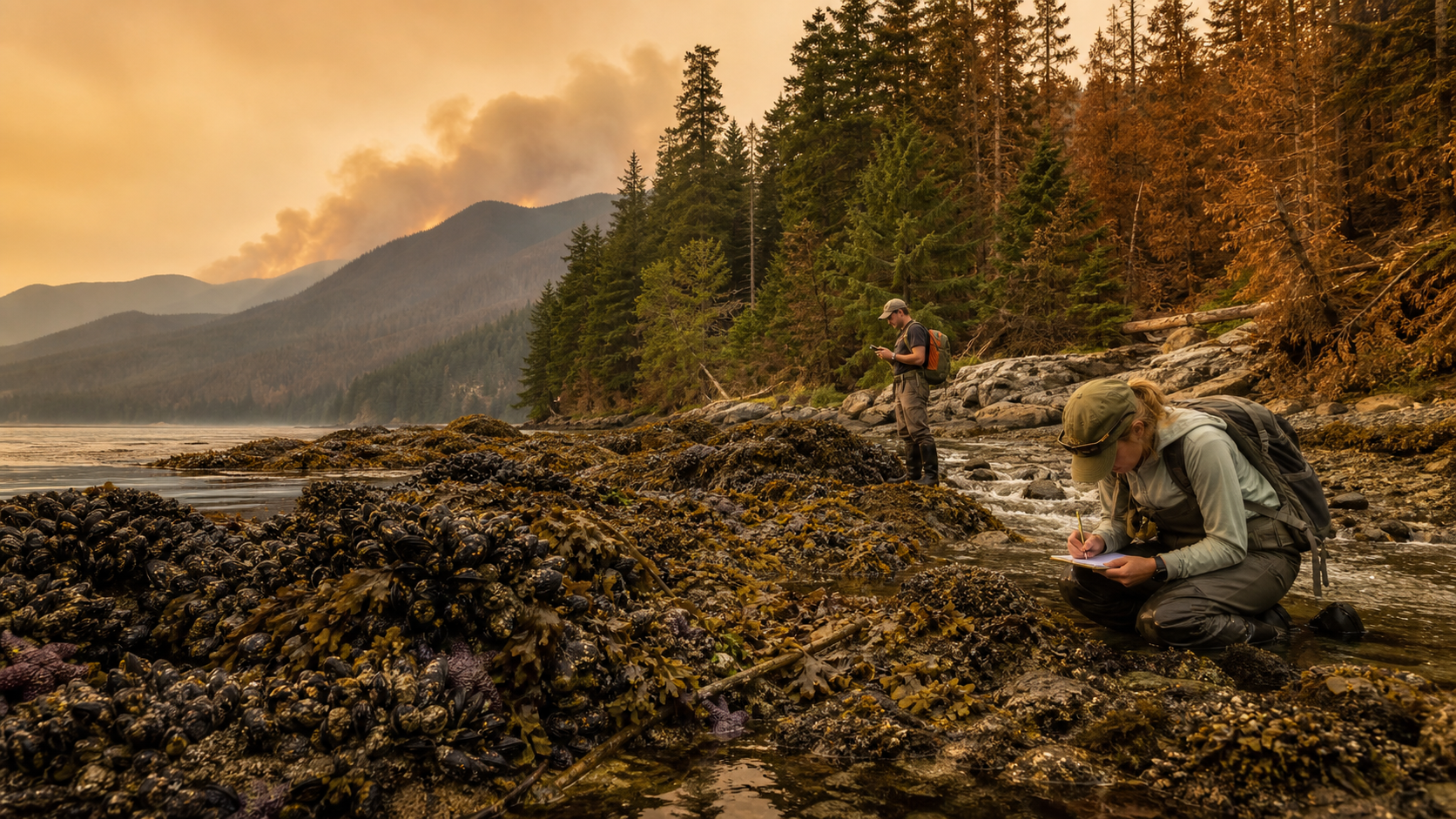
A peer-reviewed synthesis of the 2021 western North American heat dome found negative effects in more than 75 percent of 32 studied terrestrial and marine taxa, although individual responses ranged widely. The event also coincided with large shifts in ecosystem productivity, streamflow, and wildfire activity across connected land and coastal systems.
Why it matters
Extreme heat can propagate through organisms, water, vegetation, and fire rather than creating isolated impacts. The study combined heterogeneous observations and models around one event, so it does not attribute every change solely to heat or imply uniform effects across species and places.
What to watch
- Coordinated monitoring across land, freshwater, and marine ecosystems as compound heat events become more likely.
- Thermal refuges, post-fire effects, repeated-event recovery, and adaptation plans designed across ecosystem boundaries.
Sources & evidence
- Widespread ecological responses and cascading effects of the 2021 western North American heatwavePeer-reviewed Article, Nature Ecology & Evolution (2026), from the University of Victoria, University of British Columbia, Canadian agencies, the Hakai Institute, and partners. Published March 11, 2026. Post-event synthesis using observations, meta-analysis, and process modeling; the supplement was corrected March 19, 2026.
- Heat-dome ecological data and code archivePublic data and code archive associated with the study.
Continue learning with ACC
Explore ACC's ecosystems guide