
ACC News Brief
Climate Solutions Global
Nature-based climate projects often stall on capacity and coordination
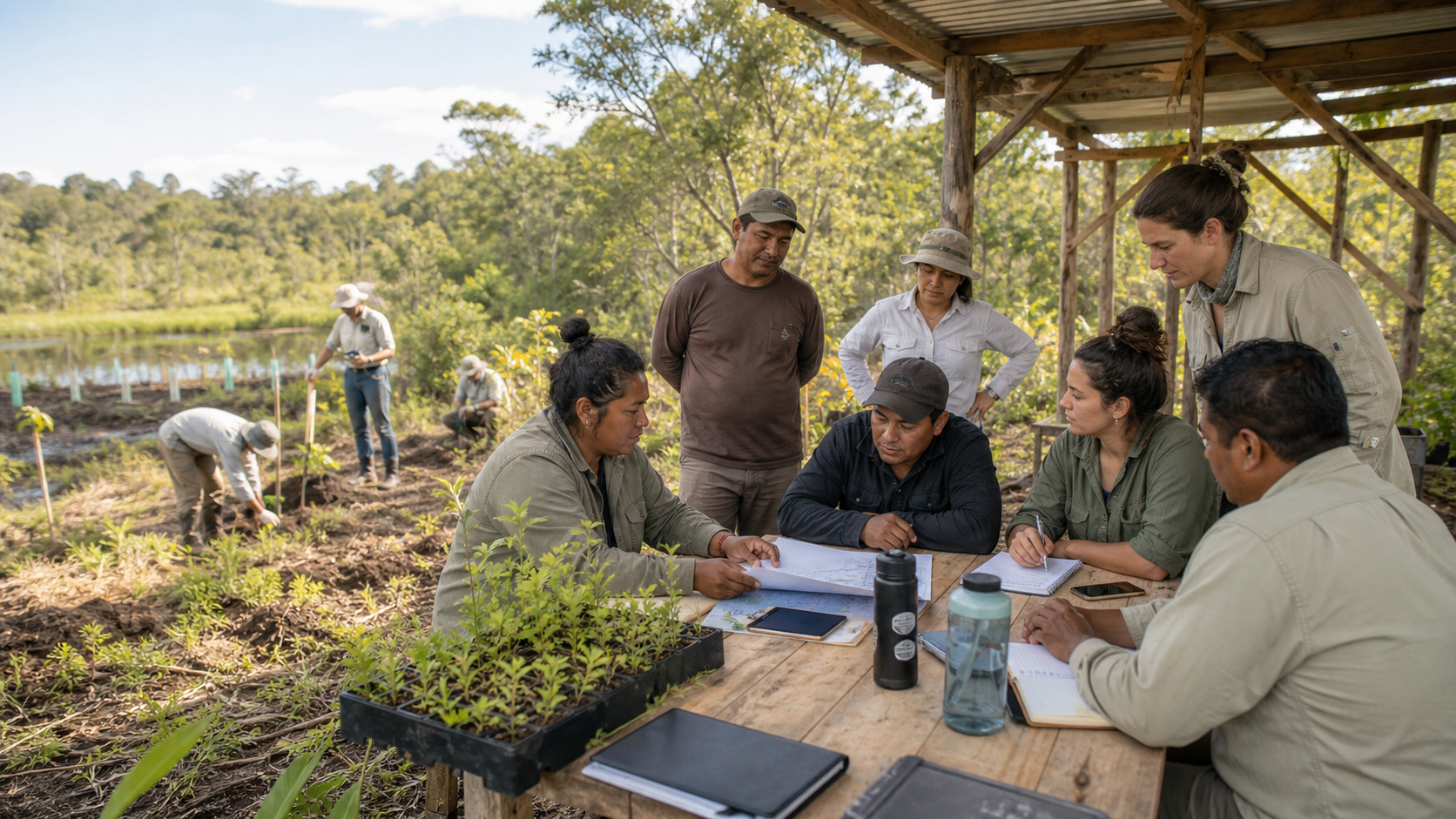
What happened
A peer-reviewed global review and project survey mapped 46 implementation constraints in eight categories from 15,572 georeferenced observations. The evidence covered 501 studies and projects in 137 countries, with policy coordination or implementation capacity most often reported as the leading constraint.
Why it matters
The climate potential of forests, wetlands, grasslands, and farms remains theoretical unless projects also support governance, knowledge, participation, and implementation capacity. Reported frequency does not prove causal importance, the evidence base is uneven, and a missing report is not evidence that a constraint is absent.
What to watch
- Locally tailored barrier assessments and budgets that fund enabling conditions, not only field activities.
- Indigenous and community governance, transparent benefit sharing, long-term maintenance, and measured ecological and social outcomes.
Sources & evidence
- Global literature review and survey of implementation constraints on natural climate solutionsPeer-reviewed Article, Nature Communications 17 (2026), led by The Nature Conservancy with Dartmouth College, the University of Colorado Boulder, Stanford University, WRI, CIFOR-ICRAF, and global partners. Initially published March 14, 2026; the publisher page records a May 22, 2026 version of record. Reported frequency is not a causal ranking.
- PubMed record for the implementation-constraints studyIndexed biomedical and life-sciences record for the peer-reviewed article.
Continue learning with ACC
Explore ACC's ecosystems guide