ACC News Brief
Energy Policy Global
Clean-energy policy works better when benefits arrive up front
What happened
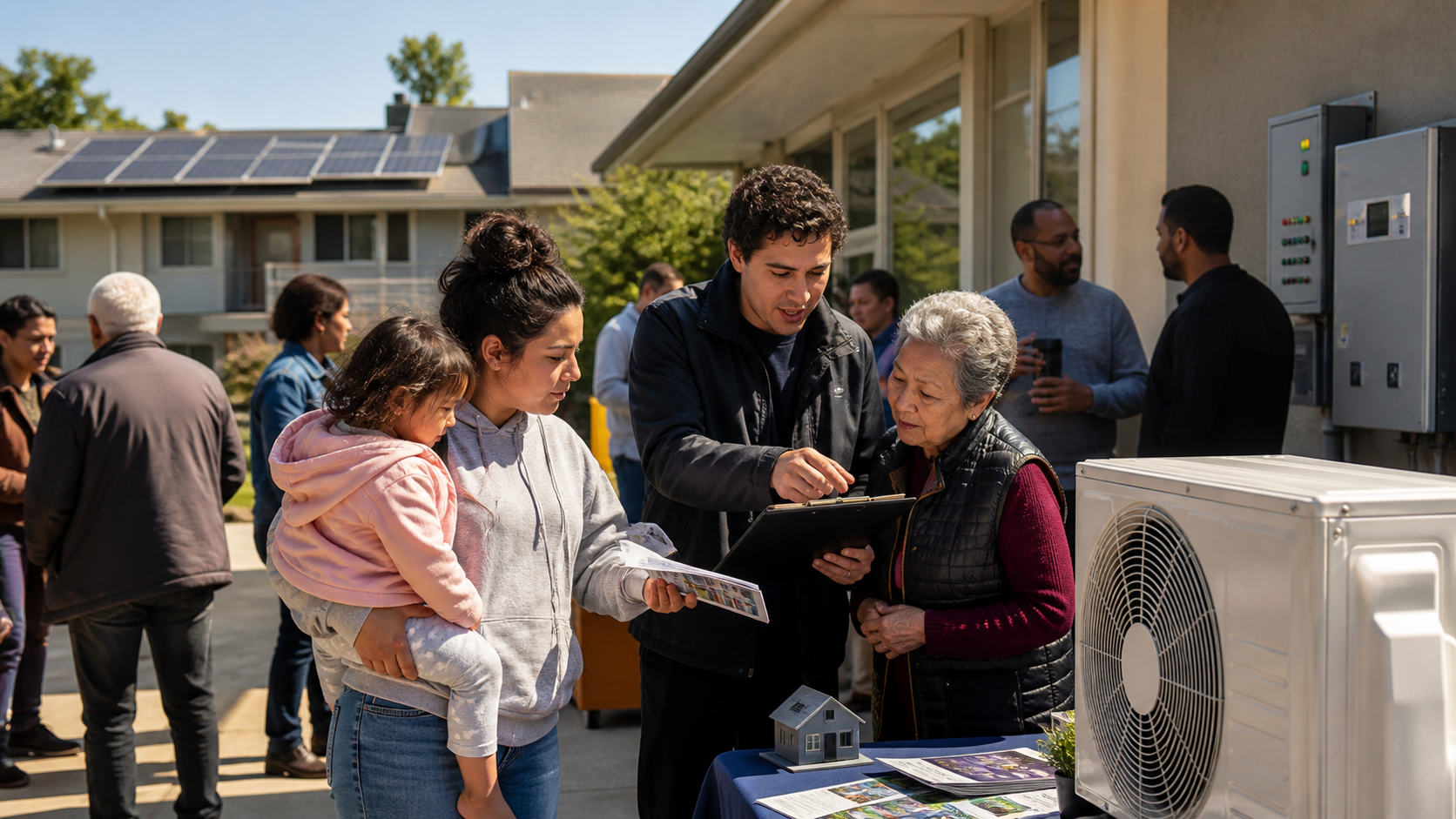
A peer-reviewed review finds that delayed tax credits, future bill savings, credit requirements, and complex applications can systematically exclude lower-income households and renters from clean-energy programs. It recommends barrier-aware eligibility, point-of-sale rebates or grants, simpler administration, shared ownership or microgrids, and community participation.
Why it matters
Clean technologies can spread faster and more fairly when programs reflect the real constraints people face instead of assuming everyone can pre-finance an upgrade. The paper synthesizes evidence and proposes design principles; individual policies still need outcome evaluation.
What to watch
- Program results broken out by income, housing tenure, energy burden, community ownership, and participation—not deployment totals alone.
- Whether upfront support and simpler delivery reduce exclusion without shifting unfair costs to nonparticipants.
Sources & evidence
- Structural barriers and policy pathways for a just clean energy transitionPeer-reviewed Review Article, Nature Reviews Clean Technology 2, 327–347 (2026). Published March 24, 2026. Evidence synthesis and policy framework, not an evaluation of one program.
Continue learning with ACC
Explore ACC's climate solutions pathways