ACC News Brief
Clean Energy United States
Model finds solar irrigation can cut pumping emissions 85 percent at little added cost
What happened
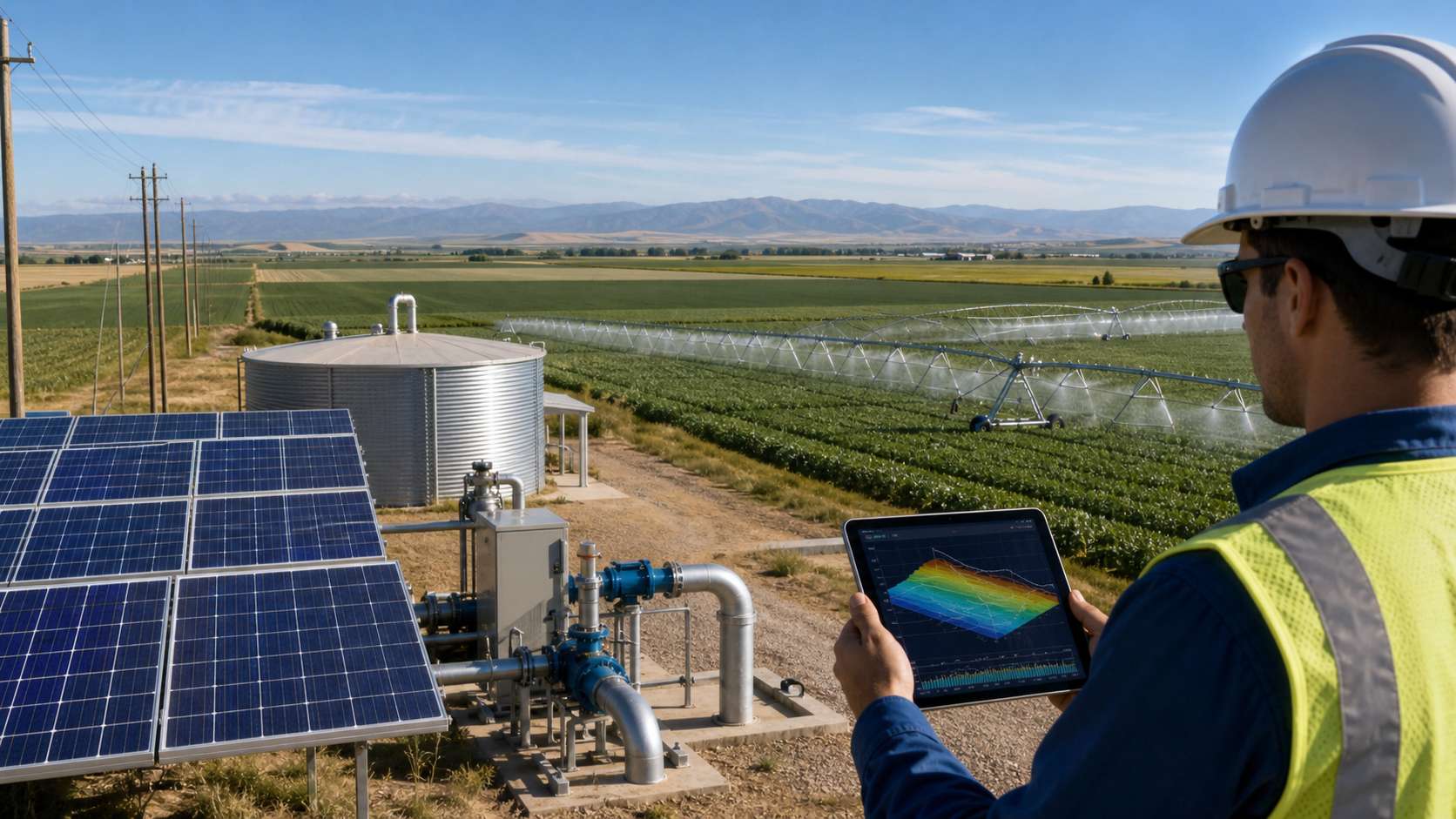
A peer-reviewed optimization study covering 774 U.S. counties and 98 percent of national agricultural irrigation water use found a pathway to cut pumping-related carbon dioxide emissions about 85 percent while keeping modeled annual costs only 0.7 percent above business as usual. Its cost-optimal scenario lowered annual cost by 23 percent and emissions by 39 percent through efficient electric pumps and more solar power.
Why it matters
The modeling suggests that much of irrigation pumping can be cleaned up affordably before the most expensive last step to zero. Full modeled net-zero roughly doubled cost and required much more solar and storage, so field deployment, financing, and local water constraints still matter.
What to watch
- Farm-scale pilots, financing, grid constraints, and operating changes that test the modeled county-level pathways.
- How water availability, groundwater depth, storage needs, and the higher cost of the final reductions shape adoption.
Sources & evidence
- Pathways to cost-optimal and net-zero emissions irrigation in the United StatesPeer-reviewed Article, Nature Communications 17, 4504 (2026). Published March 27, 2026. County-scale linear optimization; modeled scenarios are not an operating national deployment.
Continue learning with ACC
Explore ACC's renewable energy and grid guide