ACC News Brief
Clean Energy Mountain Regions
Underground transmission could unlock renewables in constrained mountain corridors
What happened
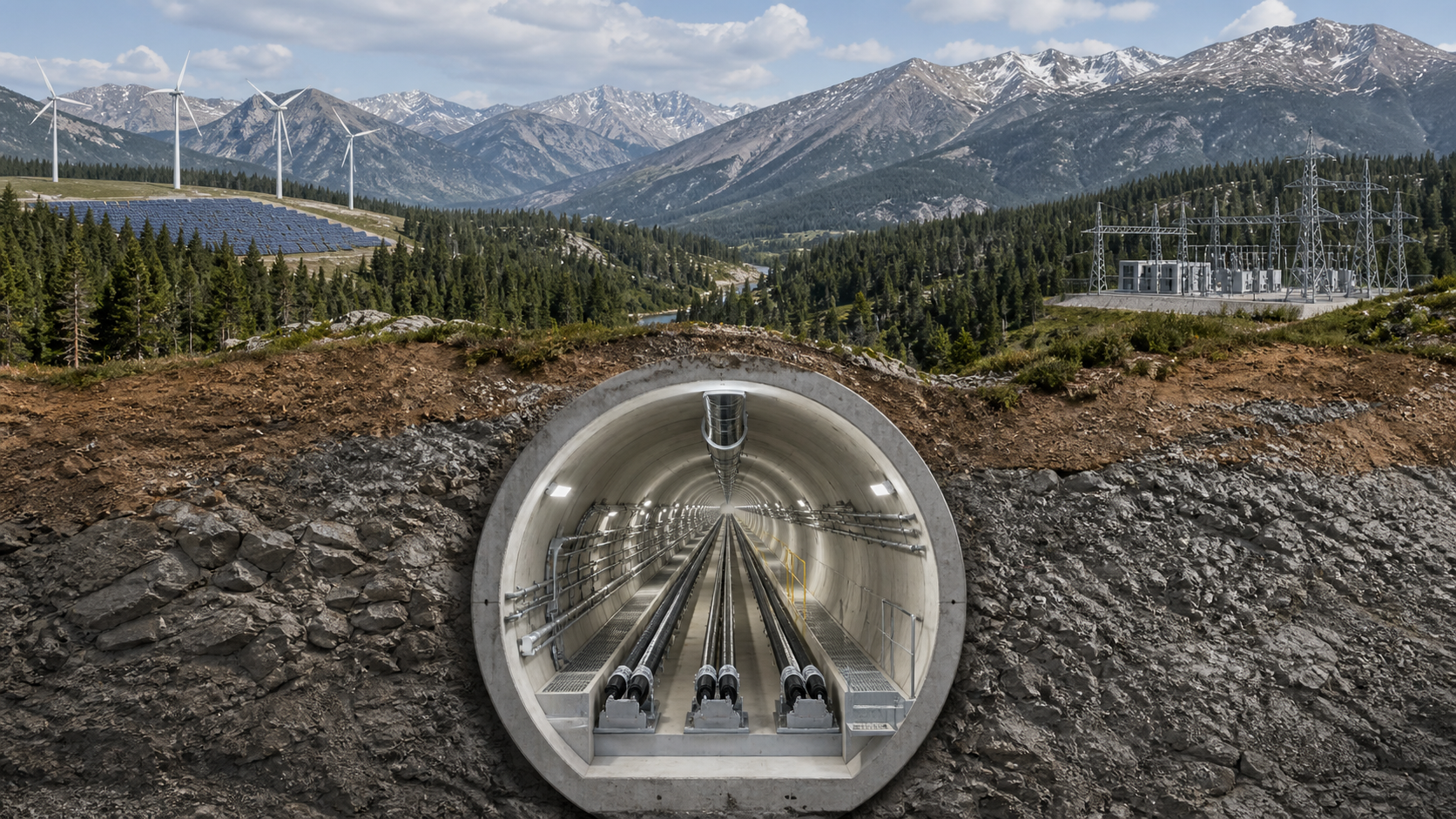
A peer-reviewed engineering study combined electromagnetic, thermal, ventilation, and lifecycle-cost models to compare overhead lines with underground tunnel transmission for renewable-rich mountain regions. The modeled gas-insulated option became cost-competitive where ecological, landscape, and infrastructure constraints pushed external costs above about $550,000 per kilometer per year, and design optimization increased modeled cable capacity by as much as 57 percent.
Why it matters
Undergrounding is not the cheapest answer everywhere, but the analysis offers a conditional option for difficult corridor segments where conventional lines face high environmental or siting costs. It is a techno-economic model, not evidence of a newly operating project.
What to watch
- Real corridor studies that test the modeled cost thresholds against local ecology, geology, and community priorities.
- Safety, maintenance, ventilation demand, permitting, and construction impacts for any proposed tunnel segment.
Sources & evidence
- Bulk electrical power extraction through tunnel transmission technology from renewable energy concentrated zonesPeer-reviewed Article, Nature Communications 17, 4757 (2026). Published April 2, 2026. Multi-physics and lifecycle-cost modeling; not an operating deployment.
Continue learning with ACC
Explore ACC's renewable energy and grid guide