ACC News Brief
Water and Resilience Little Calumet River Watershed, United States
Urban stream resilience depends on what lies beneath the pavement
What happened
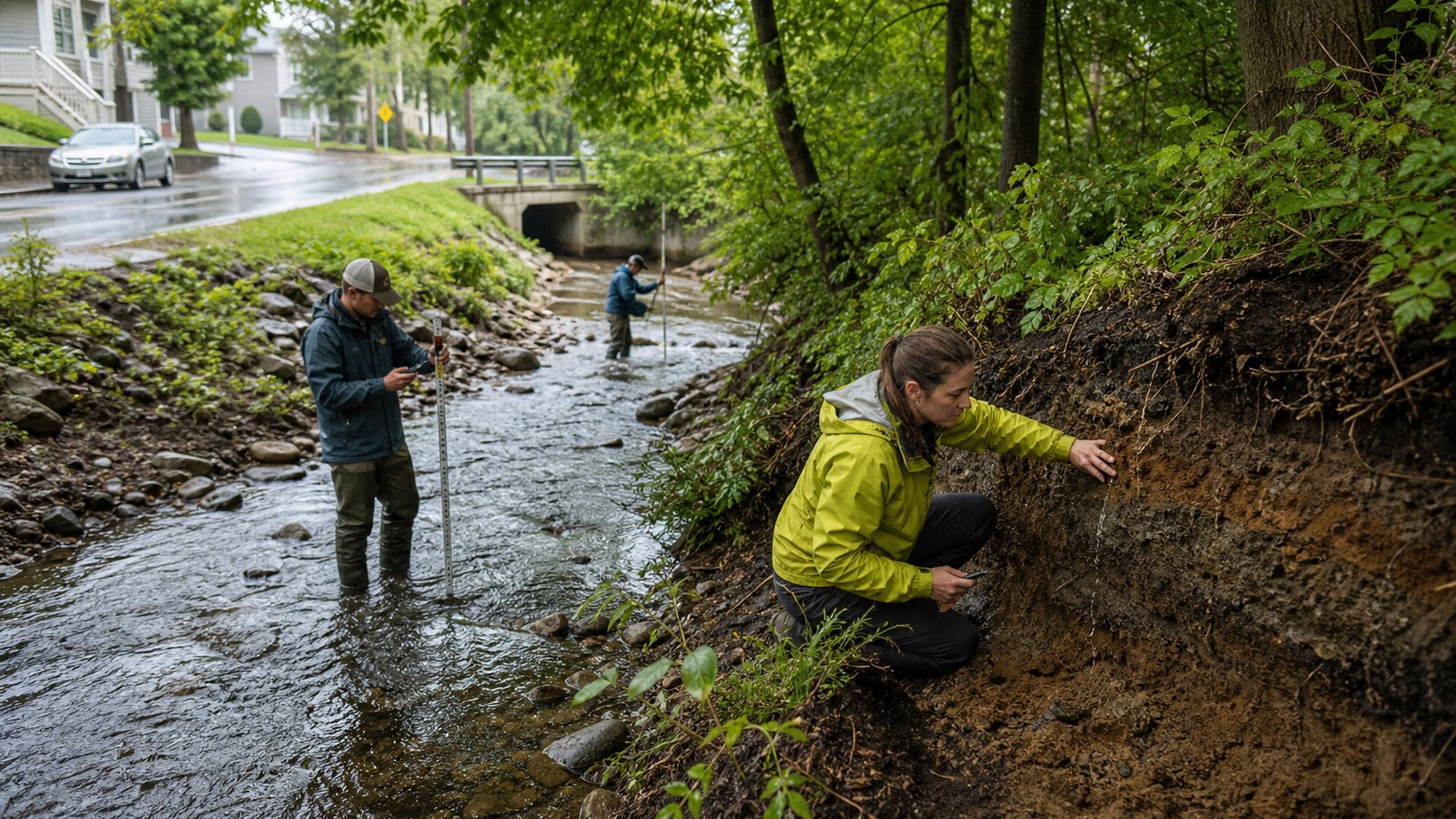
A peer-reviewed field study mapped stream connectivity in the Little Calumet River watershed and found that subsurface geology helped explain which urban headwater channels kept flowing. Contrary to a common expectation, tributaries with more impervious cover were more persistent in this watershed, while those over permeable soils and ancient sand deposits were more intermittent. Active drainage length tracked effective precipitation from the preceding six days more closely than immediate runoff.
Why it matters
Urban-water solutions work best when they fit the local watershed. Combining rainfall, surface cover, and subsurface geology can help cities protect stream habitat and target green infrastructure without assuming the same intervention will work everywhere.
What to watch
- Replication in other urban watersheds with different geology, sewer networks, groundwater conditions, and climates.
- Management pilots that test whether subsurface-informed restoration improves stream continuity, water quality, and habitat through dry periods.
Sources & evidence
- Subsurface conditions and hydrologic accumulation drive stream connectivity and flow intermittency in urban river networksOpen-access, peer-reviewed Communications Earth & Environment article, DOI 10.1038/s43247-026-03477-0, published April 10, 2026. The findings are observational and watershed-specific, providing hypotheses and management context rather than a universal rule.
Continue learning with ACC
Explore ACC's practical climate-solutions pathways