ACC News Brief
Clean Energy Rural China
Rural solar program linked cleaner air with higher local output
What happened
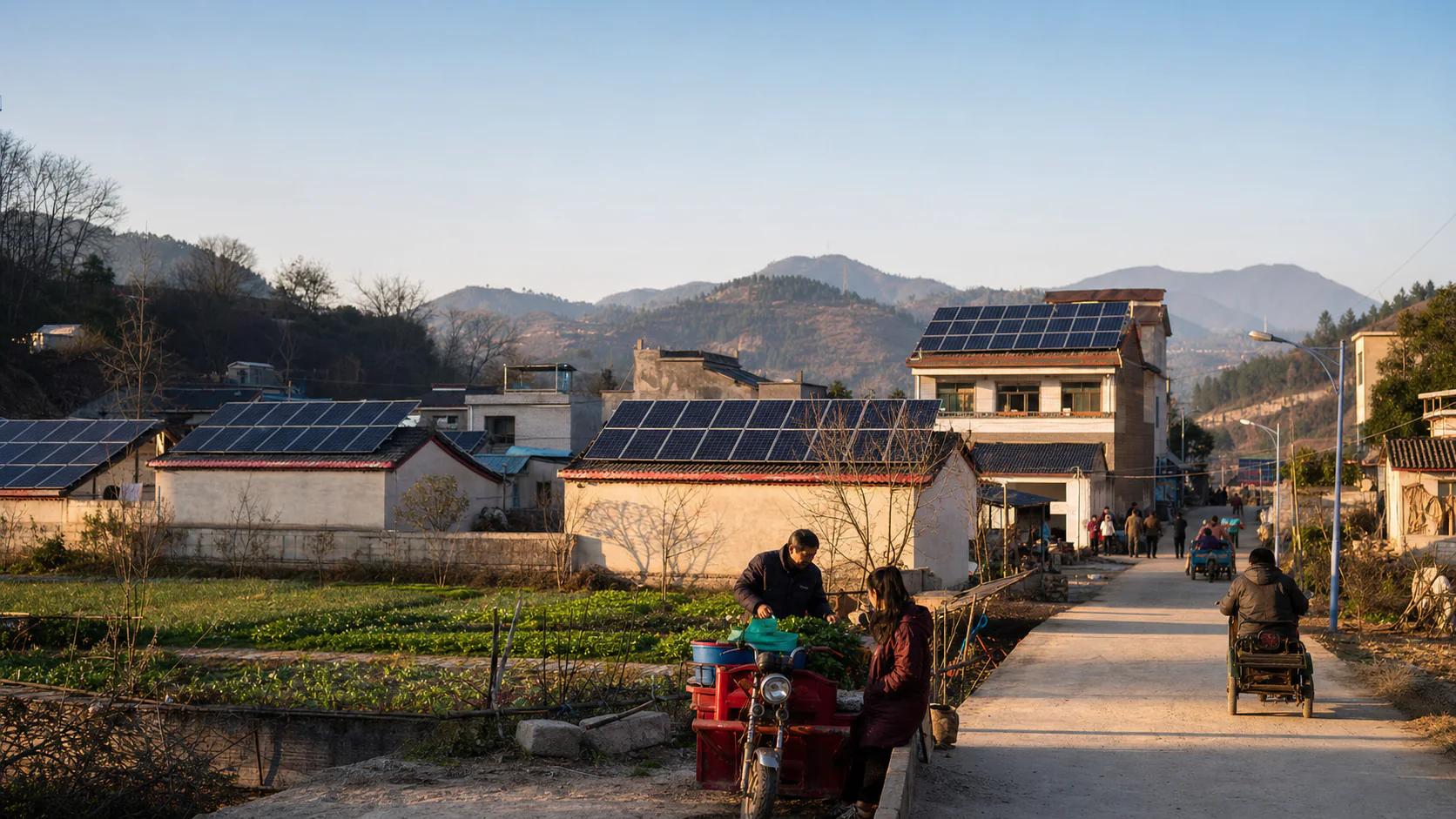
A peer-reviewed natural-experiment study compared Chinese counties covered by the photovoltaic poverty-alleviation program with other counties using 2010?2020 economic records and satellite pollution observations. The authors estimated about 3 percent higher county GDP and roughly 4 micrograms per cubic meter lower sulfur dioxide in program counties. These are county-level quasi-experimental estimates?not direct measurements of household income, health, or every solar project's performance.
Why it matters
The study offers rare evidence that a targeted distributed-solar policy can support local development and cleaner air at the same time, while showing why program design, maintenance, and durable financing matter as much as panel deployment.
What to watch
- Household-level income and affordability, long-term panel maintenance, and whether benefits persist after subsidy and support periods end.
- Replication in other settings and the influence of grid quality, local industry, financing, and governance on the measured county-level effects.
Sources & evidence
- Solar poverty alleviation program raises local incomes and lowers air pollution in rural ChinaPeer-reviewed natural-experiment study, Communications Sustainability, DOI 10.1038/s44458-026-00091-1, published May 25, 2026. The analysis uses county economic data from 2010?2020 and satellite pollution observations.
- National Energy Administration notice on photovoltaic poverty-alleviation implementationOfficial Chinese National Energy Administration program document cited by the research paper.
Continue learning with ACC
Explore ACC's renewable energy and grid guide