ACC News Brief
Resilience California
Early wildfire data can help communities model uneven housing recovery
What happened
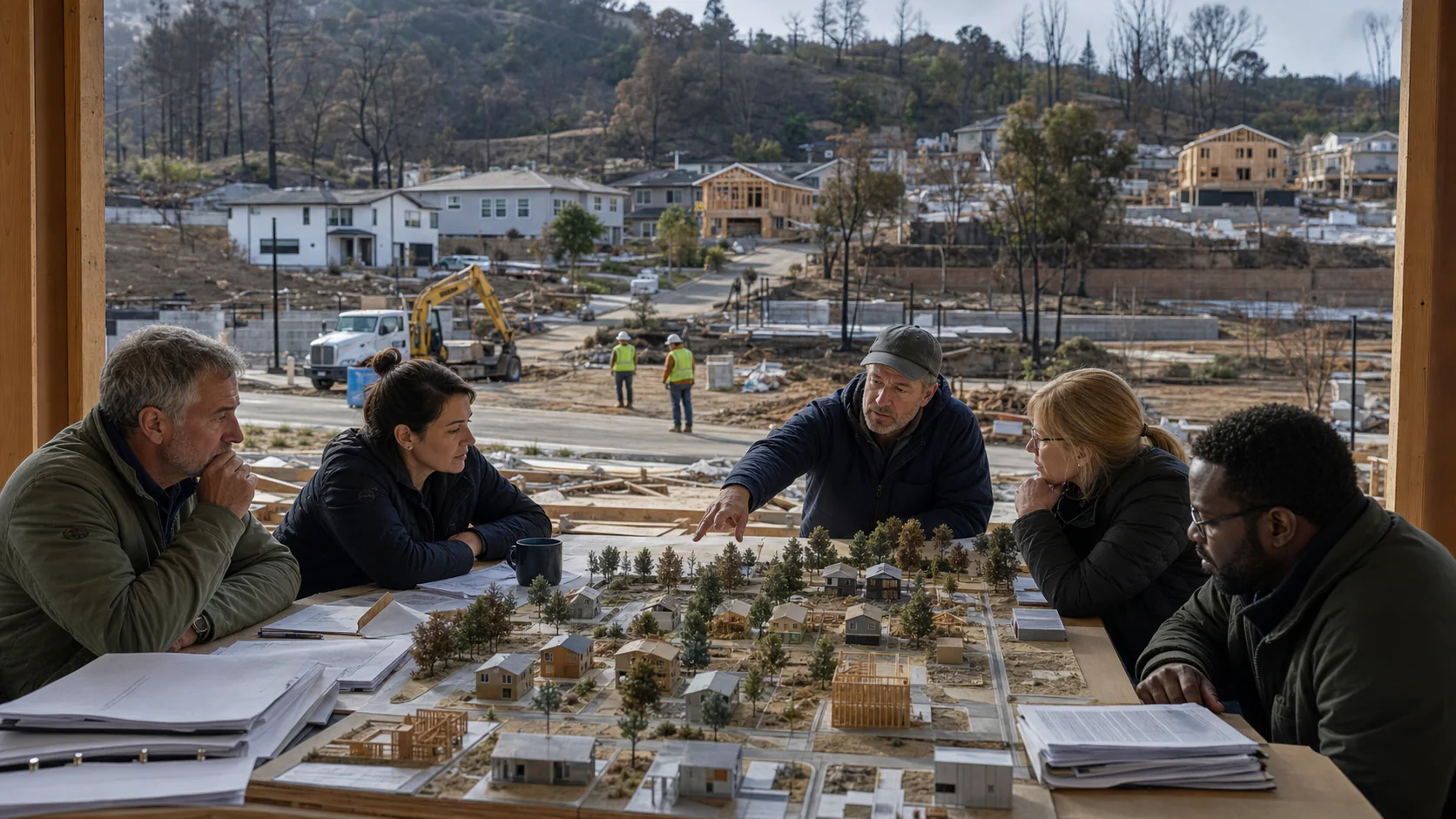
Researchers introduced RAAbIT, an agent-based model that uses data available within weeks of a disaster to simulate households, insurers, contractors, and constraints such as labor availability. In hindcasts of the 2017 Tubbs and 2018 Camp fires, it reproduced different recovery patterns; Santa Rosa rebuilt 57 percent of destroyed homes within five years versus 9 percent in Paradise. It is a planning model, not a deployed forecasting service.
Why it matters
Recovery planning can expose housing, insurance, labor, permitting, and equity bottlenecks before they harden into years of displacement. Climate resilience includes the capacity to rebuild fairly, not only evacuation and fire suppression.
What to watch
- Prospective validation after future disasters and testing beyond the two California communities used in the hindcast.
- How local data quality, insurance access, displacement, contractor capacity, and unequal household resources affect modeled and real recovery.
Sources & evidence
- Post-wildfire housing recovery simulation via an agent-based modelPeer-reviewed early-access article, Scientific Reports, DOI 10.1038/s41598-026-48424-3, published June 4, 2026.
Continue learning with ACC
Explore ACC's climate resilience guide