ACC News Brief
Clean Energy Global Power Systems
Grid-forming battery controls stabilize a simulated solar plant
What happened
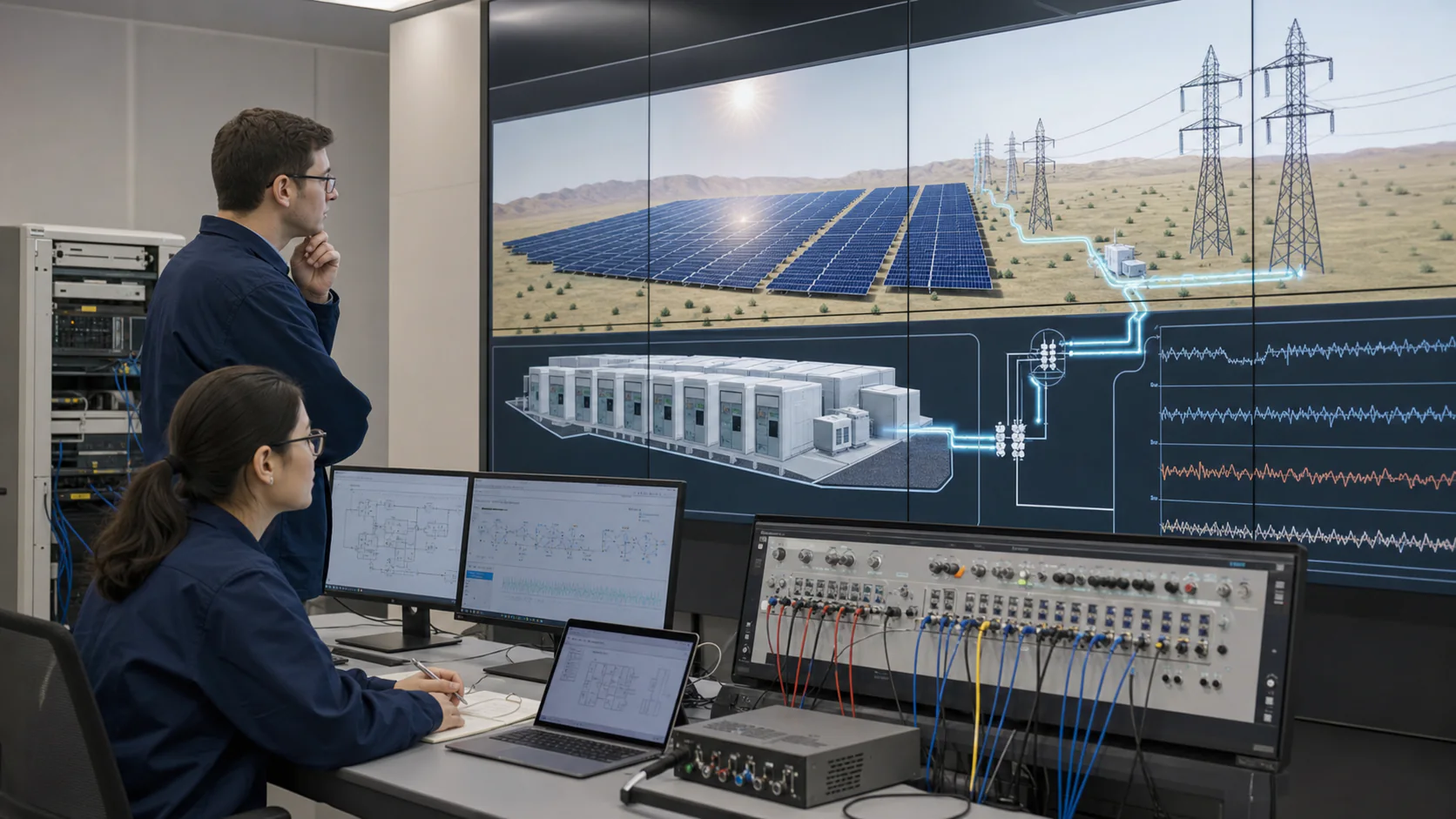
A peer-reviewed time-domain simulation paired a 100-megawatt solar plant with a 35-megawatt, 60-megawatt-hour battery and tested grid-forming controls during solar fluctuations, load steps, outages, faults, and changes in grid strength. The modeled battery supplied fast active and reactive power, reduced voltage sag, and met the study's IEEE 2800 ride-through tests across the evaluated scenarios.
Why it matters
Grid-forming batteries could help low-inertia and weak grids support more inverter-based solar, but this work is a simulation rather than a field trial or hardware-in-the-loop demonstration.
What to watch
- Physical demonstrations that test protection systems, inverter interoperability, and real fault conditions.
- State-of-charge limits, battery degradation, dispatch tradeoffs, and the cost of providing grid-forming services.
Sources & evidence
- Performance evaluation of grid-forming battery energy storage systems for stability enhancement in solar PV plantsPeer-reviewed simulation study, Scientific Reports, DOI 10.1038/s41598-026-56252-8, published June 13, 2026; early-access unedited manuscript.
Continue learning with ACC
Explore ACC's renewable energy and grid guide