ACC News Brief
Sustainable Living United States
Passive cooling can make homes safer during heat outages
What happened
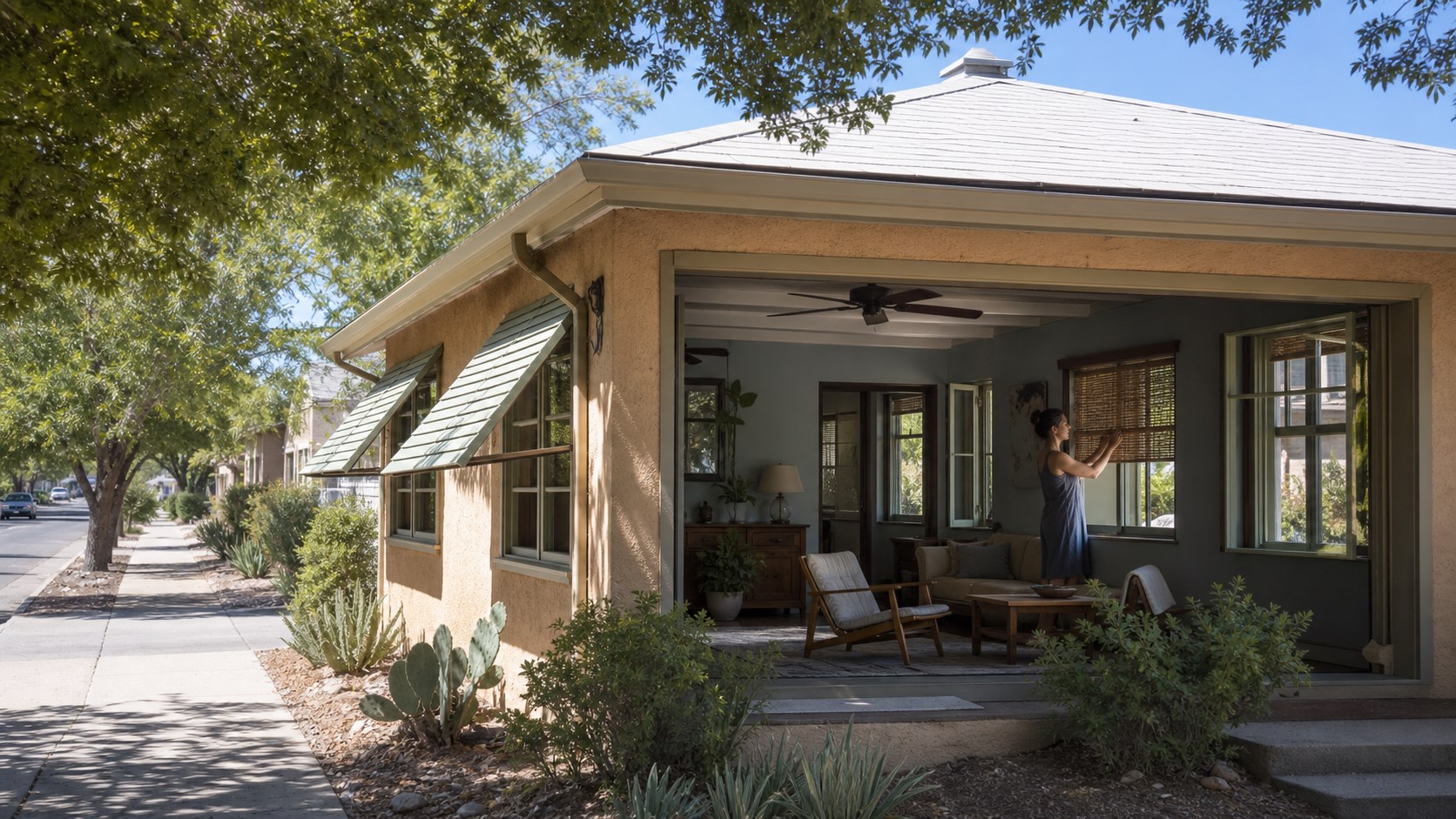
Grist, republishing Vox through Climate Desk, explained how passive cooling strategies such as reflective surfaces, shade, airflow, better orientation, awnings, trees, and efficient building envelopes can help homes stay safer when heat waves strain power grids or air conditioning becomes unaffordable.
Why it matters
The story makes resilience tangible: buildings can be designed or retrofitted so cooling does not depend entirely on a running compressor.
What to watch
- Further verified reporting or data from Grist and other primary sources.
- How this develops in United States, especially around Heat Resilience, Buildings, Passive Cooling.
Continue learning with ACC
Explore ACC's sustainable living guide