
ACC News Brief
Clean Energy India
Lab model predicts voltage swings in off-grid micro-hydro systems
What happened
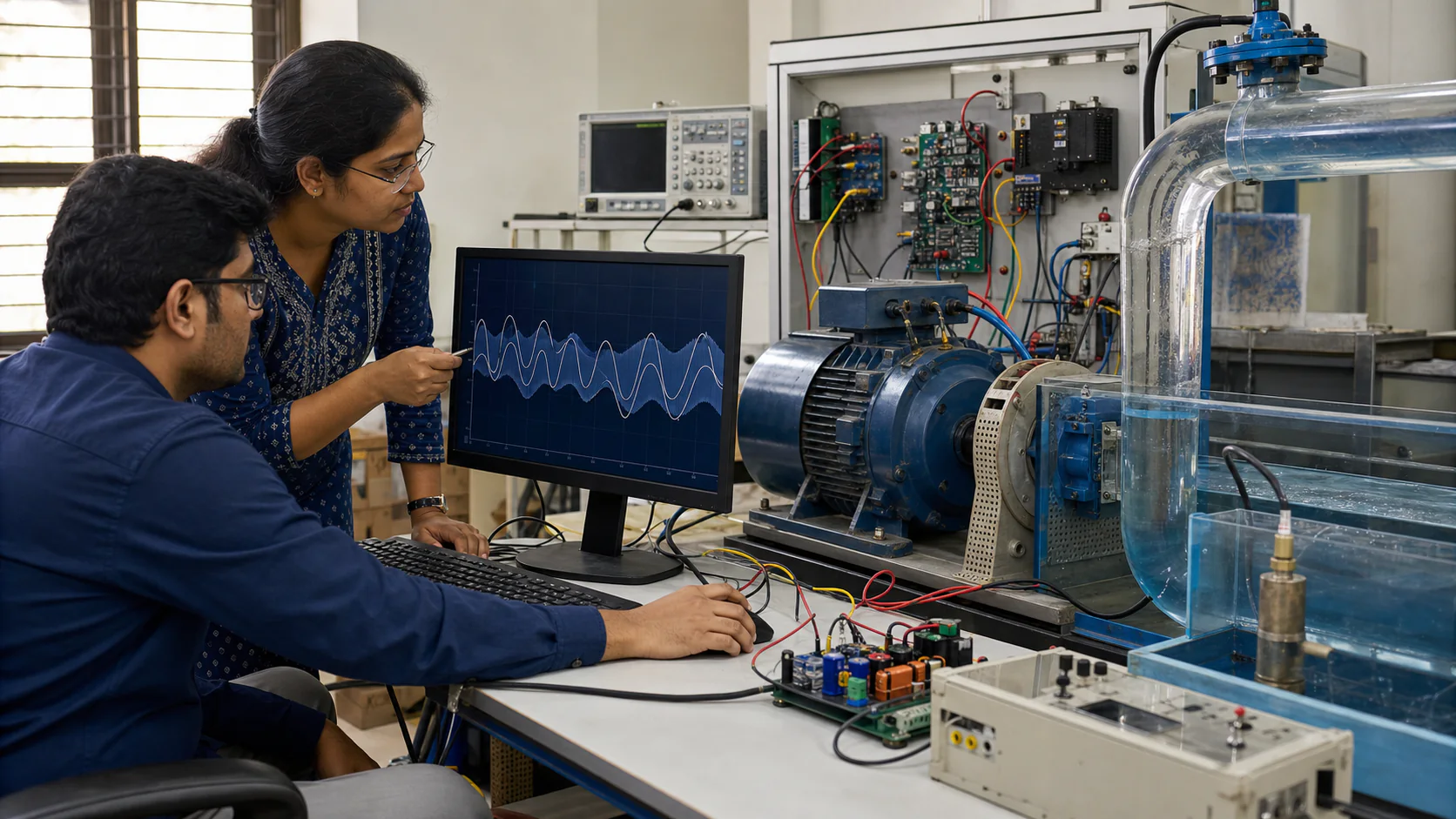
A peer-reviewed study gathered real-time data from a 2.2-kilowatt, 415-volt laboratory generator and electronic load controller designed to represent an off-grid micro-hydro system. A stacking ensemble using load power, dump power, and switching events reported an R-squared value of 0.997 for predicting point-of-common-coupling voltage during sudden load changes. This is prediction on one laboratory apparatus?not evidence of better voltage regulation, reliability, or energy access in an operating rural microgrid.
Why it matters
More accurate short-term voltage forecasts could eventually help controllers protect equipment and maintain power quality in isolated renewable systems, but the field value depends on whether prediction actually improves control under messy real-world conditions.
What to watch
- Field validation under unseen loads, seasonal flow changes, noisy sensors, and equipment wear, followed by closed-loop tests showing that forecasts improve voltage control rather than only fit laboratory data.
- Computing and sensor requirements, operator maintenance, independent replication, and comparison with simpler control methods that may be easier to deploy in remote communities.
Sources & evidence
- Stacking ensemble learning for PCC voltage prediction in SEIG-ELC based off-grid micro-hydro systemsPeer-reviewed laboratory study, Scientific Reports, DOI 10.1038/s41598-026-61776-0, published July 19, 2026. The publisher identifies the page as an unedited early manuscript.
Continue learning with ACC
Explore ACC's renewable energy and grid guide