ACC News Brief
Resilience Colorado River, Arizona and Utah, United States
Glen Canyon decision prioritizes strained hydropower over cool fish flows
What happened
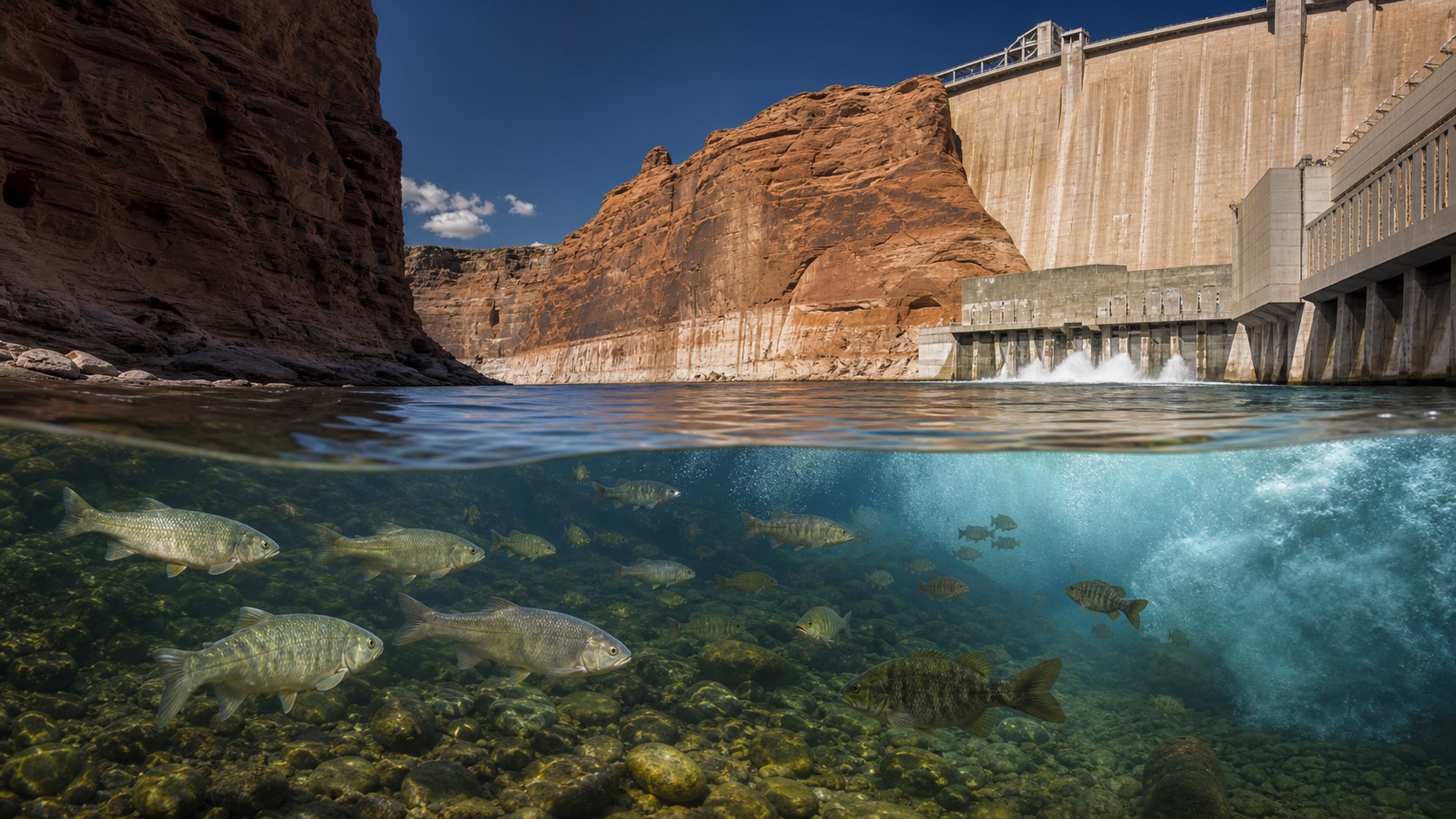
The Bureau of Reclamation will not release cool water from deep in Lake Powell this year, citing already strained hydropower conditions, according to an agency email obtained by the Associated Press. Similar releases in 2024 and 2025 prevented invasive smallmouth bass from spawning downstream, where warmer water threatens federally protected humpback chub.
Why it matters
Lake Powell is about 23% full after decades of overuse, drought, evaporation, and warming. The decision exposes a difficult climate tradeoff among river ecology, hydropower, electricity costs, and water supply, while showing why durable solutions cannot rely on a single emergency release.
What to watch
- Smallmouth bass spawning, humpback chub survival, and downstream temperature monitoring.
- Effectiveness of rapid fish removal, backwater changes, and proposed structural controls.
- Long-term Colorado River agreements that address water demand, hydropower, and ecosystem needs together.
Sources & evidence
- Officials will not release cool water from a Colorado River reservoir to protect threatened fishAssociated Press report published by Phys.org on August 7, 2026, covering the Bureau of Reclamation decision, reservoir conditions, fish risk, and hydropower tradeoffs.
Continue learning with ACC
Explore ACC's climate resilience guide