ACC News Brief
Practical Solutions Czech Republic
Magnetic microrobots remove most test microplastics in lab samples
What happened
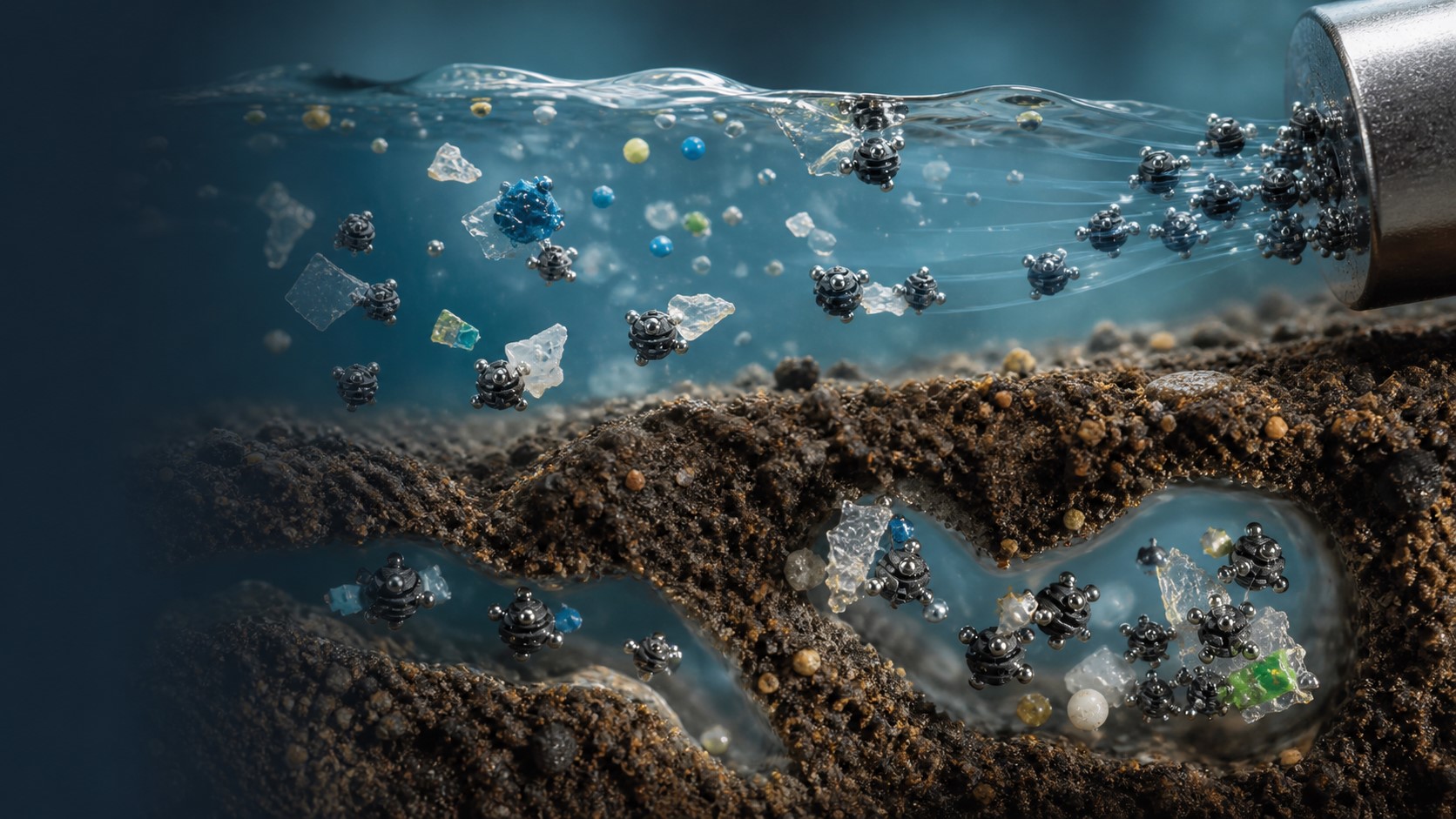
Researchers created magnetic MXene-based microrobots that moved through water and model soil, bound microplastic particles, and were retrieved with a magnet. In laboratory tests lasting about an hour, the system removed roughly 94% of polystyrene and 89% of PET from water, and about 81% and 72%, respectively, from model soil.
Why it matters
Microplastics are difficult to extract once they enter soil and water. Active, magnetically recoverable materials could complement prevention and filtration, but the reported performance comes from controlled laboratory samples, not contaminated rivers, farms, or drinking-water systems.
What to watch
- Field trials in complex water and soil with mixed particle sizes and other contaminants.
- Complete recovery of the robots and testing for nickel or other material leakage.
- Energy use, cost, reuse cycles, and safe handling at environmentally meaningful scale.
Sources & evidence
- Swarms of tiny robots remove microplastics from soil and waterPhys.org report published August 8, 2026, describing the laboratory setup, measured removal rates, and retrieval and leakage limitations.
- Magnetic MXene-based microrobots for soil microplastics removalPeer-reviewed npj Asia Materials study underlying the reported laboratory results.
Continue learning with ACC
Explore ACC's climate-solutions pathways