ACC News Brief
Clean Energy Barbados
Government plan and procurement — capacity is not yet installed
Barbados advances battery plan to connect constrained solar
What happened
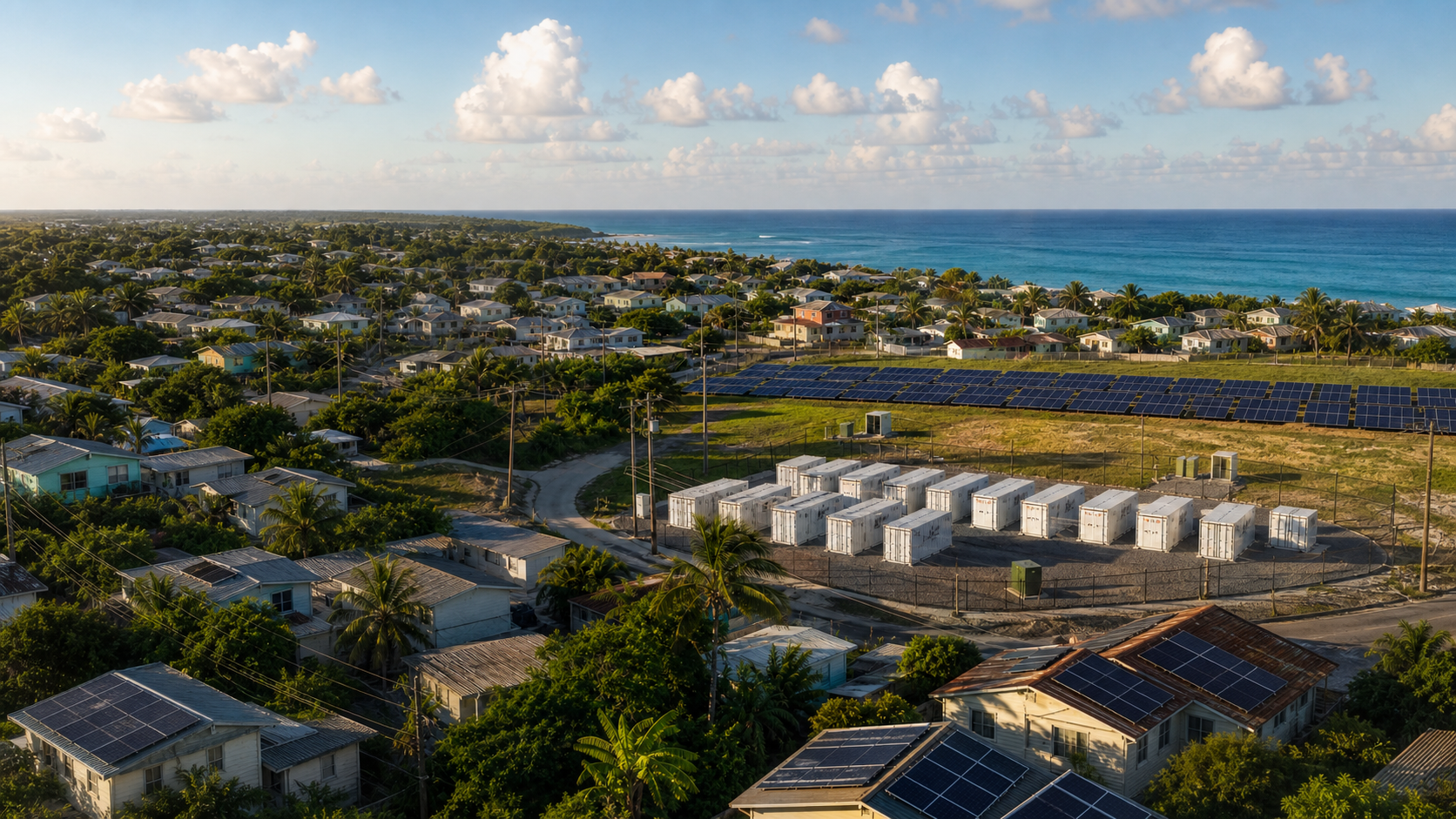
Barbados says roughly 125 megawatts of battery storage will be needed to support its goal of reaching 50 percent renewable-energy penetration by the end of 2027. The government says 60 megawatts is being advanced through competitive procurement and another 65 megawatts is planned. A related fast-track process is intended to help connect or release 33.1 megawatts of solar capacity that is currently curtailed or built but not connected. The batteries and solar connections are planned or in procurement—not yet completed capacity.
ACC context
Batteries can move solar electricity into later hours and provide grid-balancing services, but power capacity in megawatts does not by itself describe duration or total stored energy. Procurement terms, location, interconnection, operating rules, consumer protections, and delivery dates determine how much constrained solar the program can actually unlock.
Why it matters
Solar installations that cannot deliver their full output represent stranded clean-energy investment. Storage and grid upgrades could make more of that electricity usable while improving system flexibility, but those benefits depend on contracts being completed, batteries being commissioned, and delayed solar systems receiving working grid connections.
What to watch
- Contract awards, financing, construction starts, and commissioning evidence for the first 60 MW / 240 MWh procurement.
- The final design, location, duration, ownership, and consumer-cost treatment of the additional 65 MW.
- How many of the 257 curtailed or unconnected solar systems complete the eight-month pathway and begin delivering unrestricted electricity.
- Reliability, safety, battery recycling, hurricane resilience, and transparent reporting once systems operate.
Sources & evidence
- Barbados Today report on the battery planReport published August 24, 2026. Its mid-2027 schedule is attributed to the minister and is an expected timetable, not evidence of completed installation.
- Barbados Government Information Service renewable-energy target updateGovernment update published August 25, 2026 stating that about 125 MW is required, 60 MW is being advanced through competitive procurement, and another 65 MW is planned.
- Barbados Government Information Service solar interconnection updateGovernment update published August 25, 2026 describing 33.1 MW across 257 curtailed or built-but-unconnected solar systems and an expedited pathway.
- Barbados Ministry of Energy 60 MW battery-storage procurement pageMinistry page for a 60 MW / 240 MWh storage-services solicitation, accessed August 26, 2026. Status boundary: this is procurement evidence, not proof of an award, financial close, construction, or operation.
- Barbados Ministry of Energy tender indexTender index accessed August 26, 2026. It conflicted with the dedicated procurement page about whether an opportunity was currently open, so the brief makes no current-open, award, or financial-close claim.
Continue learning with ACC
Learn how renewable generation, storage, and grid planning work together