ACC News Brief
Clean Energy Kamoa-Kakula, Democratic Republic of the Congo
Developer-reported commercial operation
Developer reports 30 MW firm solar-battery supply at DRC copper complex
What happened
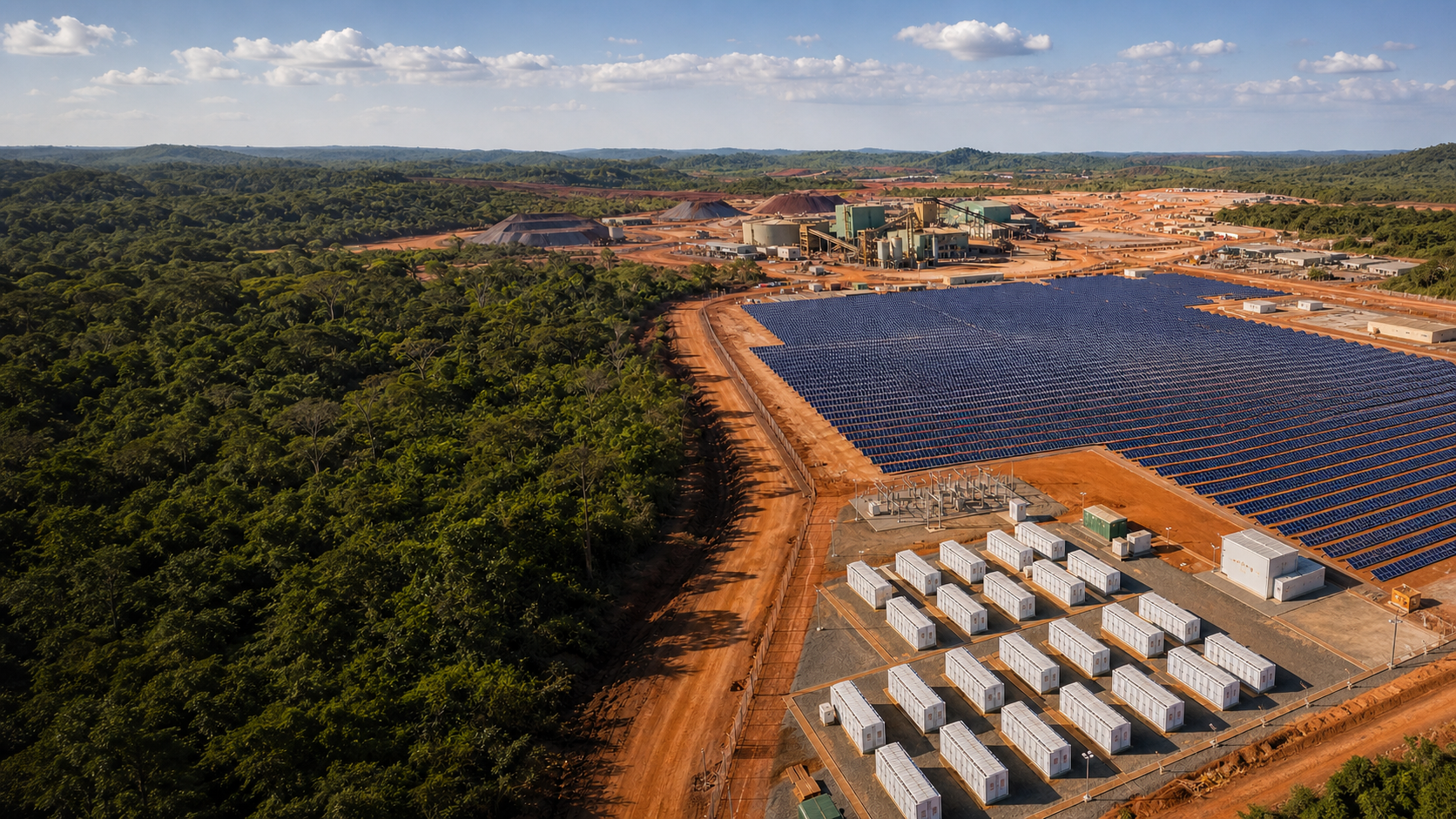
CrossBoundary Energy says its solar-plus-battery facility for Kamoa Copper reached commercial operation on August 12 and is supplying at least 30 MW of firm power using a 233 MWp solar array and 123 MVA/526 MWh battery system. Ivanhoe Mines, a Kamoa Copper owner, reported on July 30 that commissioning of the combined on-site facilities was nearing completion and that the first 15 MW had been delivered in July, which partially corroborates the ramp-up. ACC did not locate an independent post-COD performance evaluation, so the current 30 MW operating claim remains explicitly attributed to the developer.
ACC context
This is on-site industrial supply for a copper complex, not evidence of broader public-grid access. The much larger solar nameplate relative to the 30 MW firm contract reflects the need to generate and store enough variable solar energy to support delivery outside peak sunlight. Whether the facility provides the claimed availability, emissions reductions, and cost savings requires operating data and a clear displaced-power baseline.
Why it matters
If sustained performance matches the contract claim, the project would be a consequential real-world test of using solar and batteries for firm industrial power. It could reduce reliance on fuel-fired backup at a major mine, but those benefits should be measured rather than inferred from capacity or commercial-operation status alone.
What to watch
- Independently reviewable generation, battery-dispatch, outage, curtailment, and availability data through the first full operating year.
- Measured fuel displacement, emissions, cost, and mine-reliability outcomes rather than projected benefits.
- Resolution of the public capacity discrepancy: CrossBoundary reports 526 MWh; MIGA’s top-level project description lists 561 MWh, while an attached ESIA describes roughly 526.6 MWh.
- Battery degradation, environmental and community outcomes, and performance of the second adjacent solar/storage project.
Sources & evidence
- Africa’s first solar and battery baseload facility reaches commercial operationCrossBoundary Energy developer announcement published August 25, 2026. It says commercial operation occurred August 12 and reports 233 MWp solar, 123 MVA/526 MWh storage, and at least 30 MW firm supply; present operating-performance statements remain developer-reported.
- Ivanhoe Mines issues 2026 second-quarter financial results and operations updateMine-owner report published July 30, 2026. It says commissioning was nearing completion and the first 15 MW was delivered in July, partially corroborating the ramp-up but predating and not independently verifying the August 12 commercial-operation claim.
- CrossBoundary Energy Solar and BESS ProjectWorld Bank Group MIGA project record disclosed November 17, 2025 and accessed August 26, 2026. It supports location, design, offtaker, and 30 MW contracted supply but still labels the project Proposed. Its top-level 561 MWh figure conflicts with CrossBoundary’s 526 MWh; an attached ESIA lists about 526.6 MWh.
- Kamoa Copper and CrossBoundary Energy sign agreement for baseload renewable energy systemPower-purchase announcement published April 3, 2025. It establishes the planned 30 MW offtake and earlier 222 MWp/526 MWh design; projections in that announcement are not operating results.
Continue learning with ACC
Learn what grid-scale storage can and cannot do