ACC News Brief
Climate Impacts Puerto Rico and Jamaica
Rapid attribution analysis — infrastructure, demand, and natural variability also shape impacts
Attribution analysis finds climate warming reduced early wet-season rain in Puerto Rico and Jamaica
What happened
A World Weather Attribution rapid analysis combined observations and climate models for the May-to-July 2026 drought. It estimated that human-caused warming reduced rainfall by about 9% in Puerto Rico and 6% in Jamaica. An effective-precipitation event like the one observed—rainfall after estimated evaporative demand—was assessed as about 30% more likely in Puerto Rico and 40% more likely in Jamaica than in a climate 1.4°C cooler.
ACC context
ACC reports the study's bounded attribution estimates and its uncertainty. The analysis does not assign every water shortage to climate change, and it does not treat model results for the Lesser Antilles as precise.
Why it matters
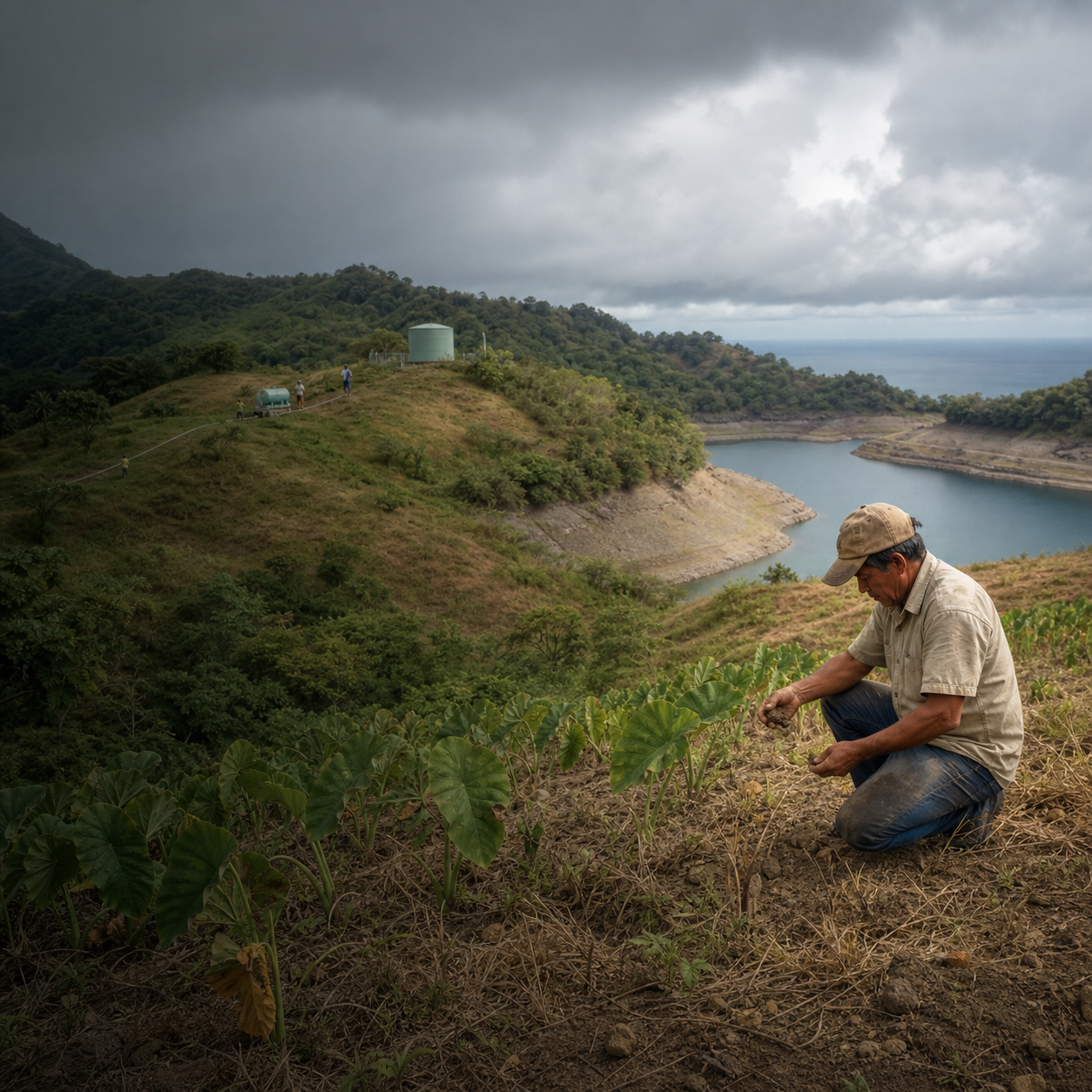
Early wet-season rainfall helps recharge water supplies before the summer dry period. Climate-driven heat and drying can intensify pressure on farms, reservoirs, households, and wildfire management, while infrastructure leakage, storage limits, demand, and local water governance also shape how severe shortages become.
What to watch
- Rainfall, reservoir levels, groundwater, agricultural impacts, and water restrictions through the remainder of the dry season.
- Investments in leak reduction, monitoring, watershed protection, rainwater harvesting, storage, and other locally appropriate water measures.
- Peer review and follow-up analysis, especially for the Lesser Antilles where sparse observations made the rapid study highly uncertain.
Sources & evidence
- Climate change is reducing early wet season rainfall in Puerto Rico and JamaicaWorld Weather Attribution rapid analysis dated August 28, 2026. It uses established peer-reviewed methods, reports combined observational and model estimates, and states that results for the Lesser Antilles are highly uncertain.
- Climate change parches Puerto Rico and Jamaica in rare early wet-season droughtSeptember 1, 2026 secondary report on the August 28 analysis. The ACC brief keeps the primary analysis date and its attribution limits visible.
Continue learning with ACC
Learn how communities can prepare for drought and water stress