ACC News Brief
AI & Data Centers United States
AI cluster cut peak power for three hours without adding batteries
What happened
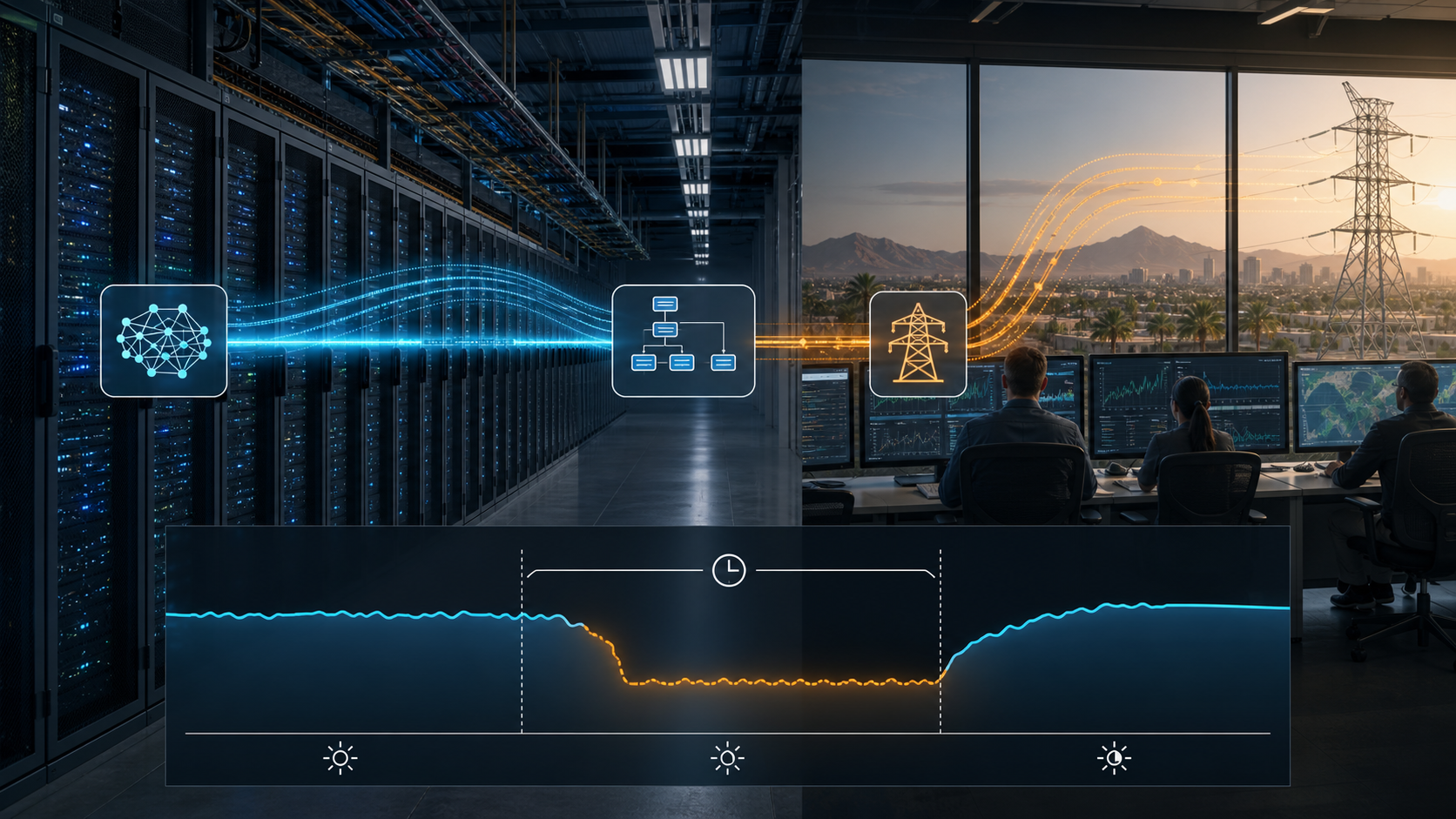
A peer-reviewed field demonstration tested software-based power orchestration on a 256-GPU cluster running representative AI workloads at a hyperscale cloud facility in Phoenix, Arizona. The system reduced cluster power use by 25 percent for three hours during peak demand while maintaining the study's stated quality-of-service guarantees, without hardware modifications or energy storage. This was a bounded cluster experiment, not a long-term whole-data-center deployment or a direct measurement of avoided emissions.
Why it matters
Flexible computing loads could help grids manage short peaks and integrate variable clean power while new generation and transmission are built. The demonstration is useful evidence, but it does not erase the larger questions about data-center electricity growth, local infrastructure costs, water use, or which generators respond when demand shifts.
What to watch
- Independent replication across different facilities, AI workloads, utilities, seasons, and longer dispatch events.
- Whole-site measurements that include cooling, networking, backup systems, workload backlogs, and rebound demand after an event.
- Transparent grid accounting showing whether flexible operation reduces emissions and system costs rather than merely moving demand to another hour.
Sources & evidence
- AI data centres as grid-interactive assetsPeer-reviewed Nature Energy article and version of record dated December 5, 2025. DOI: 10.1038/s41560-025-01927-1. The authors report a field test and disclose employer affiliations, company stock or options, and pending patents.
- Emerald AI May 2025 demonstration artifactsData, code, container, pseudocode, and documentation archive cited by the paper for the field experiments.
Continue learning with ACC
Examine the energy, water, grid, and climate tradeoffs of AI data centers