ACC News Brief
Climate Science Global
Flash droughts cut vegetation greenness more sharply and slowed recovery
What happened
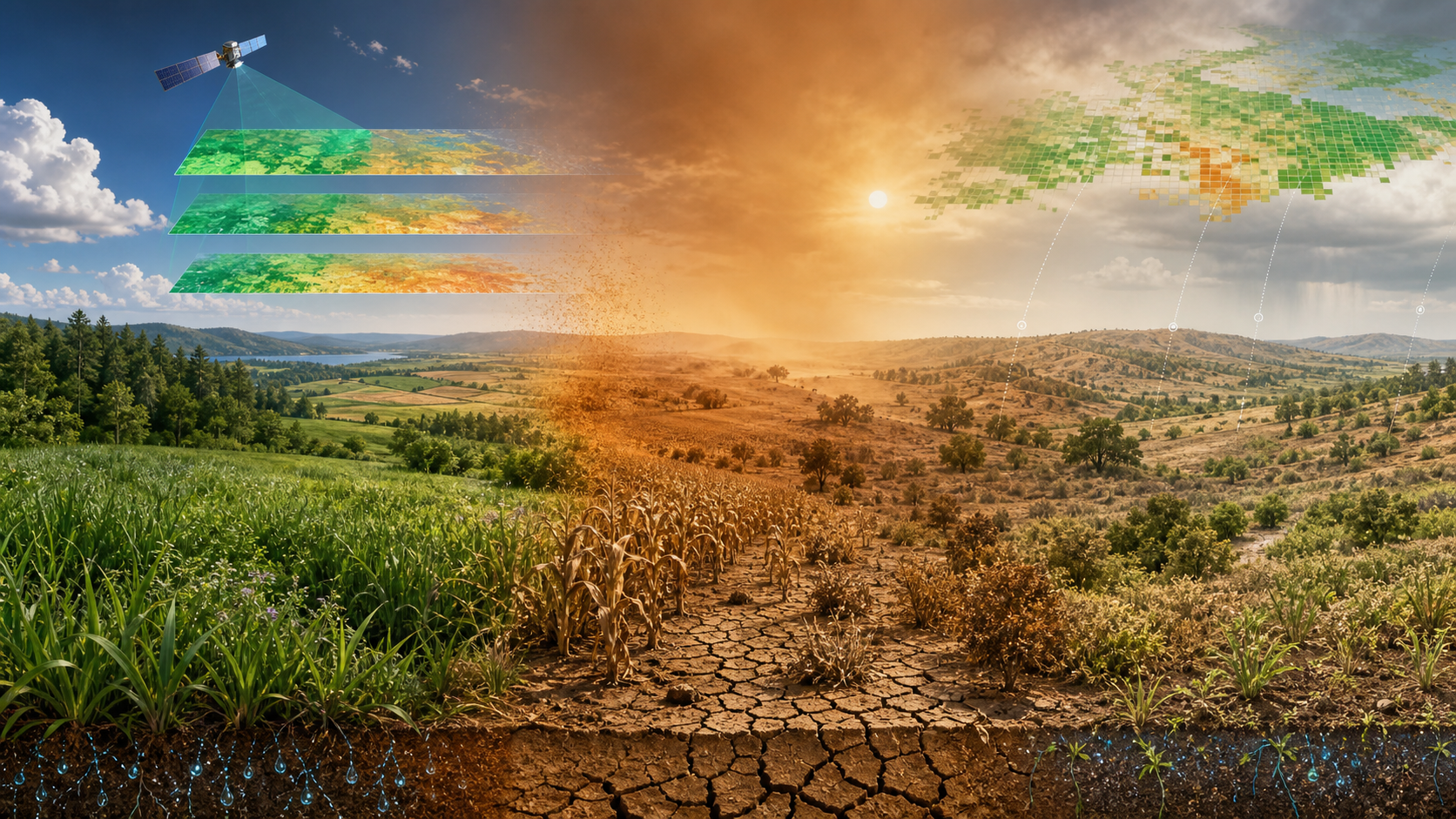
A global analysis combining satellite vegetation greenness with meteorological reanalysis found that flash droughts produced an average normalized difference vegetation index loss of 9.0 percent from 1982 through 2022, compared with 5.3 percent during conventional droughts. Vegetation recovery after flash drought averaged 31.0 plus or minus 6.8 five-day periods, versus 27.8 plus or minus 6.6 after conventional drought.
Why it matters
Flash droughts intensify rapidly, leaving less time for farmers, land managers, and ecosystems to respond. The study indicates that their vegetation effects can be sharper and more persistent than slower-developing droughts. Its satellite greenness metric is a useful global indicator, however, not a direct measurement of biomass, crop yield, carbon loss, or ecosystem mortality.
What to watch
- Regional validation with field observations, crop yields, soil moisture, carbon fluxes, and species-level responses.
- Whether forecast systems give land managers enough lead time to act before rapid soil-moisture declines become severe.
- How the frequency, geography, and ecological effects of flash drought change under different warming and land-management pathways.
Sources & evidence
- Flash droughts exacerbate global vegetation loss and delay recoveryPeer-reviewed Nature Communications study first published online December 8, 2025, DOI 10.1038/s41467-025-67173-x. The analysis uses satellite NDVI and gridded reanalysis; NDVI measures vegetation greenness rather than biomass or carbon directly.
- Flash droughts exacerbate global vegetation loss and delay recovery — DOI recordStable DOI for the article. Nature's later version-of-record metadata should be distinguished from the December 8, 2025 first-publication date used for this brief.
Continue learning with ACC
Understand how climate observations, models, and attribution evidence fit together