Climate change is a complex subject, but its central mechanisms are understandable. This guide explains the distinction between weather and climate, the greenhouse effect, the carbon cycle, and the role of scientific assessments.
 Foundations
Weather changes daily. Climate is the long-term pattern
Weather describes conditions over short periods: a storm, a heat wave, a cold front, or a rainy week. Climate refers to longer-term patterns, ranges, and averages across regions and seasons. A single unusually cold day does not contradict a long-term warming trend, just as one unusually hot day does not prove the full trend by itself. Researchers evaluate climate using long records and multiple indicators.
A helpful way to think about it is signal versus noise. Weather is noisy: it changes from day to day and place to place. Climate is the larger signal that emerges from many observations over decades. That is why climate science relies on long records, regional comparisons, ocean measurements, ice observations, and basic physics rather than one memorable storm or one unusual season.
 Climate basics
The greenhouse effect is natural - but concentrations matter
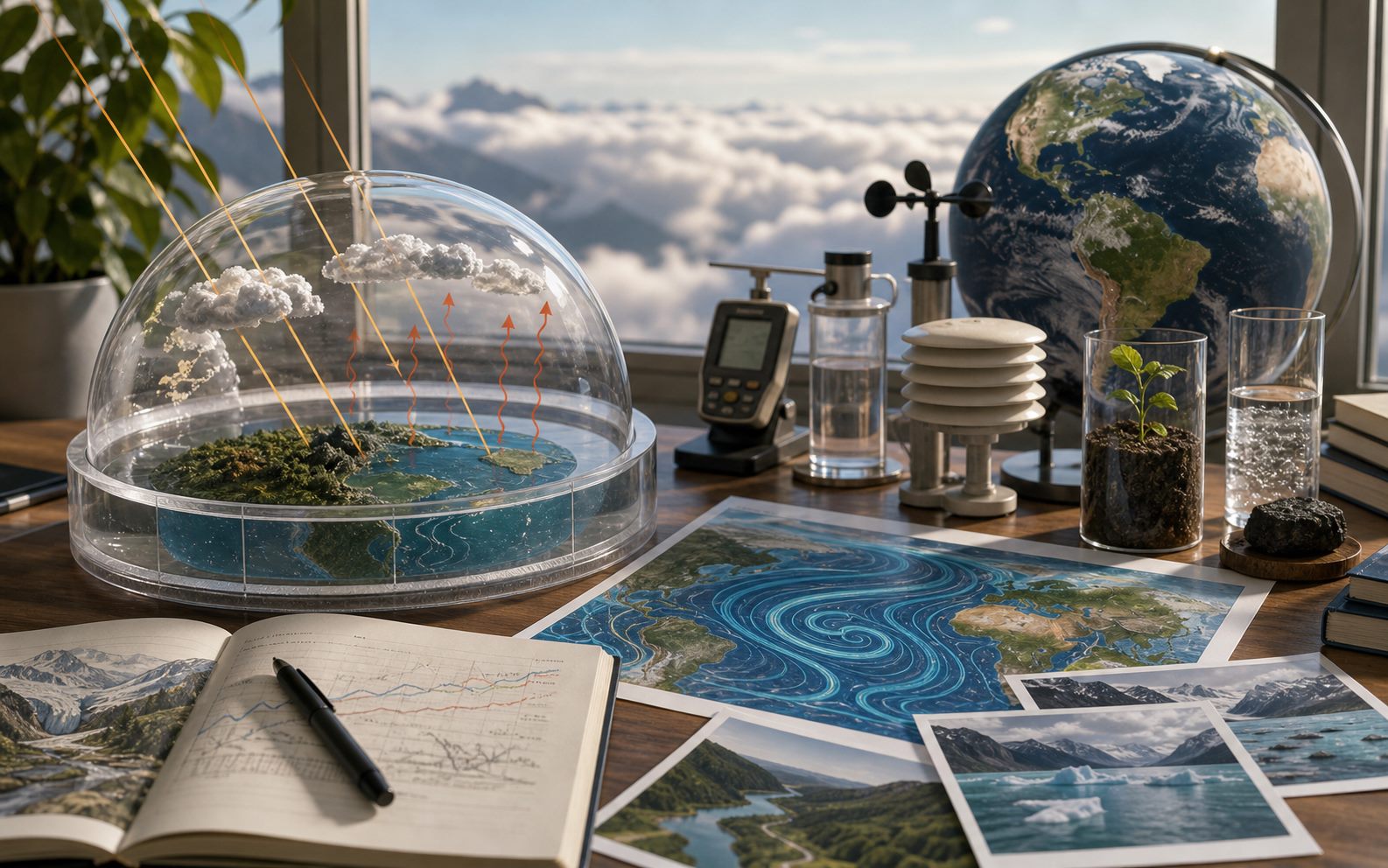
Certain gases in the atmosphere absorb and re-emit outgoing infrared energy. This natural greenhouse effect is part of what makes Earth habitable. The concern is not that greenhouse gases exist. The concern is that human activity has increased the concentration of heat-trapping gases, altering the planet's energy balance. Carbon dioxide is especially important because it accumulates and persists, while methane has a different atmospheric lifetime and warming profile.
The added warming comes from changing the amount of heat-trapping gases in the air. Carbon dioxide from fossil fuels, methane from energy and agriculture, nitrous oxide from fertilizers and industry, and land-use changes all affect the balance. Different gases last for different lengths of time, so serious analysis looks at both near-term warming and long-term accumulation.
 Big picture
The carbon cycle connects air, oceans, soil, and living systems
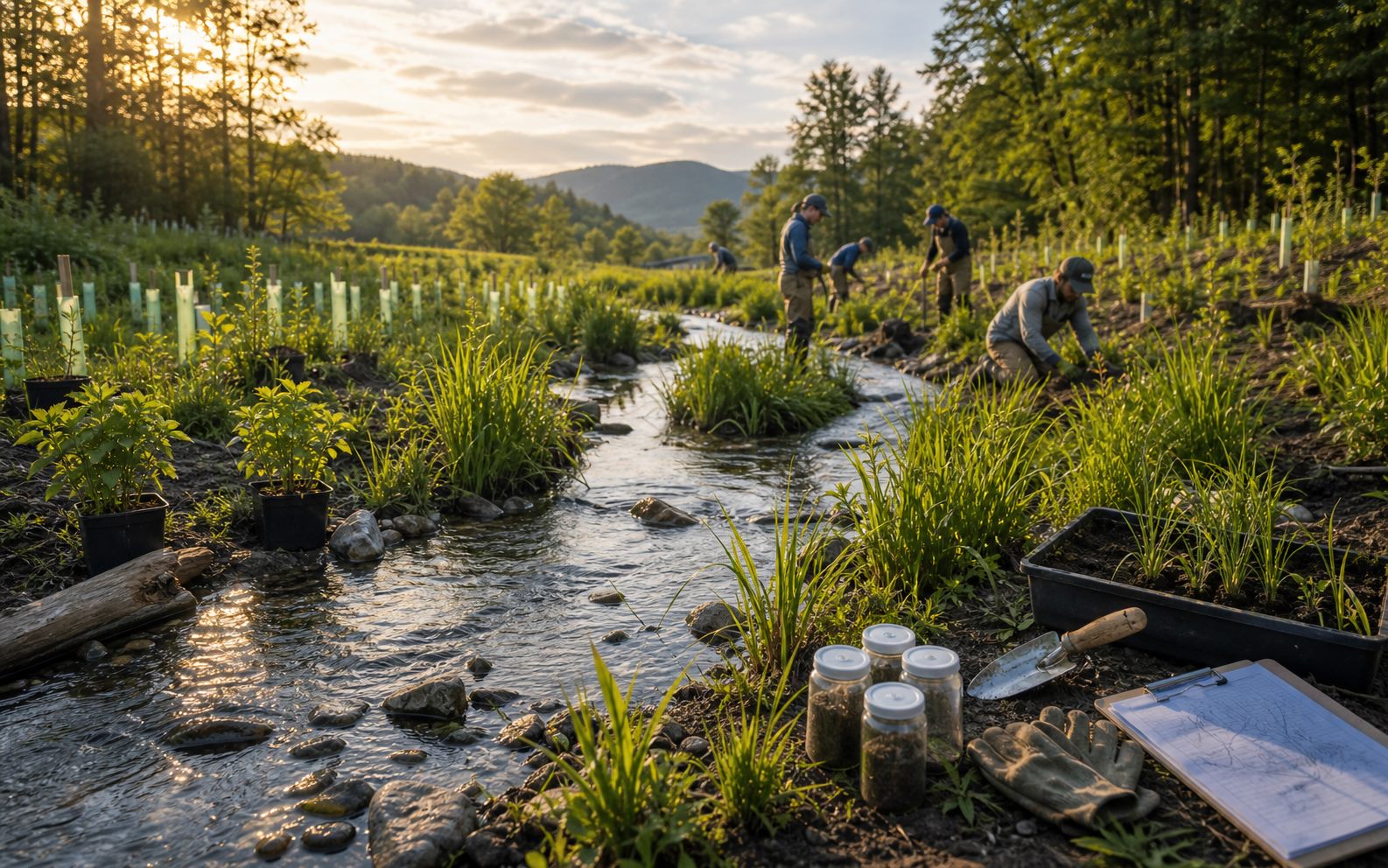
Carbon moves through the atmosphere, oceans, vegetation, soils, rocks, and human systems. Forests, wetlands, and soils can store carbon, while combustion and land-use change can add carbon dioxide to the atmosphere. Nature-based approaches matter, but they complement - rather than replace - reductions in fossil-fuel emissions.
Before large-scale fossil fuel use, carbon moved through natural reservoirs with rough long-term balance. Burning coal, oil, and gas transfers carbon that was stored underground into the active atmosphere-ocean-land system. Oceans and ecosystems absorb part of that added carbon, but not all of it, and those sinks can be stressed by warming, land conversion, drought, fire, and ecosystem degradation.
 Foundations
Why multiple lines of evidence matter
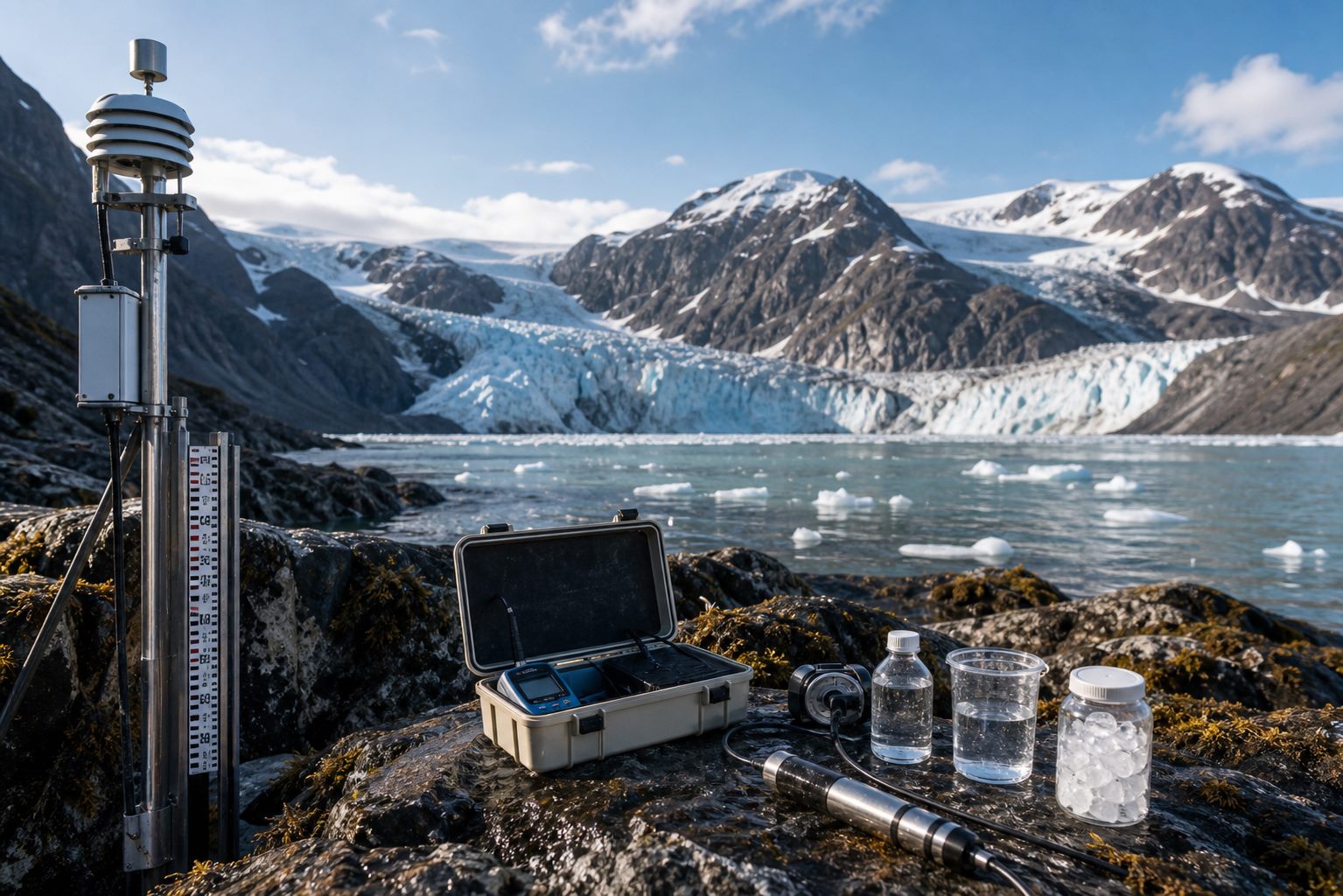
Climate research does not rely on one thermometer, one model, or one institution. Assessments examine atmospheric observations, ocean heat, sea level, glaciers, ice, ecosystems, historical records, and physical understanding. Scientific models are tools for testing relationships and exploring possible futures; they are not claims that every individual event can be predicted with perfect precision.
This is why major assessments are stronger than isolated claims. Temperature records, ocean heat content, glacier loss, sea level, shifting seasons, atmospheric chemistry, and physical models point in the same broad direction. When independent evidence agrees, confidence increases even though uncertainty remains around timing, regional details, and future human choices.
 Climate basics
How to read climate claims without getting misled
Strong climate communication separates established findings, confidence ranges, active research questions, and advocacy. A useful habit is to ask what is being measured, over what time period, from what source, and whether the claim is about one event, a regional pattern, or a global trend.
Good questions protect readers from both denial and exaggeration. A claim may be global or local, observed or projected, peer-reviewed or advocacy-based, short-term or long-term. The most trustworthy explanations are clear about uncertainty without pretending the main evidence is weak.
ACC takeaway
Use this guide as one piece of the larger picture.
Climate decisions are strongest when they combine evidence, realistic comparisons, transparent assumptions, and an honest view of tradeoffs. No single page or technology answers everything, but clear information makes better choices easier.
References & further reading
Review the underlying material.
- IPCC AR6 Working Group I: The Physical Science BasisCore scientific assessment of the climate system and climate change.
- IPCC AR6 Synthesis ReportIntegrated overview of climate science, risks, adaptation, and mitigation.
- WMO Climate Topic PageInternational climate overview and links to monitoring resources.
- The Nature Conservancy: Natural Climate SolutionsApplied perspective on protecting, managing, and restoring nature alongside emissions reduction.