ACC News Brief
Clean Industry Global
Peer-reviewed global estimate — impacts vary by mine, mineral, forest, and governance
Forest loss raises the hidden climate cost of transition-mineral mining
What happened
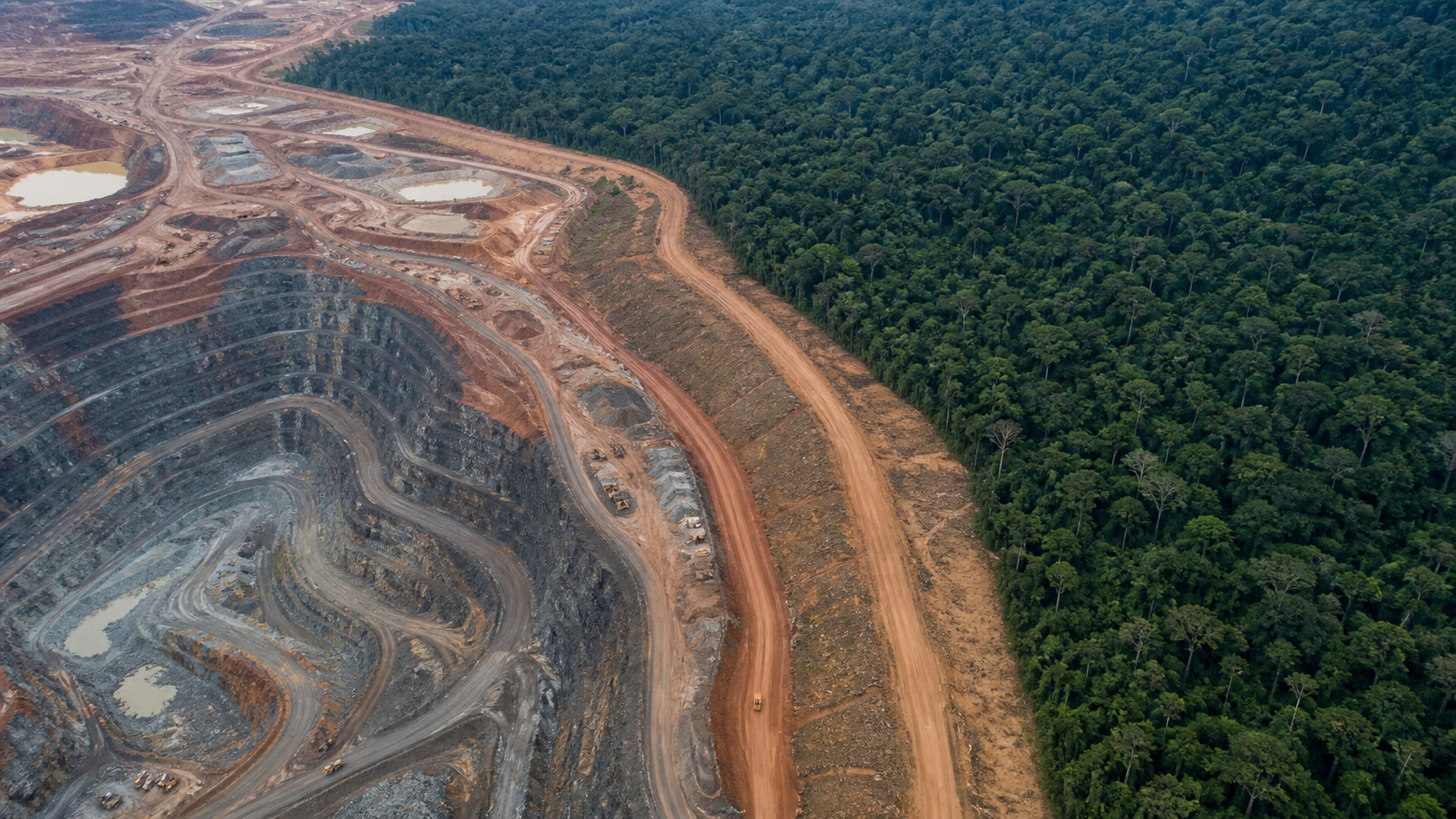
Researchers combined nearly 3,000 mining projects with satellite forest-change data and a staggered difference-in-differences design to estimate land clearing caused by mining energy-transition minerals. They found sustained forest loss averaging about 20% within ten-kilometer buffers over 15 years, concentrated disproportionately in carbon-rich tropical forests. Adding the associated land-use emissions raised the estimated mining-stage carbon footprint of transition minerals by 63% on average and by as much as 98% for some minerals; those averages do not mean every mine has the same footprint or that clean-energy technologies lose their full lifecycle climate benefit.
ACC context
Decarbonization requires minerals, but the climate and biodiversity costs of producing them are not fixed. Project siting, forest protection, recycling, material efficiency, traceability, restoration, enforcement, and Indigenous and local-community rights can change both the need for new extraction and the damage caused by it.
Why it matters
Leaving mine-driven land clearing out of carbon accounting can understate the climate cost of critical-mineral supply. Including those emissions can improve procurement, project review, forest safeguards, recycling priorities, and comparisons among supply routes without turning a serious tradeoff into an argument against the energy transition itself.
What to watch
- Mine-level disclosure and independent satellite monitoring of forest loss, restoration, leakage, and cumulative impacts across connected infrastructure.
- No-deforestation procurement, transparent lifecycle accounting, enforceable safeguards, and free, prior, and informed consent for affected Indigenous peoples and local communities.
- Recycling, product-life extension, material-efficient technology design, alternative chemistries, and whether these measures reduce pressure for new forest-area mines.
Sources & evidence
- Deforestation-induced emissions from mining energy transition mineralsPeer-reviewed Article in Nature Climate Change, published and recorded as the version of record on December 24, 2025, DOI 10.1038/s41558-025-02520-w. The National University of Singapore study estimates causal average effects from historical global project and satellite data; it does not assign identical forest loss to every mine or evaluate the complete lifecycle balance of every clean-energy technology.
- UN principles to guide critical energy transition minerals towards equity and justiceUnited Nations resource outlining principles for human rights, environmental protection, benefit sharing, transparency, circularity, and international cooperation in critical-mineral value chains. It supplies policy context rather than corroborating the study's quantitative estimates.
Continue learning with ACC
Learn how forests, land, biodiversity, and climate are connected