
ACC News Brief
Climate & Health Siaya County, Kenya
Cool-roof pilot lowers indoor heat index in rural Kenyan homes
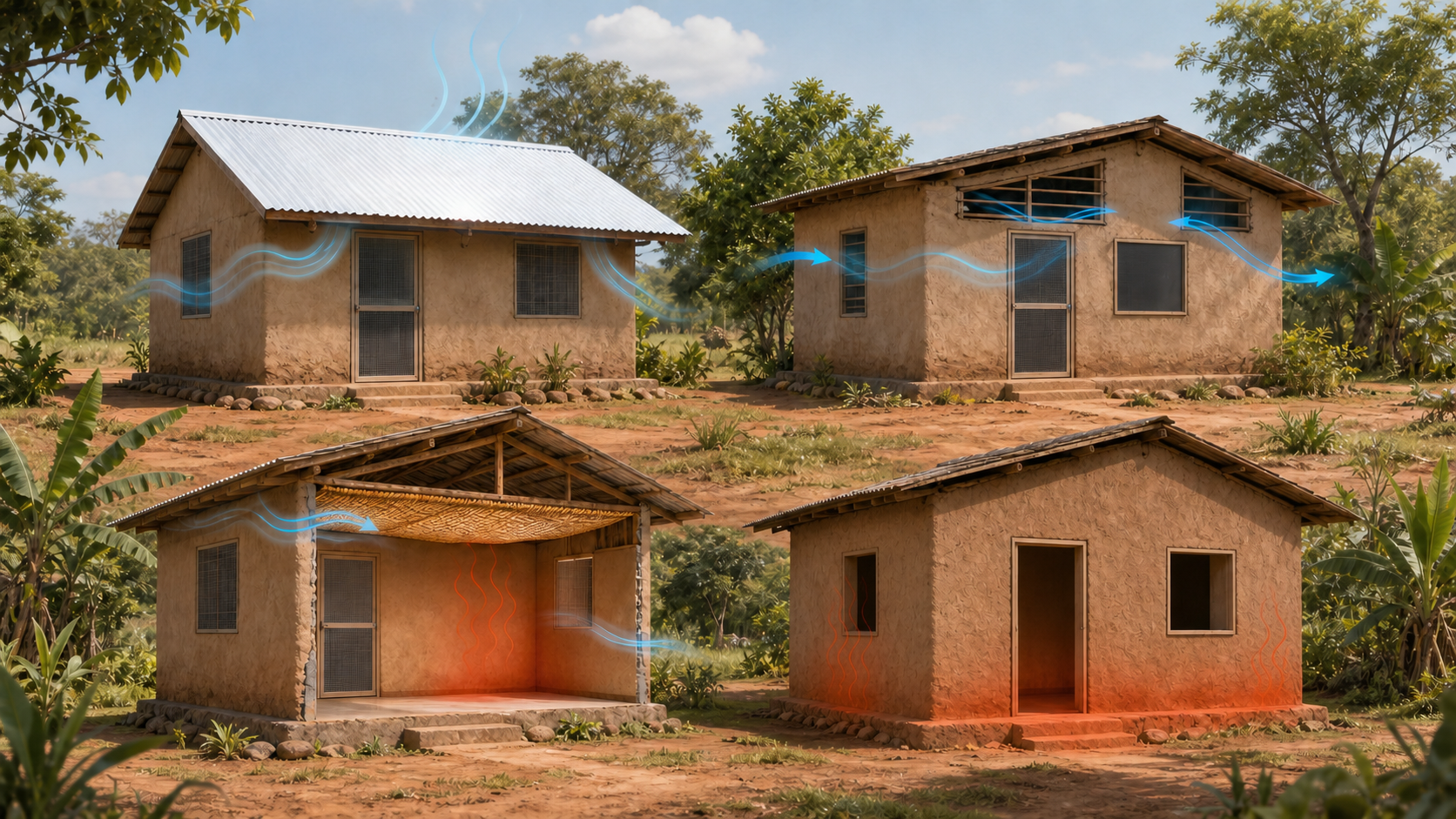
What happened
A randomized field pilot assigned 40 rural homes in western Kenya to cool-roof, cross-ventilation, mat-ceiling, or control groups, with mosquito screening added to the three intervention groups. Cool-roof homes recorded a heat index 3.3 degrees Celsius lower during the day and 2.4 degrees lower at night than controls; screened intervention homes also had 77% fewer female Anopheles funestus and 58% fewer Culex mosquitoes. The small, short study measured indoor conditions and mosquito counts, not malaria illness, long-term durability, or performance across climates.
Why it matters
Passive cooling and physical mosquito barriers could address two climate-sensitive health pressures without relying on continuous electricity or insecticides. The pilot offers practical field evidence, but scaling depends on local building design, humidity, installation quality, affordability, maintenance, cultural fit, and confirmation in a larger trial.
What to watch
- The planned larger cluster-randomized trial of roughly 300 homes, including malaria, thermal-comfort, and environmental outcomes.
- Durability, humidity, airflow, seasonal performance, maintenance, and cost-effectiveness across different housing types and climate zones.
- Community-led financing and construction standards that keep modifications affordable and respect household preferences and safety.
Sources & evidence
- Housing modifications for heat adaptation, thermal comfort and malaria vector control in rural African settlementsPeer-reviewed open-access Article in Nature Medicine, published January 5, 2026. This was a 40-home randomized pilot in one western Kenyan village; it found indoor heat-index and mosquito-count differences but did not measure malaria transmission, long-term durability, or broad-scale effectiveness.
- Housing modifications data and codePublic repository linked by the study containing temperature, humidity, heat-index, mosquito, and analysis-code files.
Continue learning with ACC
Explore ACC's climate-ready buildings guide