ACC News Brief
Climate & Health Rio de Janeiro, Brazil
Rio neighborhood upgrades were linked to lower heat-wave mortality
What happened
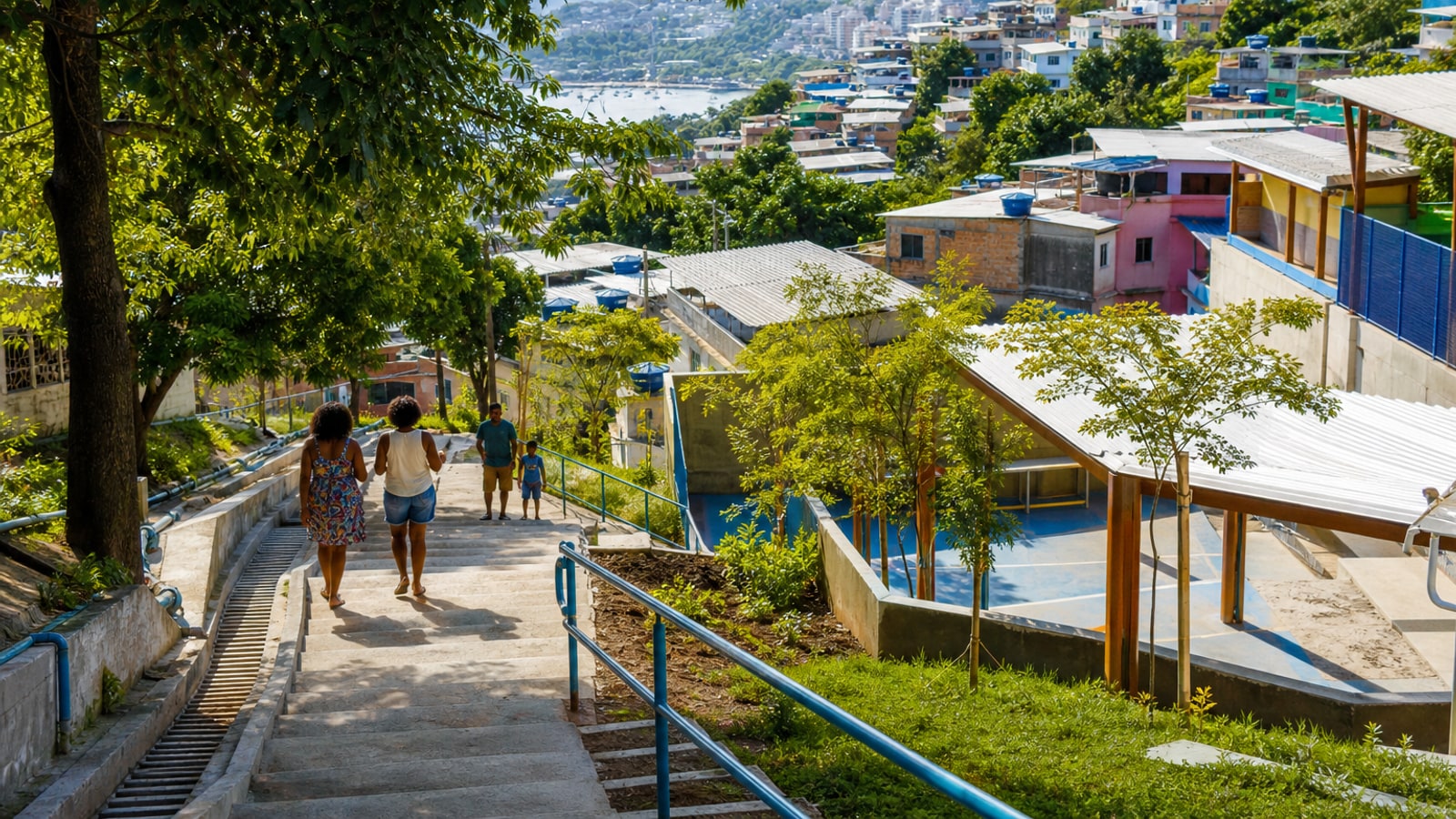
A Nature Cities study examined 31 neighborhood-upgrading interventions completed from 2006 through 2019 and daily mortality records across 806 health facilities. Heatwaves were associated with 5.1% to 8.2% higher mortality, while proximity to upgraded areas was associated with 3.9% to 5.5% lower excess mortality during heatwaves.
Why it matters
Drainage, public space, sanitation, access, and urban greening can influence how safely residents endure extreme heat. The study is a quasi-experimental observational analysis in one city, so it supports an association rather than proving that every upgrade caused the measured reduction.
What to watch
- Replication in other cities and clearer evidence about which upgrade components deliver the largest benefit.
- Long-term maintenance, equitable access, and resident participation in adaptation projects.
- The peer-reviewed version of record, because the posted article is an early unedited manuscript.
Sources & evidence
- Infrastructure upgrading reduces heatwave mortality in informal settlementsNature Cities research article published August 10, 2026, analyzing heatwave mortality and neighborhood-upgrading interventions in Rio de Janeiro.
Continue learning with ACC
Explore ACC's climate resilience guide