ACC News Brief
Wildfires Arctic-Boreal Region
Permafrost thaw can intensify Arctic-boreal fire conditions, study finds
What happened
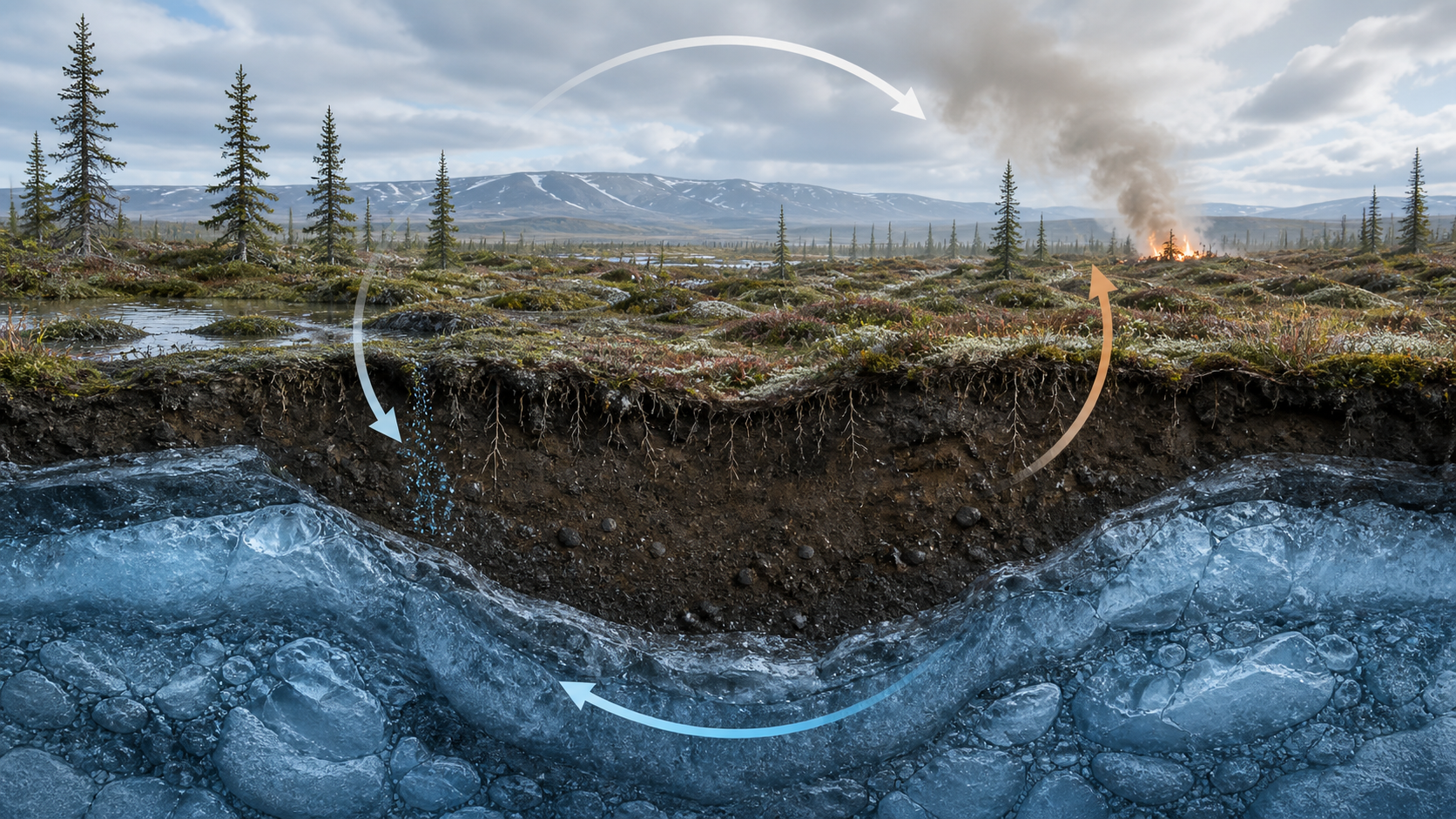
Researchers combined observations of the seasonally thawed soil layer from 1997 through 2018 with causal-inference and space-for-time models to estimate how permafrost thaw affects northern fires. The analysis links a deeper active layer with lower surface reflectivity and soil moisture, stronger summer warming and atmospheric dryness, more vegetation growth, drier soil organic matter, and increases in modeled fire weather, burned area, and fire emissions. This is an observation-informed modeling study, not a controlled experiment or a forecast for any one fire season.
Why it matters
Permafrost and wildfire can reinforce one another: thaw can make landscapes more fire-prone, while burning can release carbon and further disturb frozen soils. That feedback raises risks for northern ecosystems and communities, but the estimated chain depends on statistical models and heterogeneous datasets and does not replace local monitoring or fire-management evidence.
What to watch
- Longer field records that track active-layer depth, soil moisture, vegetation, fuel condition, ignition, burned area, and carbon emissions at the same sites.
- Independent tests of the causal-inference and burned-area models across different Arctic and boreal landscapes.
- Community-led fire preparedness, Indigenous fire knowledge, fuel management, and rapid greenhouse-gas reductions alongside better permafrost monitoring.
Sources & evidence
- Amplified Arctic-boreal fire regimes from permafrost thaw feedbacksPeer-reviewed Article in Nature Geoscience, published January 9, 2026. It integrates 1997-2018 active-layer observations with causal-inference, space-for-time, fire-weather, burned-area, and emissions models; the result is observation-informed statistical evidence rather than a controlled experiment or site-specific forecast.
- Data and code for the permafrost-fire feedback studyZenodo record cited by the paper for figure data and analysis code, with the study also documenting public inputs including CALM, ESA permafrost, ERA5-Land, TerraClimate, and Global Fire Emissions Database products.
Continue learning with ACC
Explore ACC's ecosystems and biodiversity guide