ACC News Brief
Clean Transport Africa
Model points to financing—not charging—as Africa's biggest EV cost barrier
What happened
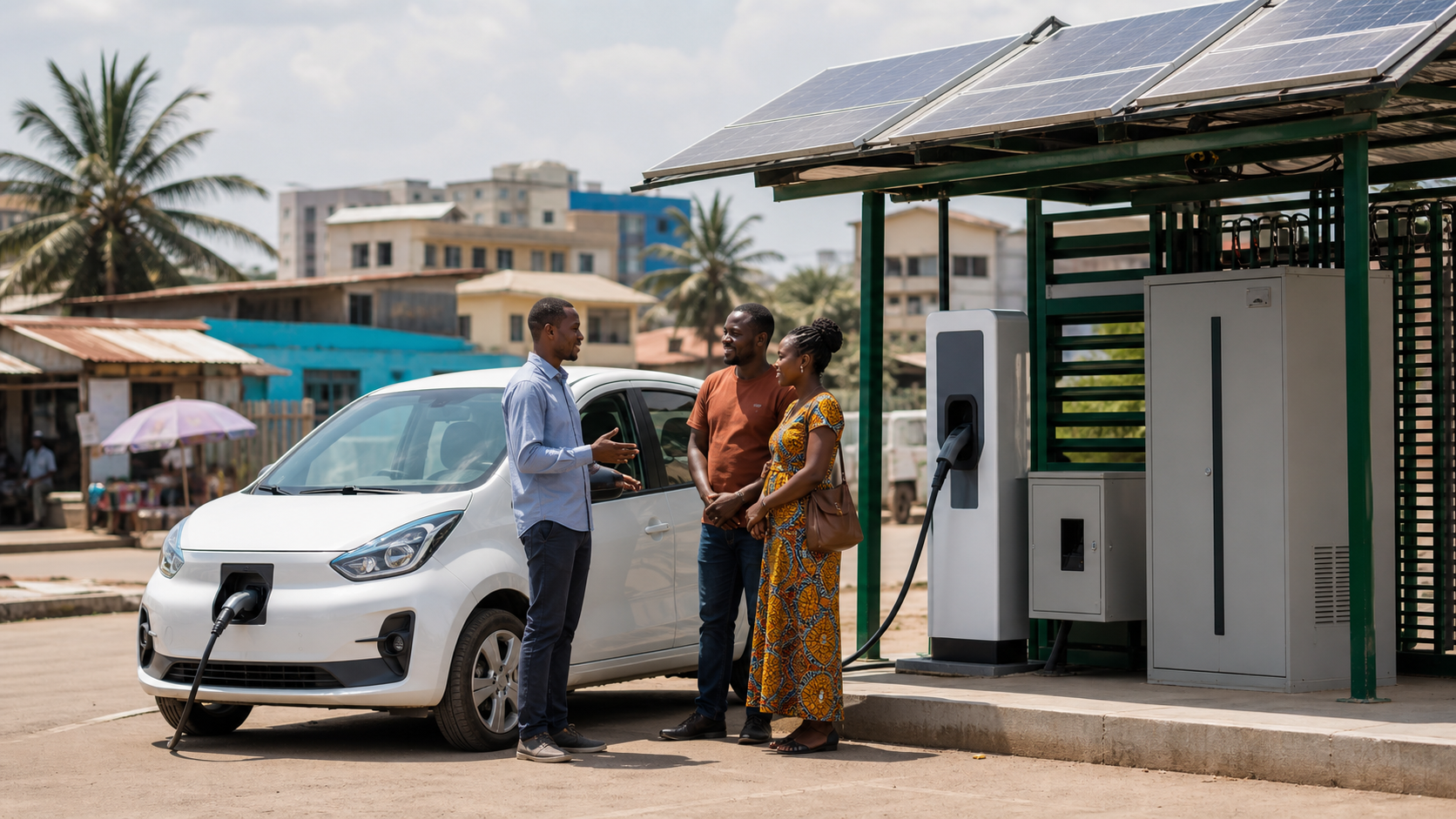
A peer-reviewed study modeled total ownership cost and lifecycle emissions for six passenger-vehicle segments in 52 African countries through 2040. Under assumptions that exclude taxes, duties, subsidies, and used vehicles, battery-electric vehicles paired with off-grid solar charging become cost-competitive across all modeled passenger segments by 2040, with many country-and-segment cases reaching parity earlier; for a small four-wheeler in 2030, charging contributed less than 4% of modeled ownership cost while financing was the largest barrier.
Why it matters
The result challenges forecasts that assume Africa must remain dependent on combustion vehicles because electricity grids are constrained. It also shows why lower technology costs alone may not deliver equitable adoption when borrowing costs, vehicle availability, maintenance capacity, and second-hand markets differ sharply among countries.
What to watch
- Country-level evidence on real purchase prices, import duties, financing, insurance, maintenance, and resale values.
- Performance of solar charging, battery swapping, grid charging, and shared-mobility models in actual African deployments.
- Policies and finance structures that expand access without concentrating benefits among higher-income vehicle buyers.
Sources & evidence
- Battery-electric passenger vehicles will be cost-effective across Africa well before 2040Peer-reviewed open-access Article in Nature Energy, published January 13, 2026. It uses Monte Carlo, optimization, and prospective lifecycle models across 52 countries and six vehicle segments; results are modeled and exclude policy-induced cost distortions and used vehicles.
- Supplementary code for the Africa electric-vehicle studyThe open Zenodo code record cited by the paper for reproducing its modeling workflow.
Continue learning with ACC
Explore ACC's buildings and transportation guide