ACC News Brief
Clean Transport Beijing, China
E-bikes helped Beijing travelers stay mobile as heat rose
What happened
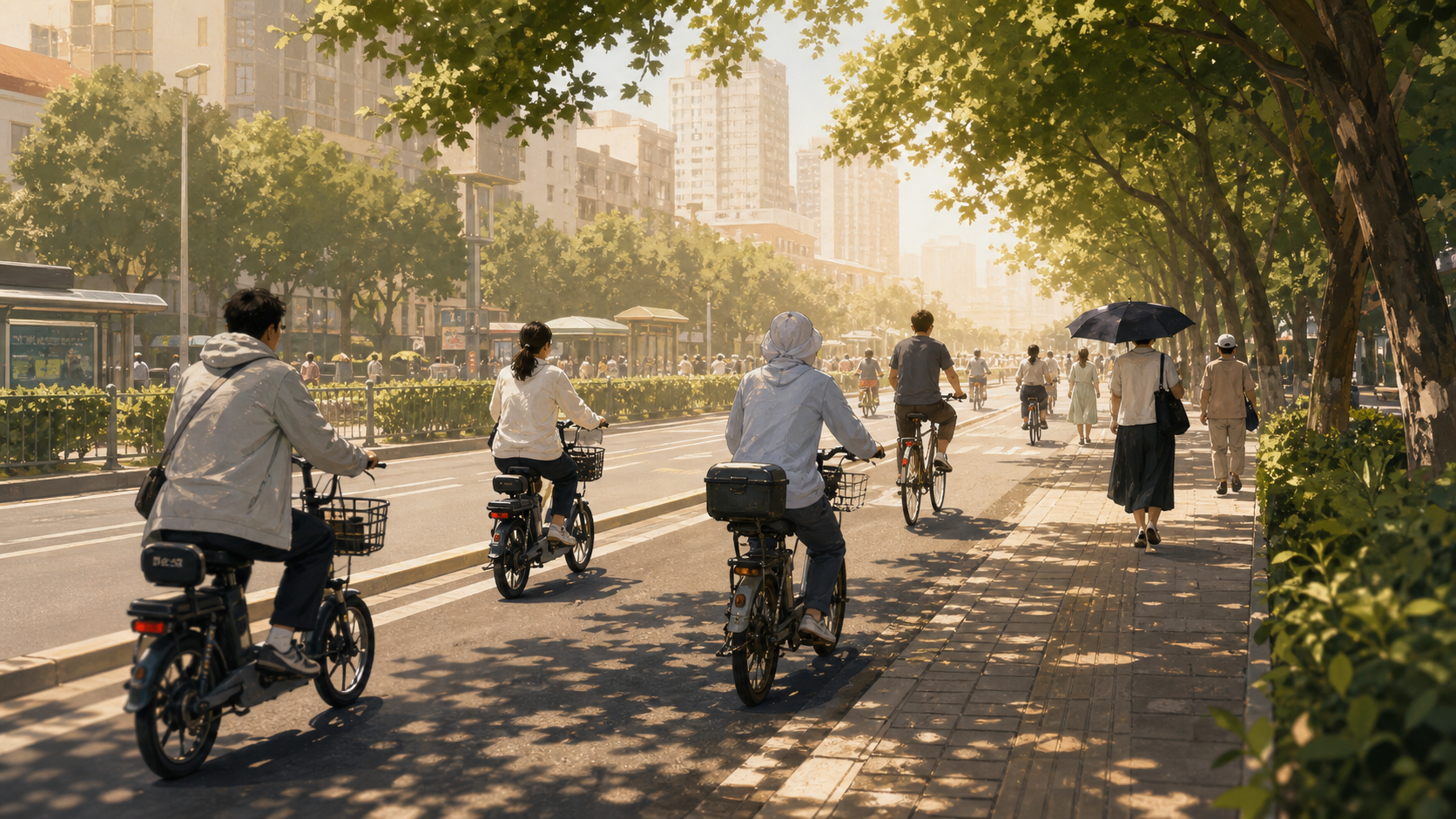
Researchers observed 4,068 e-bike riders, conventional cyclists, and pedestrians in one Beijing district over ten days in 2023. As temperatures rose above 30 degrees Celsius, heat-adaptation behaviors became more common; walking and conventional cycling volumes declined, while the study did not detect a significant heat-related reduction in e-bike ridership.
Why it matters
Electrically assisted cycling may help people maintain lower-emissions urban mobility during hotter weather, but this observational study does not establish that e-bikes will produce the same response in every city. Safe routes, shade, cost, access, and the needs of older travelers remain important.
What to watch
- Replication across cities with different climates, street networks, incomes, and levels of cycling infrastructure.
- Whether e-bike access, shade, safer routes, and heat protections improve mobility for older adults and other heat-vulnerable travelers.
Sources & evidence
- E-bikes enhance climate resilient urban mobility through heat adaptation as revealed by mediation analysisPeer-reviewed Article in Communications Earth & Environment 7, published February 9, 2026. The observational field study classified behavior among 2,805 e-bike riders, 375 conventional cyclists, and 888 pedestrians during ten observation days from May through August 2023 in a 2-by-2-kilometer Beijing study area, then applied mediation analysis. The result is OBSERVED / DEMONSTRATED evidence, not a randomized intervention or proof of citywide causation; the limited place, observation days, and 22-to-34-degree-Celsius temperature range constrain generalization.
Continue learning with ACC
Explore ACC's climate solutions pathways