
ACC News Brief
Climate & Health Africa
Extreme-weather disruption may drive most of Africa's added malaria risk
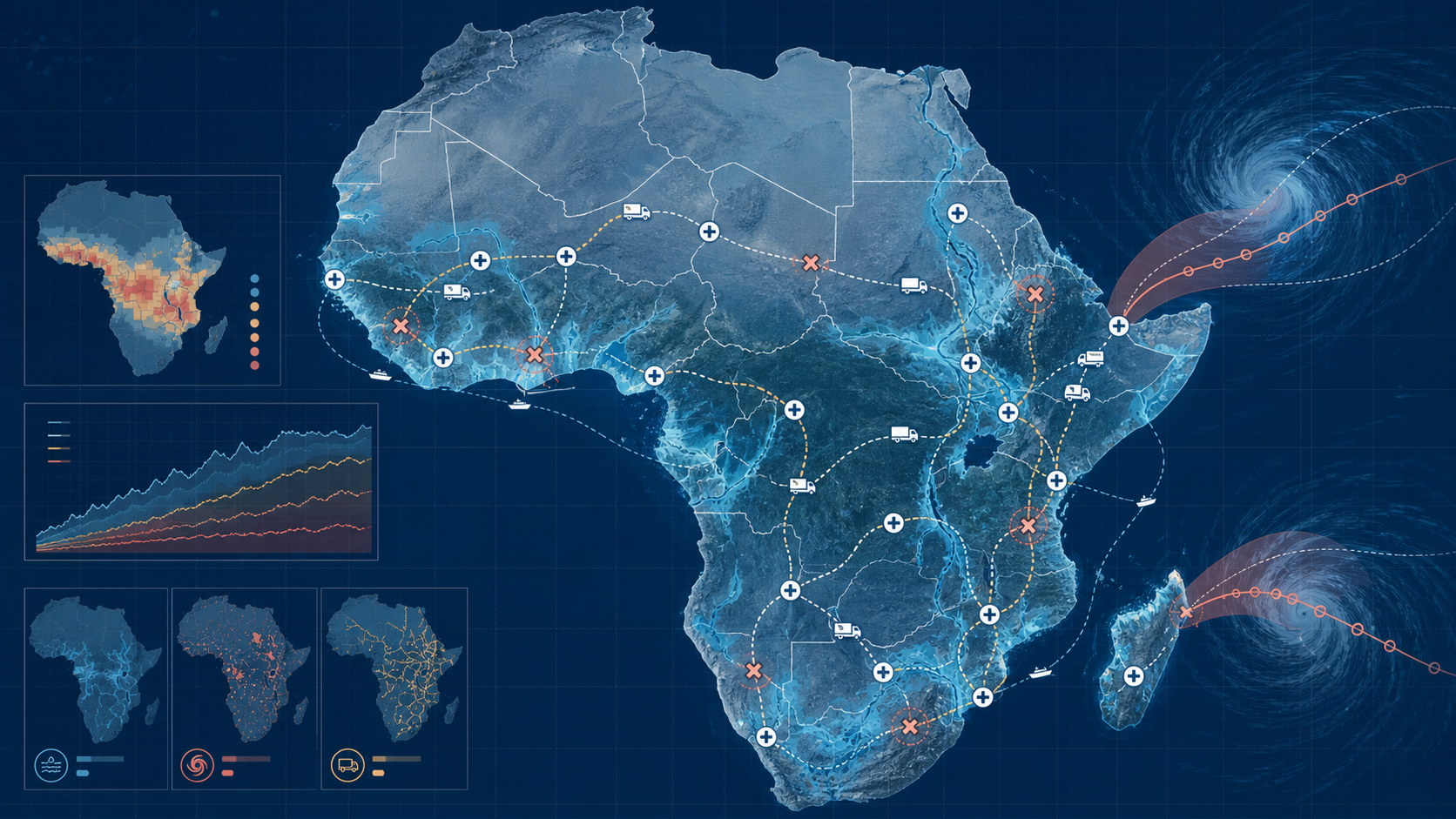
What happened
A climate-and-malaria model fitted to 49,994 geolocated prevalence observations estimated 123 million additional cases and 532,000 additional deaths in Africa from 2024 through 2050 under SSP2-4.5 if current control levels persist, with wide uncertainty ranges. The model attributed 79% of the additional cases and 93% of the additional deaths to flood- and cyclone-related disruption of treatment and prevention rather than simple expansion into new areas.
Why it matters
The study points to health-system resilience as a central climate response. Protecting clinics, medicine supplies, housing, and mosquito-control programs during disasters could reduce risk even as governments continue the broader work of cutting emissions.
What to watch
- Observed malaria outcomes after floods and cyclones and whether they support the modeled disruption pathways.
- Investment in resilient clinics, medicine stockpiles, housing, drainage, and vector-control continuity.
- Updated projections that reflect changing control programs, development pathways, and a wider range of extreme events.
Sources & evidence
- Projected impacts of climate change on malaria in AfricaPeer-reviewed open-access Article in Nature, published January 28, 2026. The reported case and death totals are model estimates under SSP2-4.5 with current malaria controls held constant, not observed outcomes or certain forecasts; the study reports broad uncertainty ranges and models floods and cyclones as the disruptive extremes.
Continue learning with ACC
Explore ACC's climate resilience guide