
ACC News Brief
Climate & Health Global
Human-caused warming is widening the global heat-stress divide
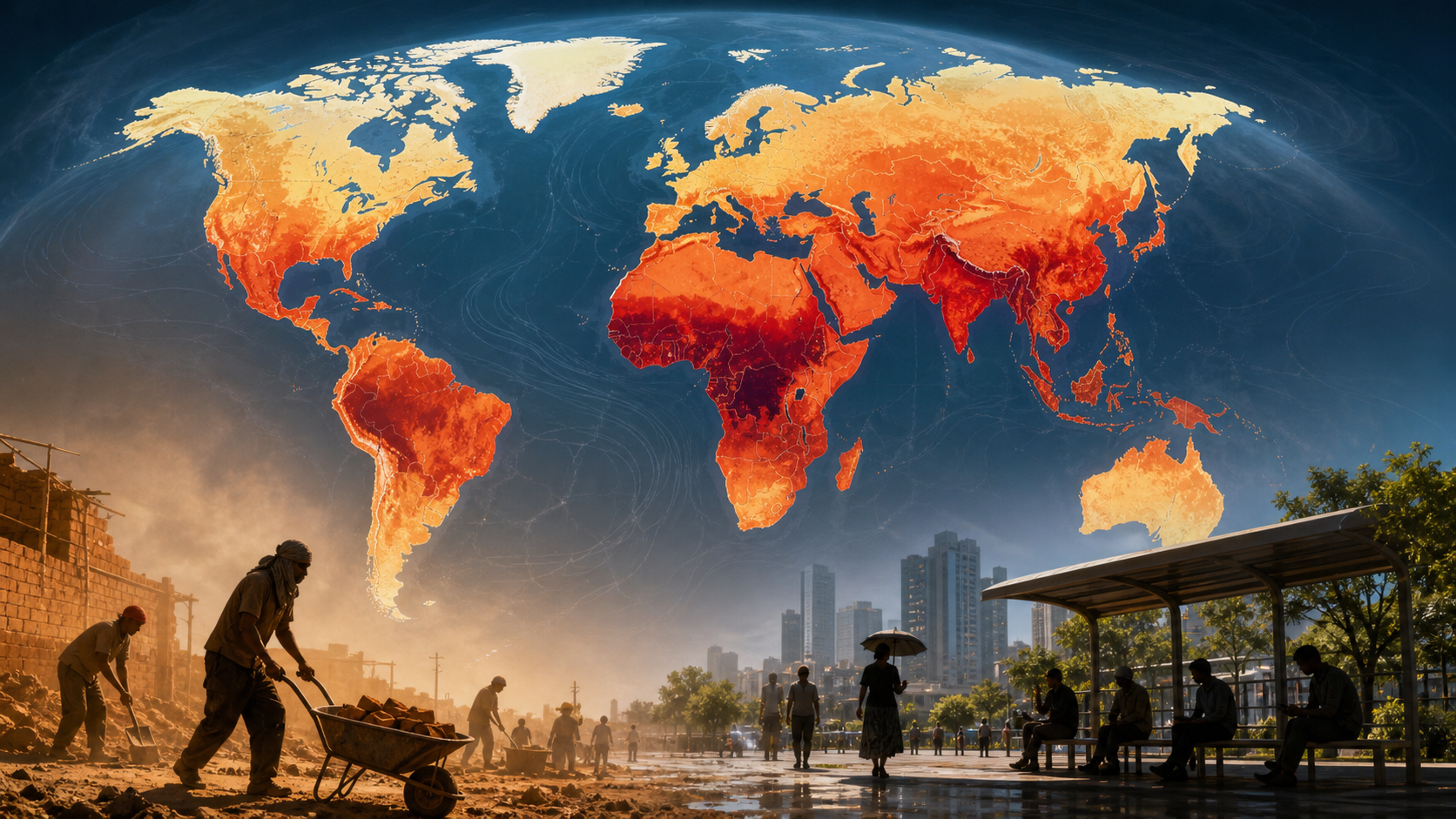
What happened
An analysis of daily maximum heat stress from 1981 through 2020 found significant increases in mean intensity across 52% of global land and increases in extreme heat-stress days across 67%. Its counterfactual modeling attributed the dominant influence across nearly twice as much land to human-caused climate change as to natural variability, while lower-income economies experienced faster increases.
Why it matters
Heat stress reflects humidity, radiation, and wind as well as temperature, making it directly relevant to worker safety and public health. The unequal trend strengthens the case for targeted heat protections and adaptation finance, although global grids cannot capture every neighborhood's exposure or vulnerability.
What to watch
- City-scale and station-based studies that can resolve shade, buildings, urban heat islands, and neighborhood inequality.
- Stronger heat protections for outdoor workers and wider access to cooling, health services, and early warnings.
- Whether adaptation funding increasingly reaches lower-income economies facing the fastest growth in heat stress.
Sources & evidence
- Anthropogenic climate change drives rising global heat stress and its spatial inequalityPeer-reviewed Nature Communications research article published February 3, 2026. DOI: 10.1038/s41467-026-69164-y. The study analyzes ERA5-HEAT data for 1981 through 2020 and uses counterfactual modeling for attribution.
Continue learning with ACC
Explore ACC's climate resilience guide