ACC News Brief
Solar Laboratory research in China
Solar windows move closer to scale with thicker, printable organic modules
What happened
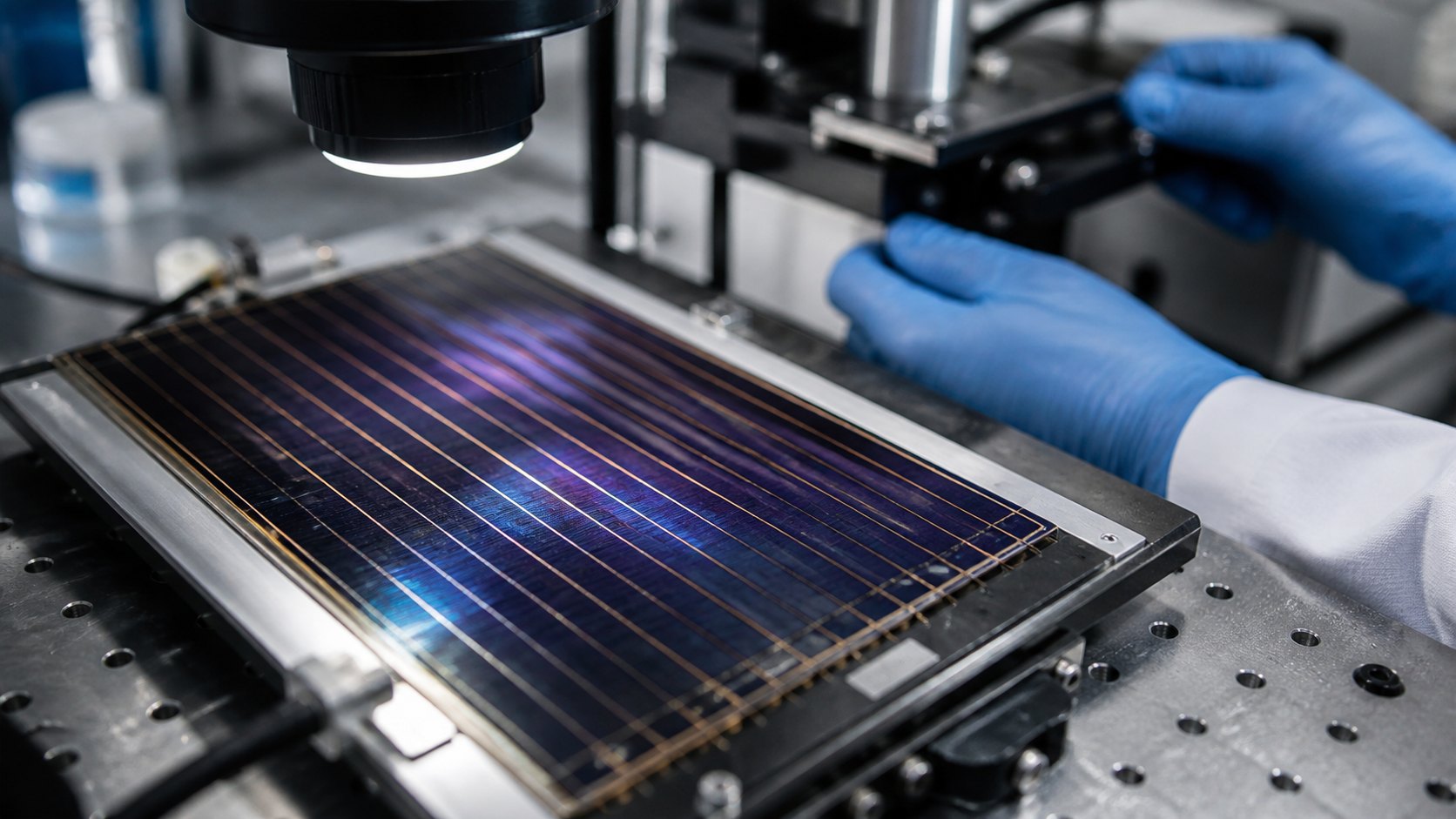
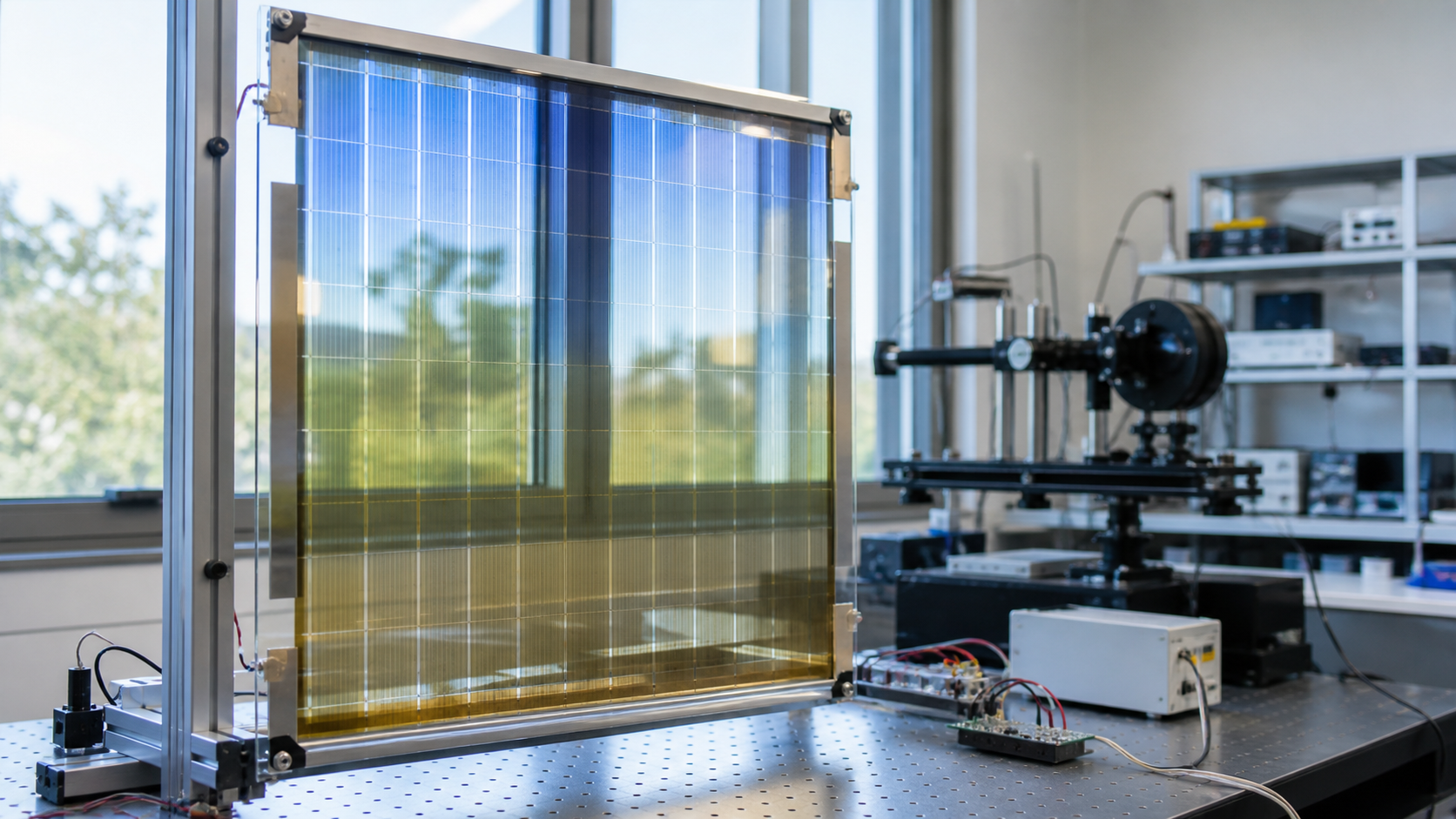
Researchers developed semitransparent organic solar devices whose performance remained comparatively tolerant of thicker active layers, a useful property for scalable coating. A 100-square-centimetre module reached a light-utilization efficiency of 3.32 percent, while a separate 600-square-centimetre window-scale demonstration powered an LCD and charged an 18650 battery.
Why it matters
Semitransparent photovoltaics could let windows generate electricity, but coating uniformity, transparency, durability, and scale-up losses have constrained the technology. The larger demonstration was not an installed building product, and the study does not establish outdoor lifetime, architectural certification, factory yield, or competitive electricity cost.
What to watch
- Certified full-window modules, outdoor weathering, encapsulation, visible-light quality, fire and building-code testing, and long-term output.
- Manufacturing yield, material use, non-halogenated processing at production scale, and electricity cost relative to conventional building materials plus rooftop solar.
Sources & evidence
- Scalable semitransparent organic solar cells with robust film thickness tolerance for building-integrated photovoltaicsPeer-reviewed Article in Nature Communications 17, published February 18, 2026. The experiments included a 100-square-centimetre module and a separate 600-square-centimetre scale demonstration processed in ambient air with a non-halogenated solvent. This is DEMONSTRATED / PILOT laboratory evidence, not an operating building installation; reported stability and scale do not establish commercial lifetime or cost.
Continue learning with ACC
Explore ACC's renewable energy and grid guide