ACC News Brief
Solar Laboratory research in China
Perovskite solar modules set a certified efficiency mark by fixing laser-scribe damage
What happened
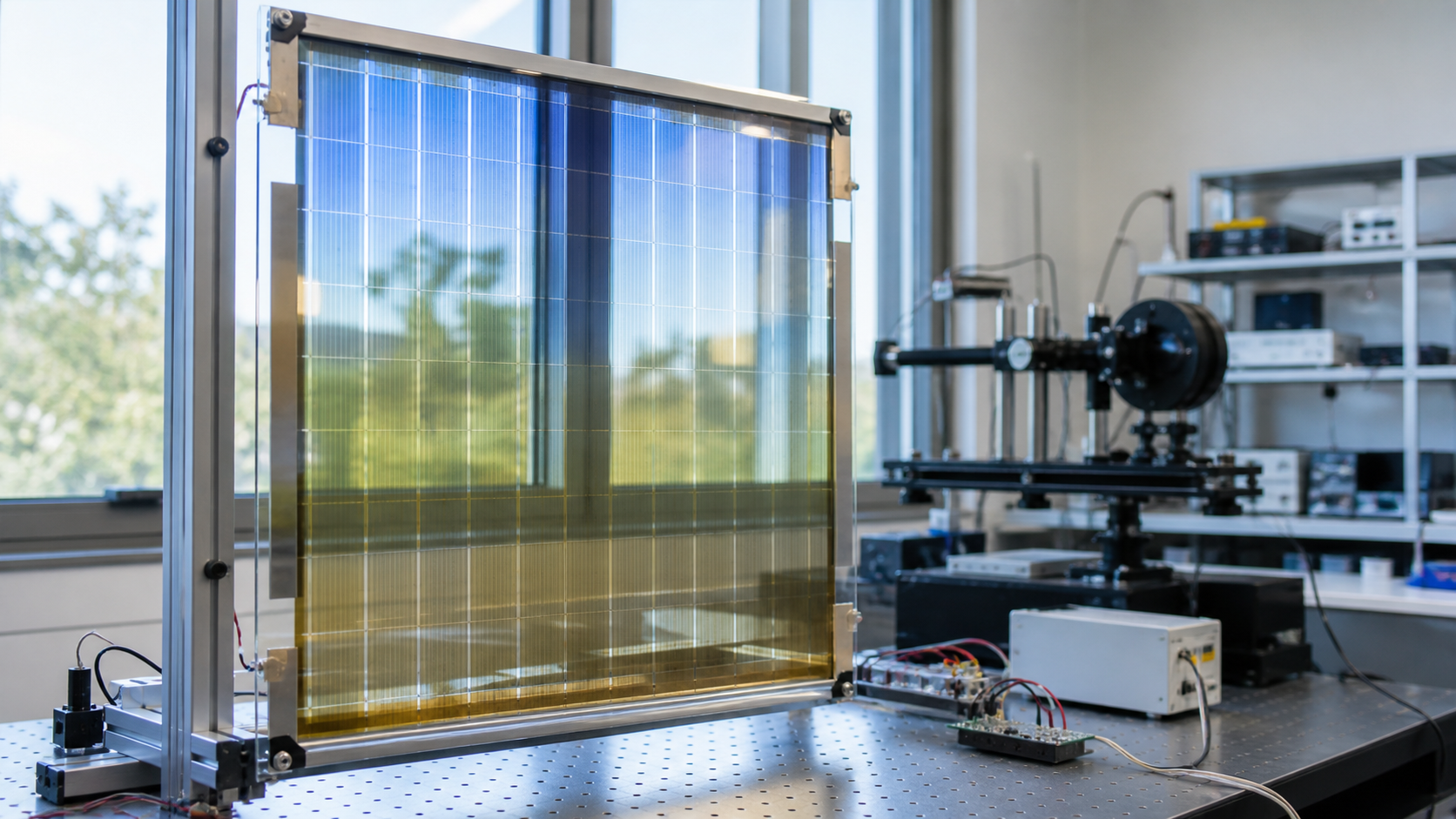
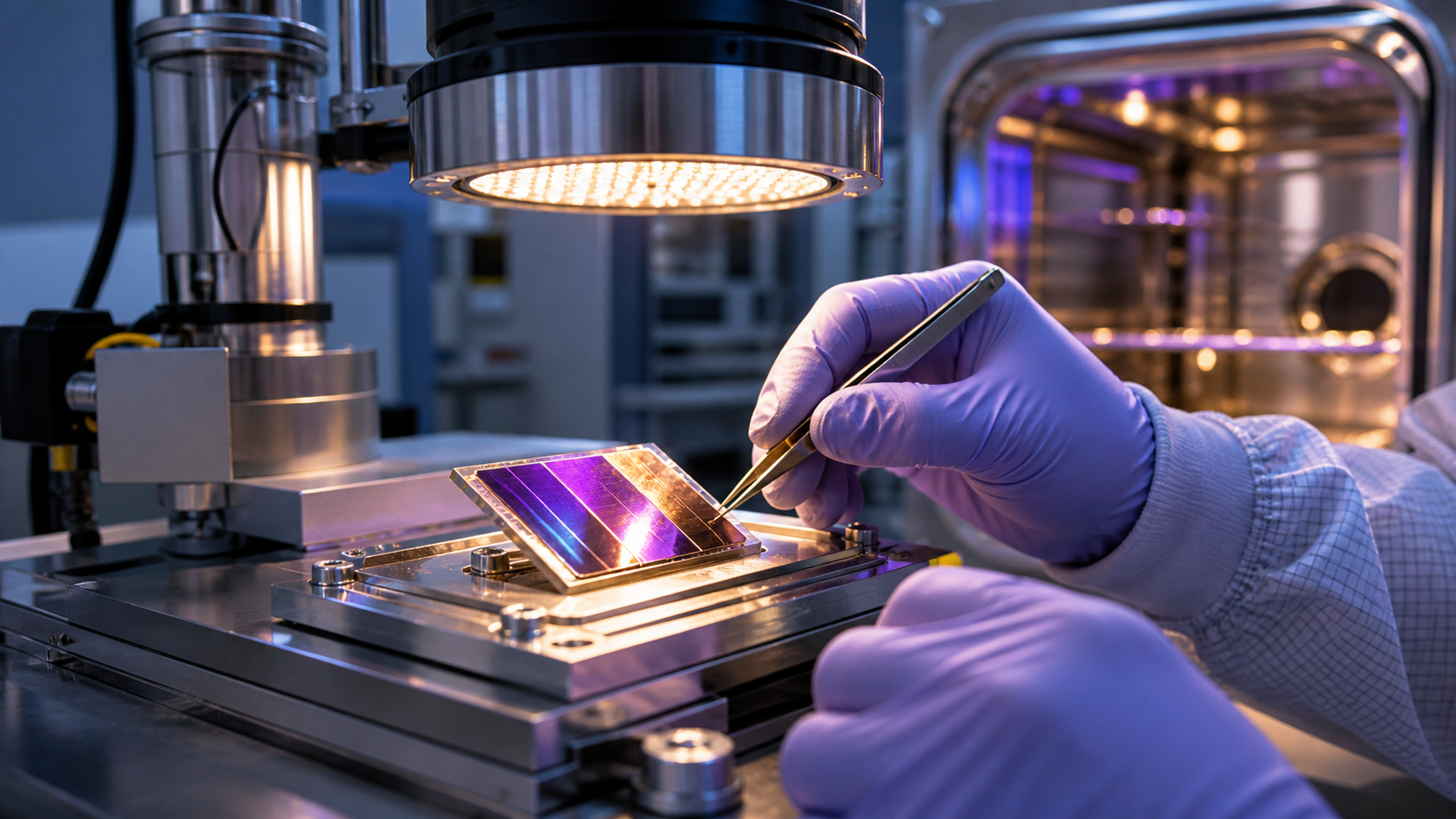
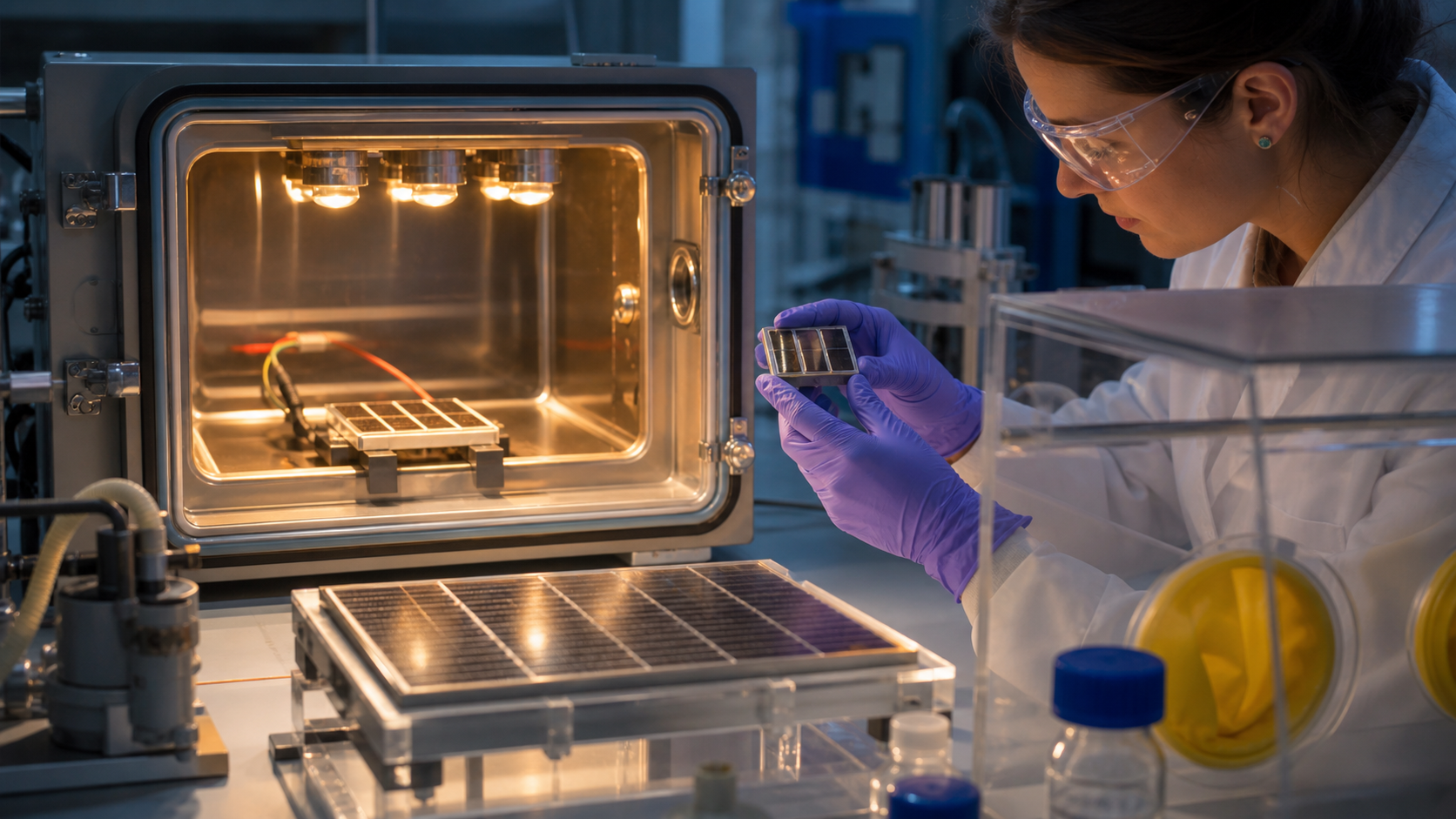
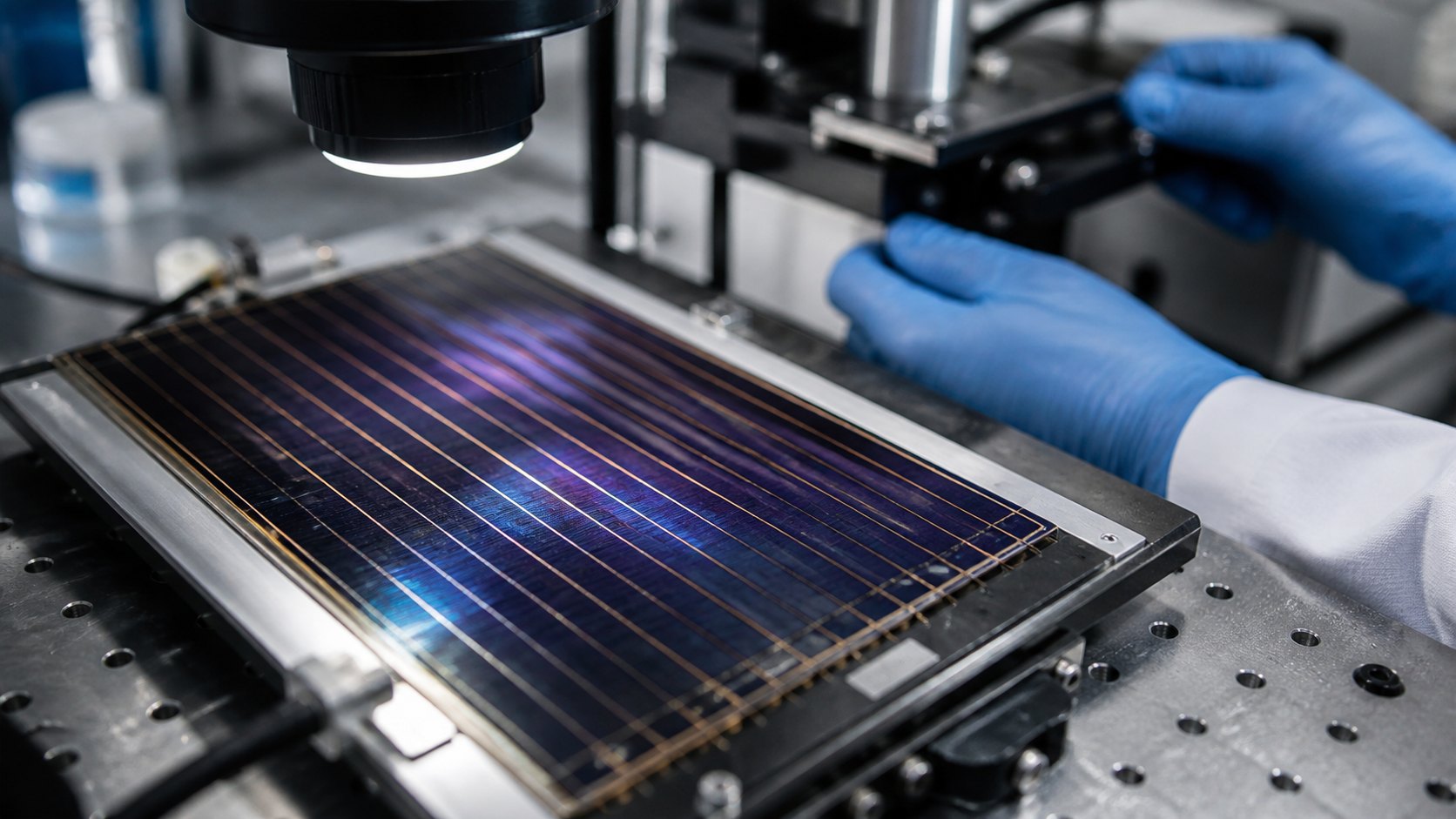
Researchers adjusted crystallization around the laser-scribed lines that electrically connect perovskite solar modules, where heat and structural defects can reduce performance during scale-up. They reported efficiencies of 24.70 percent for a 25-square-centimetre module and 23.89 percent for a 100-square-centimetre module, including a certified 23.55 percent result for the larger device.
Why it matters
The work addresses a specific scale-up loss rather than only improving a tiny research cell. It remains a laboratory module, however: the reported low-humidity storage test does not establish commercial-panel manufacturing yield, outdoor lifetime, damp-heat tolerance, lead containment, or cost.
What to watch
- Independent certification of full-size modules plus encapsulated outdoor, damp-heat, thermal-cycling, and mechanical-load testing.
- Factory yield, material and process costs, lead containment, recycling, and whether the laser-scribe treatment works on commercial production lines.
Sources & evidence
- Regulating perovskite crystallization kinetics at laser scribe lines for efficient and stable perovskite modulesPeer-reviewed Article in Nature Communications 17, published February 20, 2026. The team fabricated 25- and 100-square-centimetre laboratory modules and reported a certified 23.55 percent efficiency for the larger device. This is DEMONSTRATED / PILOT evidence, not commercial deployment; the unencapsulated stability result was 93 percent retention after 3,120 hours of storage at about 15 percent relative humidity rather than years of outdoor operation.
Continue learning with ACC
Explore ACC's climate solutions pathways