ACC News Brief
Clean Industry Laboratory research in China
Printable solar catalyst tackles a scale-up barrier for carbon dioxide conversion
What happened
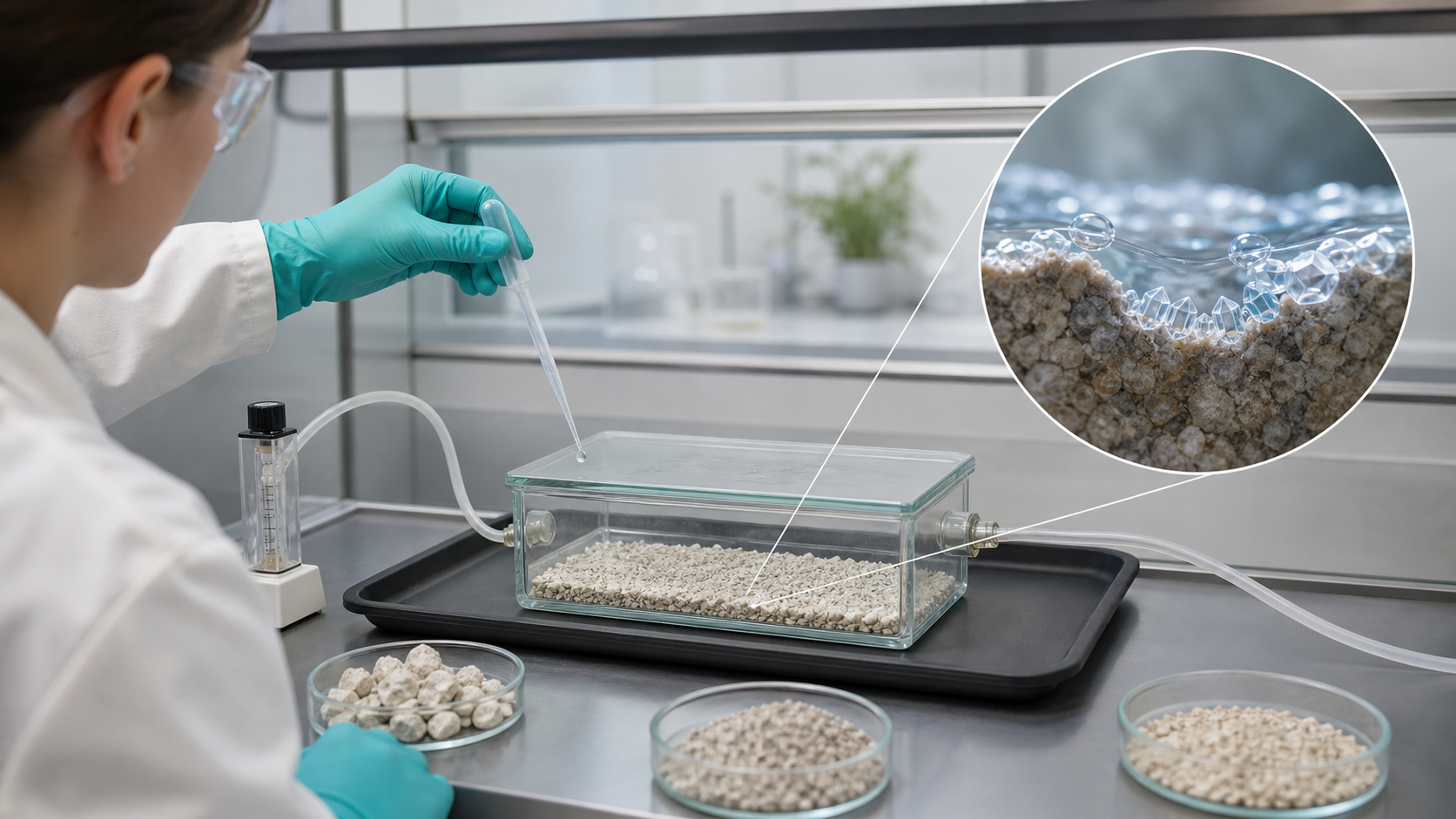
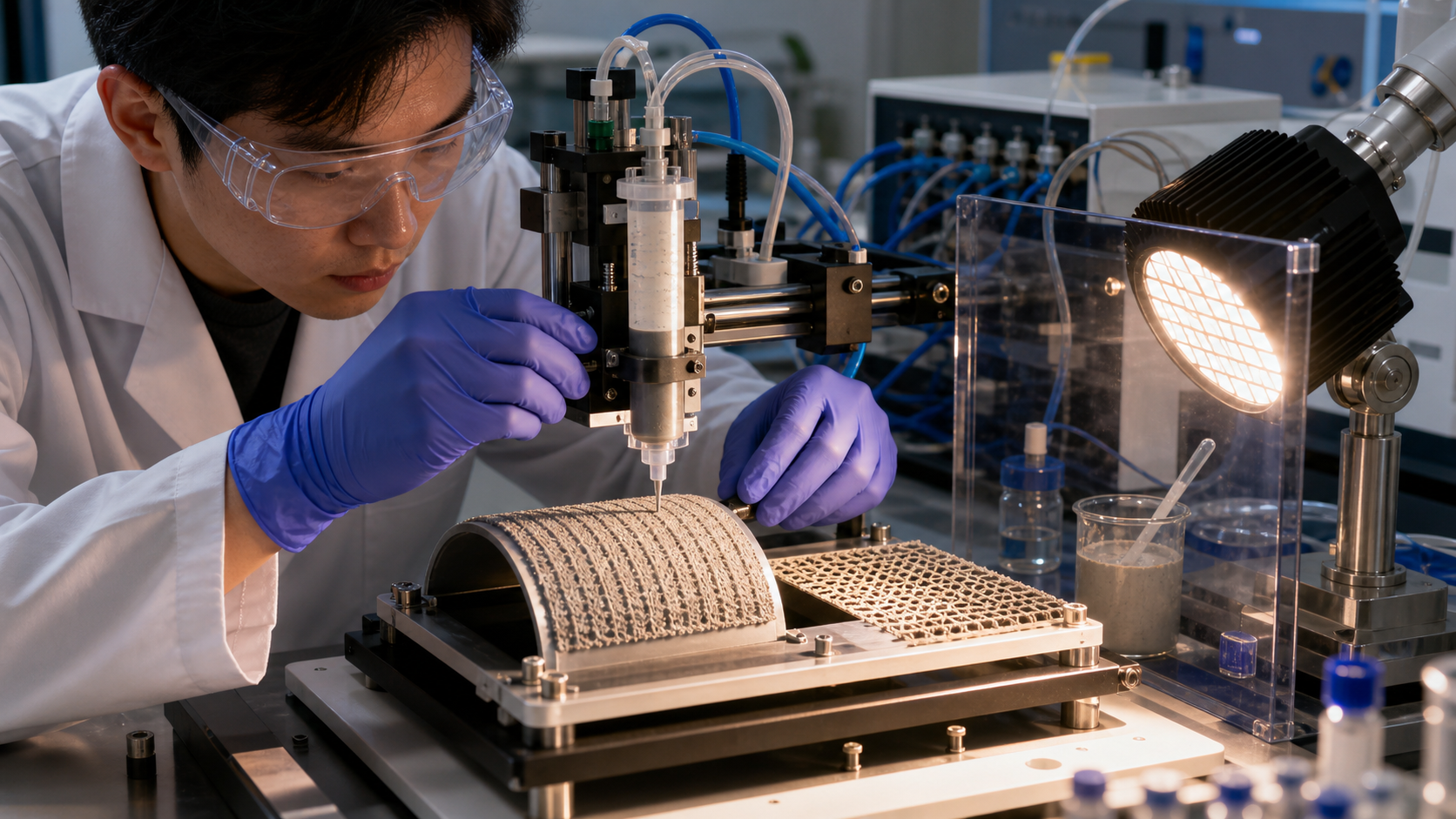
A peer-reviewed laboratory study formulated a fluid photocatalyst that could be printed onto curved, inclined, and grid supports for light-driven carbon dioxide conversion. In the tested system, the porous coating improved gas transfer and the authors reported a 57.8-fold increase in carbon-monoxide evolution efficiency with 100 percent product selectivity.
Why it matters
Printable coatings could make it easier to construct larger illuminated reaction surfaces, but this remains a laboratory proof of concept. It is not an industrial pilot, an operating carbon-removal project, or evidence of net-negative emissions.
What to watch
- Absolute solar-conversion efficiency, continuous operation, outdoor durability, catalyst lifetime, and cost at larger scale.
- Lifecycle carbon accounting and whether useful products can displace higher-emitting alternatives without creating new fossil demand.
Sources & evidence
- Printable Newtonian fluid photocatalysts for scale-up solar CO2 conversionPeer-reviewed Article, Nature Communications 17 (2026), from Jiangsu University, the Fujian Institute of Research on the Structure of Matter at CAS, and partner universities. Published March 20, 2026. Laboratory proof of concept; not an operating industrial deployment or carbon-removal project.
Continue learning with ACC
Explore ACC's climate solutions pathways