ACC News Brief
Climate Science Global
Most land lacks precipitation monitoring that meets WMO guidance
What happened
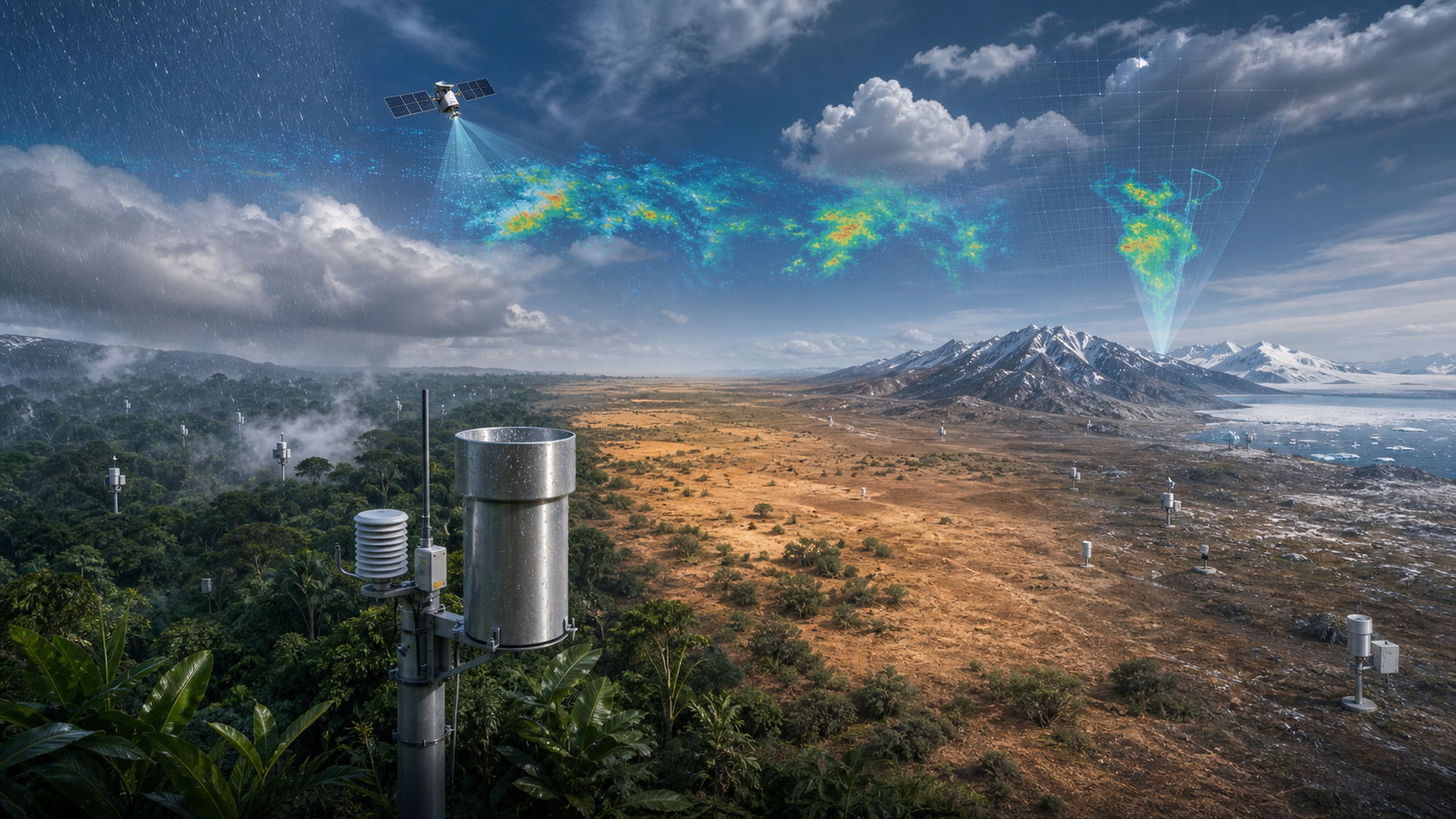
A peer-reviewed assessment of 221,483 internationally exchanged precipitation gauges with records spanning 1900–2022 found that only 13.4 percent of global land currently meets World Meteorological Organization requirements for annual precipitation monitoring. The authors identified 25 percent of land as already needing urgent network expansion because of climate variability, rising to 32.1 percent when projected change and socioeconomic vulnerability were included under a high-emissions scenario.
Why it matters
Better rain and snow observations improve flood, drought, water-supply, agriculture, and climate-impact decisions. Satellites and models help, but long, well-maintained ground records remain essential for calibration and local planning.
What to watch
- Whether new gauges and data-sharing agreements prioritize Central Africa, southern Asia, northern South America, and other high-need regions.
- How agencies maintain long records, quality control, open exchange, and links between ground gauges, radar, and satellites.
Sources & evidence
- Precipitation observing network gaps limit climate change impact assessmentPeer-reviewed Article, Nature 652, 119–125 (2026). Published March 25, 2026. Global gauge-network assessment using internationally exchanged records through 2022.
Continue learning with ACC
Explore ACC's climate science guide