
ACC News Brief
Environmental Health Laboratory Research
Softwood filters removed about 90 percent of nanoplastics in lab water tests
What happened
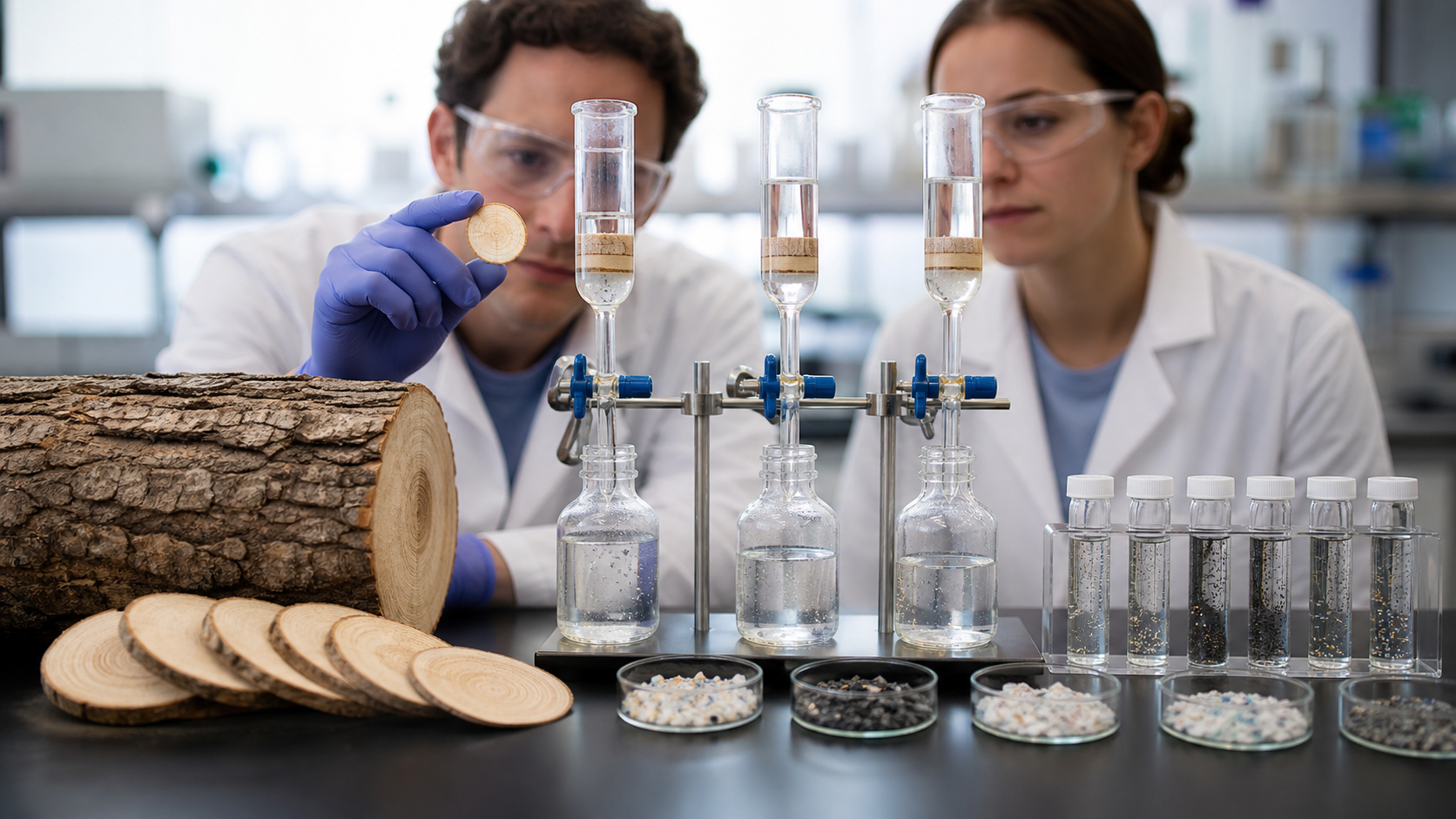
In peer-reviewed proof-of-concept experiments using artificial freshwater, unmodified spruce cross-sections used as low-pressure membranes reduced nanoplastic concentrations by about 90 percent after one filtration cycle. Poplar removed about 20 percent, and thicker membranes or repeated filtration improved retention across the tested conditions.
Why it matters
The study points to a potentially simple, bio-based filtration material, but it is an early laboratory result—not a finished drinking-water product or evidence of performance in complex real-world water systems.
What to watch
- Independent replication using environmental water, realistic particle mixtures, and longer operating periods.
- Flow rate, membrane lifetime, safe disposal, sourcing, and manufacturing performance at larger scale.
Sources & evidence
- Water filtration using softwood membranes provides a nature-based solution for nanoplastic removalPeer-reviewed Article, Communications Earth & Environment 7, 475 (2026). Published April 4, 2026. Bench-scale proof of concept using artificial freshwater.
Continue learning with ACC
Explore ACC's climate resilience guide