ACC News Brief
Food & Agriculture Florida, United States
Compact crop beds cut inputs while maintaining pepper yields
What happened
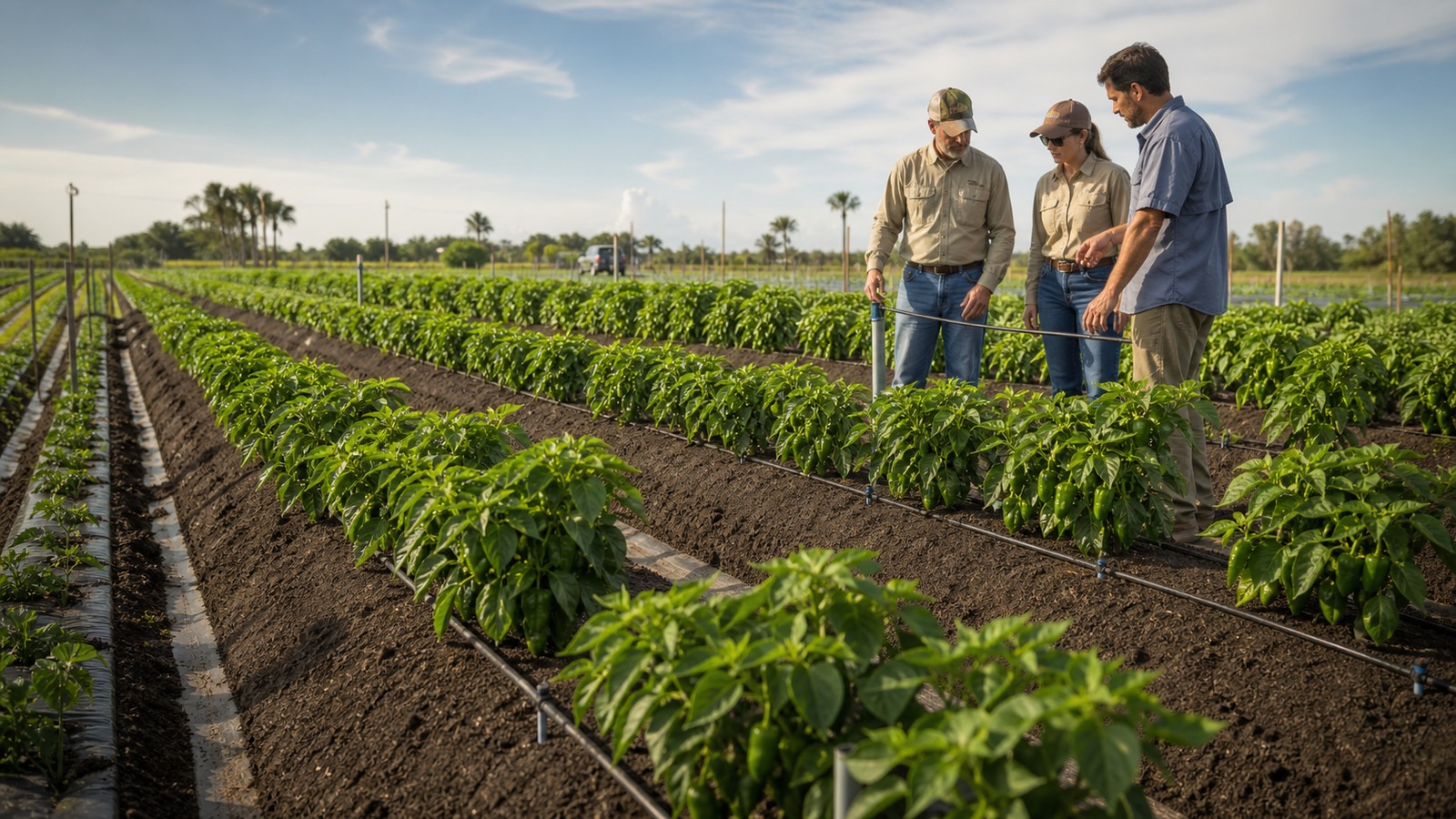
Peer-reviewed field experiments with fresh-market peppers tested taller, narrower planting beds designed to use land and inputs more efficiently. Compared with conventional beds, the compact system maintained or increased yields while cutting plastic mulch, drip tape, pesticides, and irrigation volume by 44% to 50%. The authors also estimated lower carbon emissions, nitrogen loading, subsurface water loss, plastic waste, and production costs; disease incidence fell in one season, so that benefit still needs broader confirmation.
Why it matters
Farm adaptation can be practical and incremental. Changing bed geometry and irrigation design may help growers use less water, plastic, pesticide, and land while protecting yields and reducing costs—an example of climate action that can align environmental and farm-business goals.
What to watch
- Multi-year and multi-crop trials across different soils, climates, storms, diseases, and farm scales.
- Independent life-cycle and economic assessments, including plastic disposal, labor, equipment changes, and farmer adoption.
Sources & evidence
- Sustainably intensified fresh-market vegetable production with compact bed plasticultureOpen-access, peer-reviewed Communications Earth & Environment article, DOI 10.1038/s43247-026-03394-2, published April 10, 2026. Results come from fresh-market pepper field experiments and should not be generalized to every crop or region without further trials.
Continue learning with ACC
Explore ACC's sustainable agriculture and permaculture guide