ACC News Brief
Food & Agriculture Global
Irrigation can protect crops, but water limits decide where it works
What happened
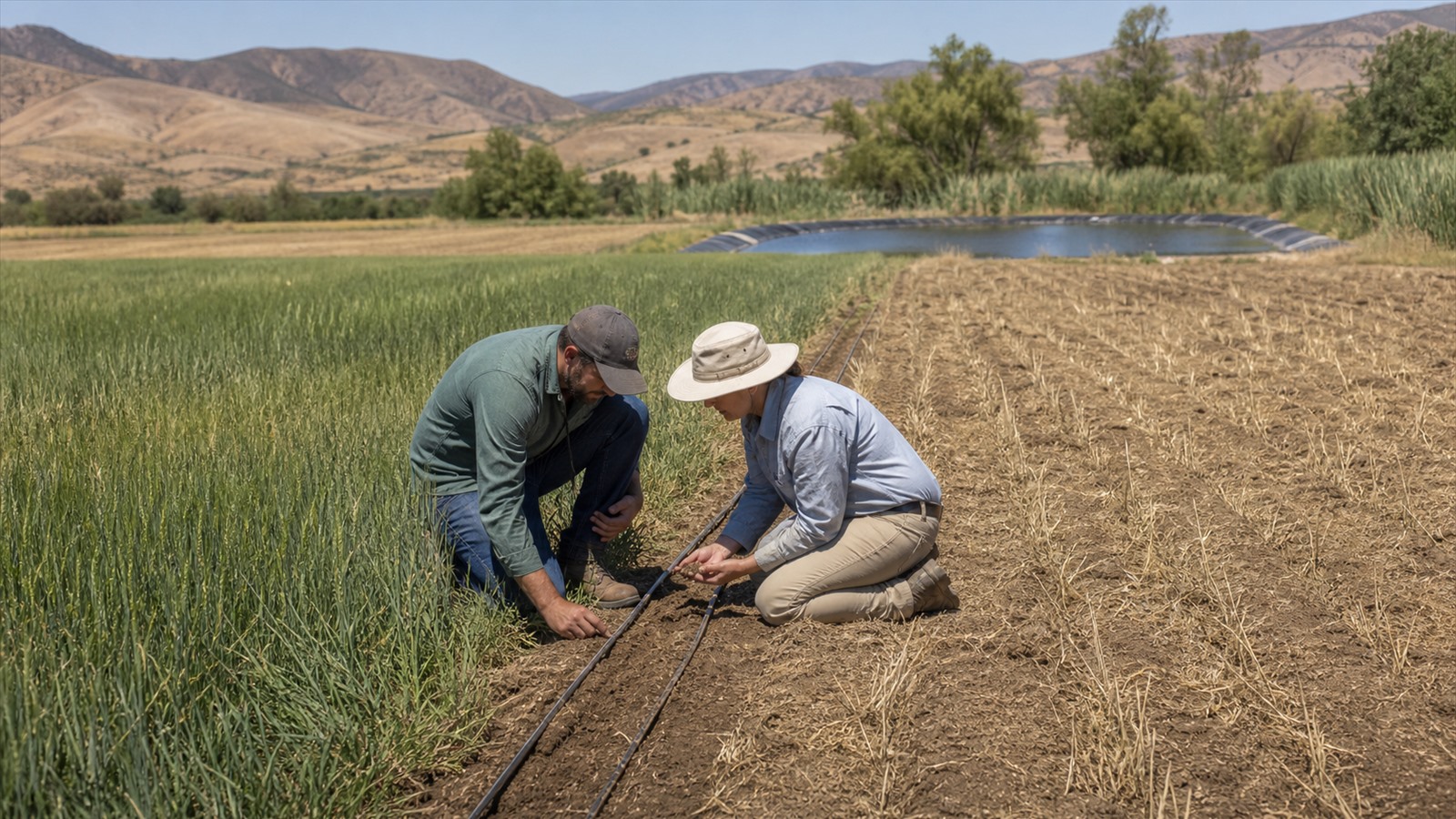
A Nature Food study combined global crop and irrigation datasets with climate models to estimate the additional irrigation needed to sustain wheat, maize, rice, and barley production under warming. The modeled expansion rises from 13%, or 25 million hectares, at 1.5 degrees Celsius warming to 47%, or 94 million hectares, at 3 degrees, while only about 60% of the affected cropland could add irrigation without creating water scarcity or depleting local freshwater. These are modeled adaptation requirements for four major crops, not a forecast of actual irrigation construction or a complete adaptation plan.
Why it matters
Irrigation can buffer heat stress where water is genuinely available, but warming quickly expands the area needing help. Limiting warming and combining efficient irrigation with soil-water conservation, suitable crop choices, and better water governance can protect more food production without shifting risk to rivers and aquifers.
What to watch
- Local water budgets, aquifer and river trends, crop responses, and field evidence showing where additional irrigation is sustainable in practice.
- Adoption of drip irrigation, soil-moisture management, rainwater capture, drought-tolerant crops, and governance that protects household and ecosystem water needs.
Sources & evidence
- Sustainable global irrigation expansion could support only two-thirds of croplands under 1.5 degrees Celsius and 3 degrees Celsius warmingPeer-reviewed Nature Food article, volume 7, pages 369-380, DOI 10.1038/s43016-026-01338-9, published April 23, 2026. It models four staple crops using global datasets and climate scenarios; the results are not observed future yields or proof that irrigation expansion will occur.
Continue learning with ACC
Explore ACC's climate resilience guide