ACC News Brief
Clean Energy China
Climate stress tests show why renewable grids need regional coordination
What happened
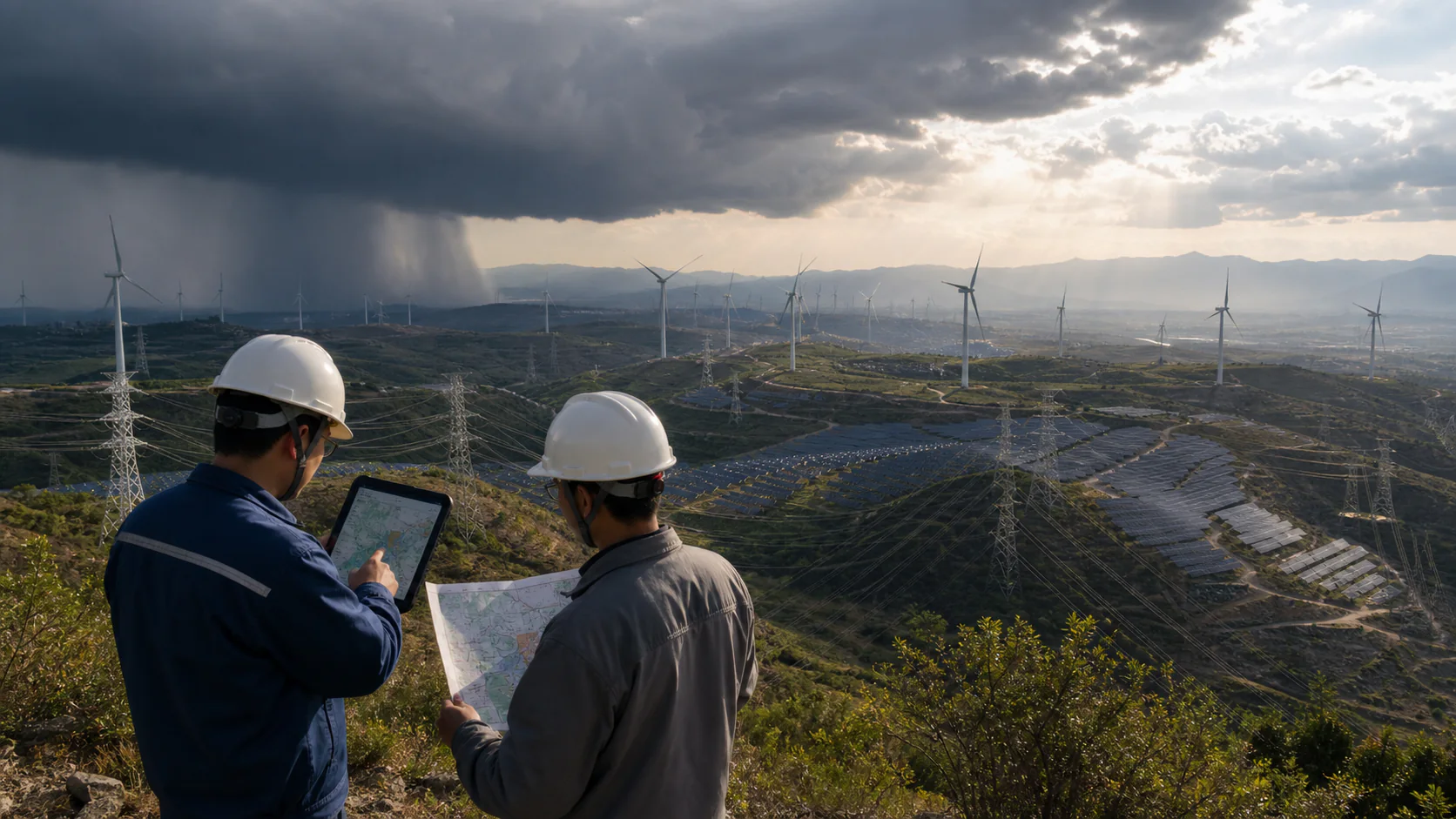
A peer-reviewed integrated assessment combined 5-kilometer, hourly meteorology with electricity-demand projections and regional system optimization for China. Under SSP5-8.5 in 2040, modeled high-impact weather produced wind-and-solar deficits lasting up to 24 days a year, with output reductions as large as 41.2 percent in inland provinces and 22.7 percent across northern-central grids. The study's 605-gigawatt cross-regional transfer figure is modeled potential, not approved or built infrastructure.
Why it matters
Renewable deployment is not enough by itself: transmission, storage, flexible demand, and geographic diversity must be designed for the weather conditions a warmer climate can produce.
What to watch
- Tests under lower-emissions pathways and with more storage, demand response, and operational grid constraints, plus replication outside China.
- Whether climate stress tests lead to resilient transmission and regional coordination without shifting ecological or community harms.
Sources & evidence
- High-impact weather effects on Chinese wind and solar power towards the carbon-neutral goalPeer-reviewed integrated modeling study, Nature Communications, DOI 10.1038/s41467-026-73427-z, published May 26, 2026. The page was posted as an unedited early manuscript; results are scenario outputs rather than observed future performance.
- Source data for high-impact weather effects on Chinese wind and solar powerPublisher-hosted source-data archive associated with the Nature Communications study.
Continue learning with ACC
Explore ACC's renewable energy and grid guide