ACC News Brief
Clean Energy Great Lakes, Canada and United States
Ontario wildfire smoke cut Great Lakes solar irradiance by up to 10%
What happened
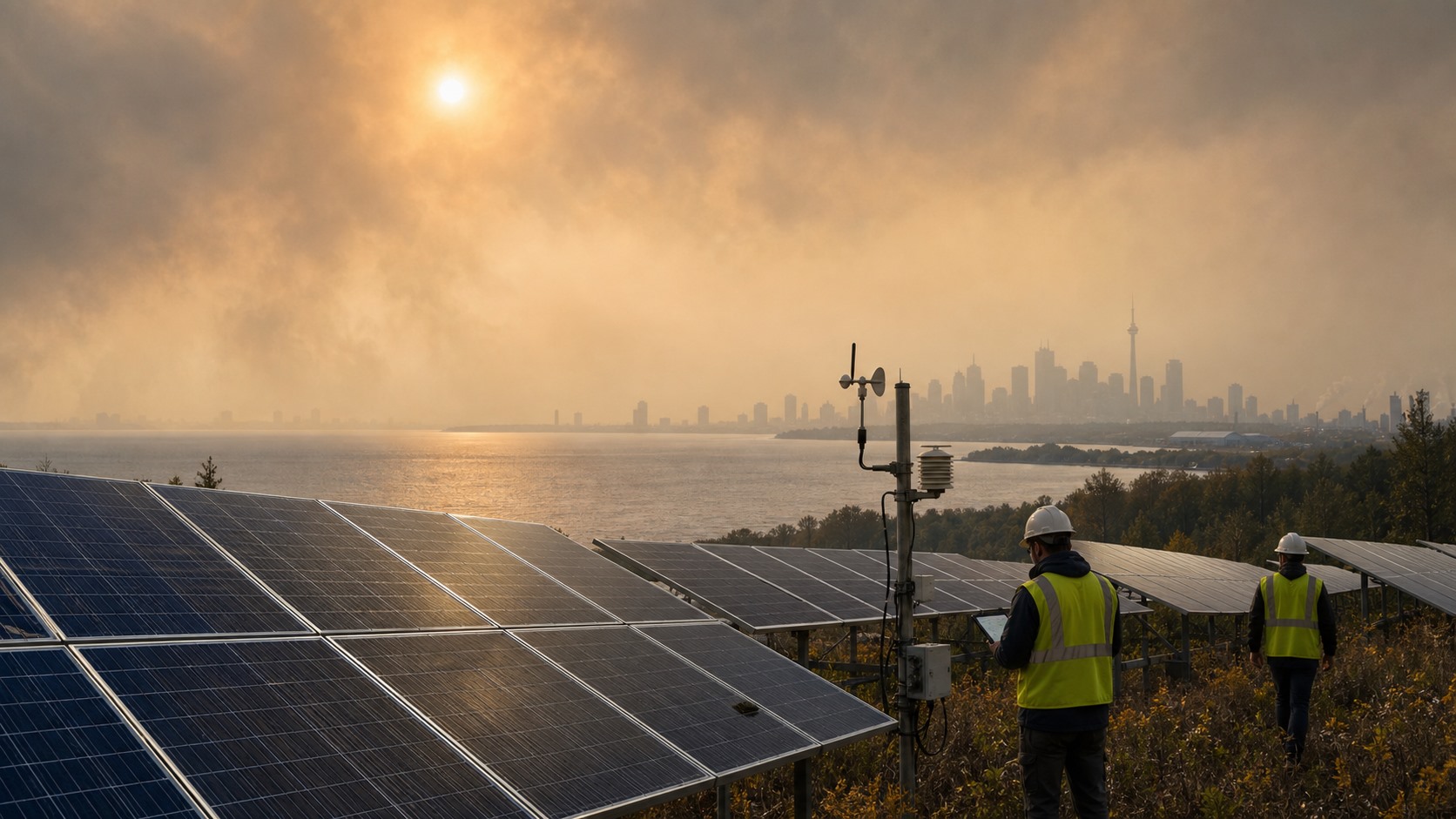
A Solcast analysis published by pv magazine found that wildfire smoke pushed global horizontal irradiance around the Great Lakes and into the U.S. Northeast as much as 10% below average from July 10 through July 21. The analysis attributed most of the loss to reduced clear-sky irradiance from aerosols, with smoke particles also increasing panel-soiling losses before rainfall on July 18. These are modeled regional irradiance anomalies, not metered production totals for every solar plant.
Why it matters
Smoke is both a public-health hazard and a power-system forecasting challenge. Solar operators need aerosol-aware forecasts and maintenance plans, while grid planners need enough geographic diversity, storage, transmission, and flexible demand to manage short-lived regional output losses.
What to watch
- Whether smoke returns to the Great Lakes and Northeast as Ontario fire activity and winds change.
- How closely plant-level production and soiling data match the regional irradiance estimates.
- Whether grid and solar forecasts improve their treatment of smoke aerosols during fire season.
Sources & evidence
- Ontario wildfire smoke suppresses irradiance across the Great LakesSolcast analysis published by pv magazine on July 24, 2026, covering July smoke, irradiance, particulate, and soiling anomalies.
- Long-range Transport of 2026 Canadian Wildfire Smoke into the United StatesNASA Scientific Visualization Studio product showing modeled transport of Canadian wildfire smoke from July 14-20, 2026.
Continue learning with ACC
Explore ACC's renewable energy and grid guide