ACC News Brief
Resilience European Union
Seven LIFE projects show cities practical ways to withstand extreme heat
What happened
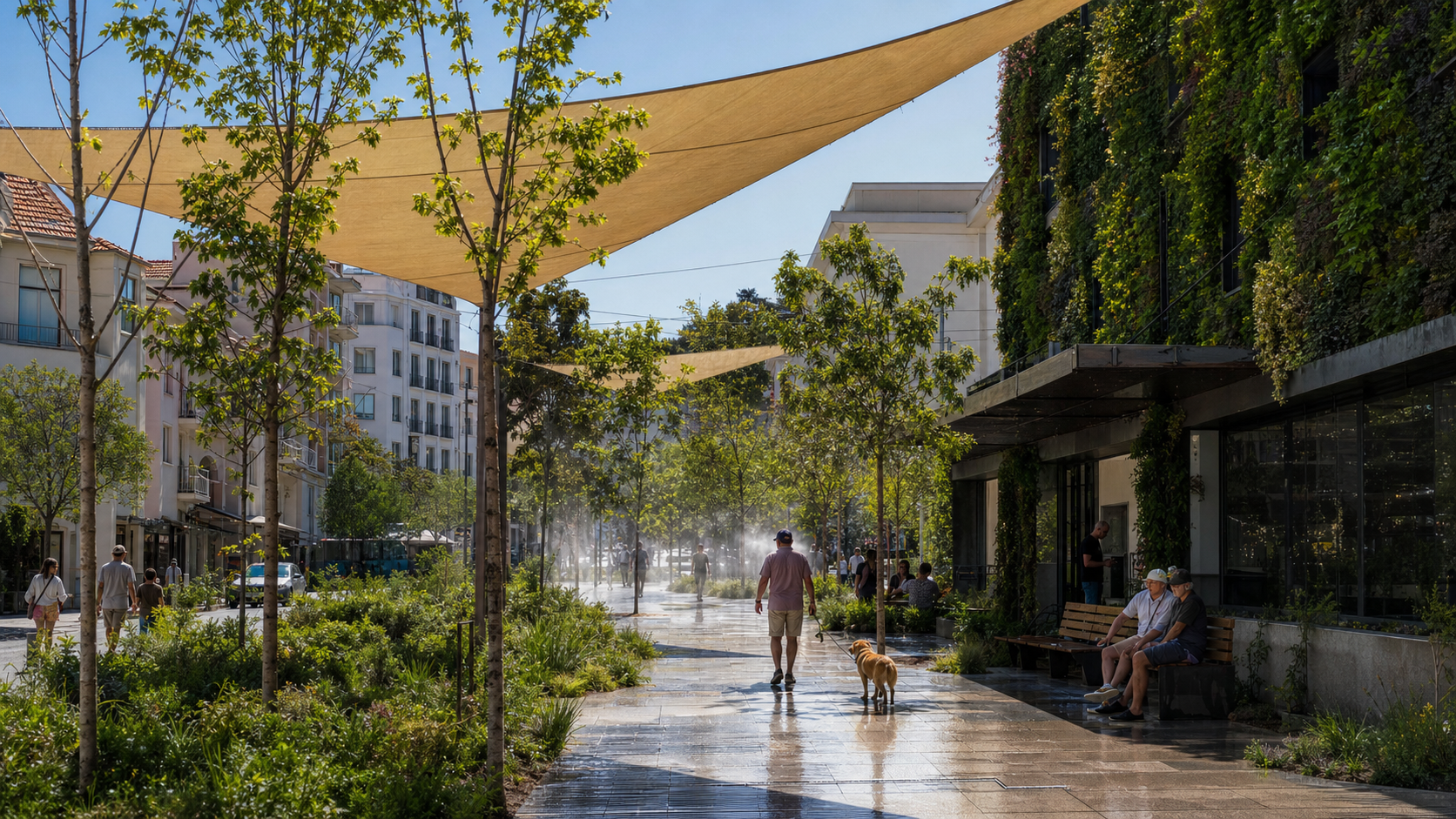
The European Climate, Infrastructure and Environment Executive Agency highlighted seven LIFE projects testing practical urban adaptation. In Almada, Portugal, measures include microforests, a green corridor, reflective road surfaces, green roofs and facades, shade netting, misting, climate shelters, warnings, and an app designed to help vulnerable residents find cooler spaces.
Why it matters
Urban heat is a public-health and infrastructure problem, not only a temperature statistic. Combining shade, vegetation, reflective materials, water management, warnings, and accessible shelters can reduce exposure while improving neighborhoods.
What to watch
- Whether Almada's combined interventions achieve the project's target of cooling its city center by up to 3°C.
- How cities maintain trees, misting systems, reflective surfaces, and climate shelters over time.
- Whether satellite mapping and local measurements show which interventions work best for vulnerable neighborhoods.
Sources & evidence
- Seven LIFE projects show cities practical ways to withstand extreme heatEuropean Commission agency news article published July 28, 2026.
Continue learning with ACC
Explore ACC's climate resilience guide