ACC News Brief
Conservation Eastern China Monsoon Region
Shrub layers can steady ecosystems until pressure drives reorganization
What happened
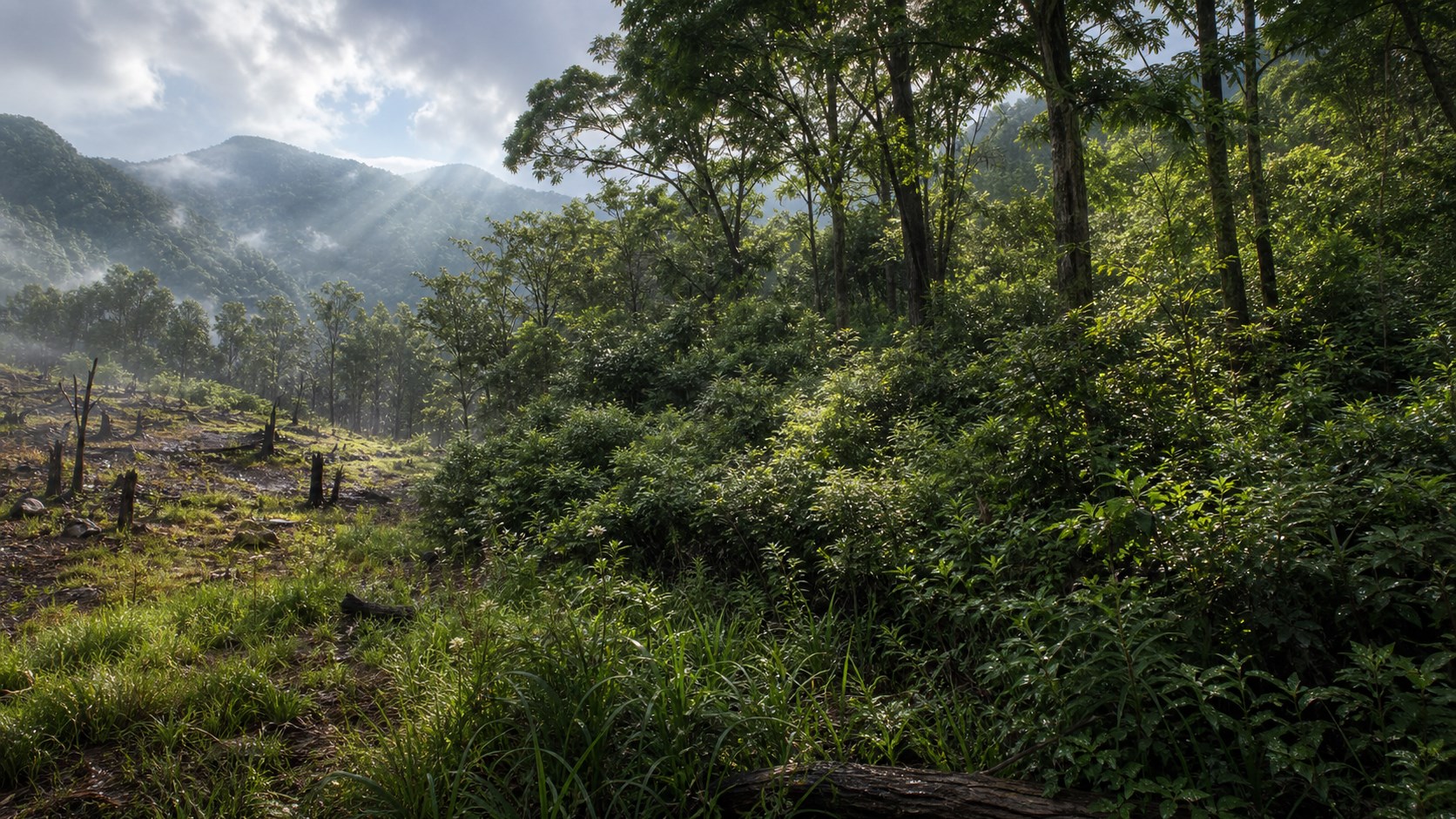
Pollen, charcoal, climate, and human-activity records from the Holocene show that shrubs can help connect tree canopies with herbs and grasses, buffering variability in some forest and forest-grassland systems. Near potential tipping points, however, shrubs shifted from stabilizing structure to being associated with vegetation reorganization under stronger fire, climate, and human pressure.
Why it matters
Ecosystem resilience depends on vertical structure, not only tree cover. Restoration and monitoring that account for canopy, shrub, and ground layers can better identify whether a landscape is buffering stress or approaching abrupt change.
What to watch
- Whether modern field studies find similar shrub-layer signals across other climate regions.
- How restoration plans protect structural diversity while managing fire and invasive species.
- Which indicators can warn land managers before buffering gives way to reorganization.
Sources & evidence
- Shrub-mediated vertical coupling regulates Holocene ecosystem variability and transition dynamicsOpen-access Communications Earth & Environment research article published July 29, 2026; CC BY-NC-ND 4.0.
Continue learning with ACC
Explore ACC's ecosystems and conservation guide