ACC News Brief
Environmental Health Los Angeles County, California
LA fire studies clarify soil and coastal contamination during recovery
What happened
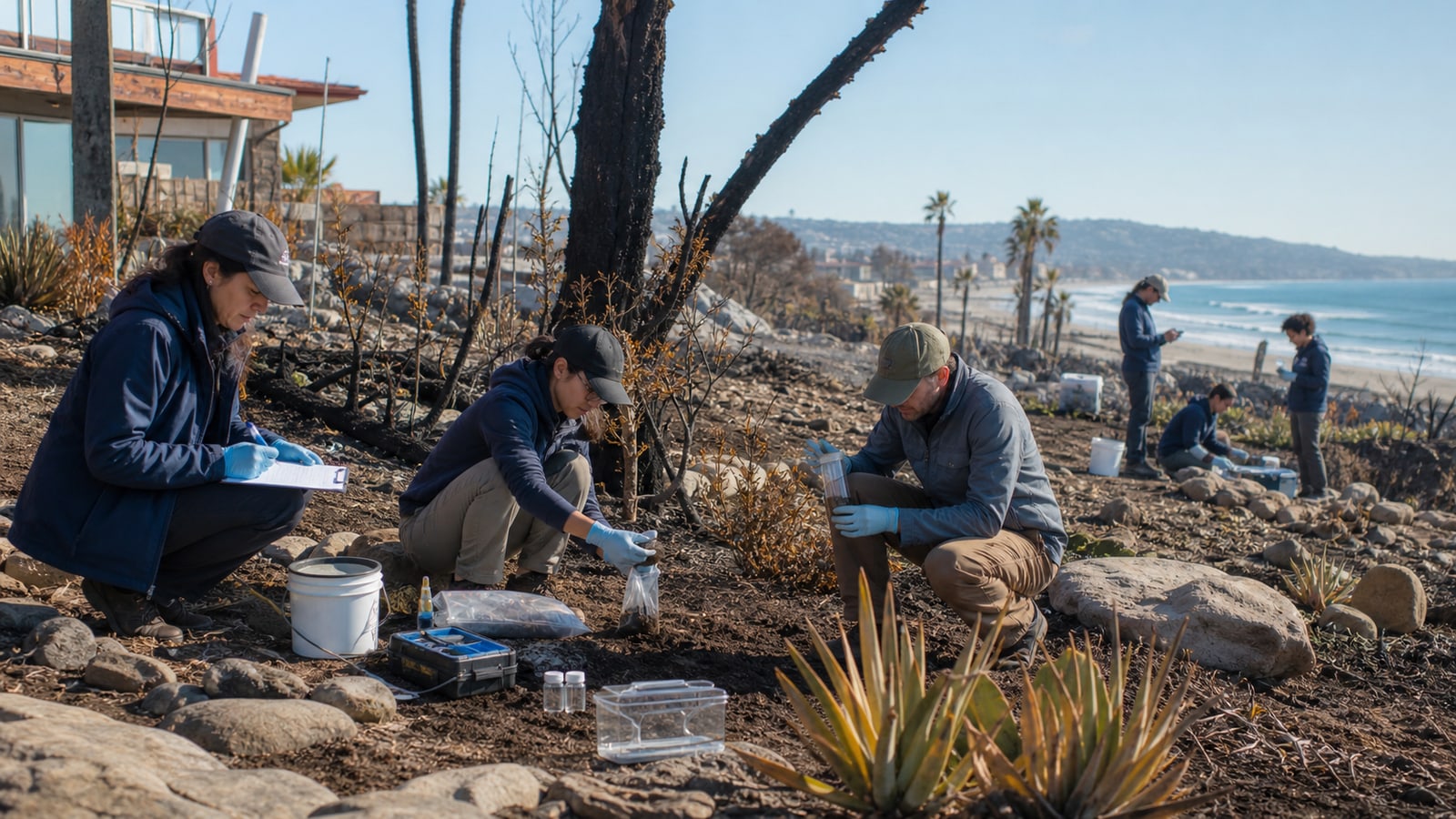
USC researchers released findings from more than 6,000 soil samples and over 900 seawater samples collected after the Palisades and Eaton fires. They found highly variable lead levels that make property-specific testing important, no evidence of countywide post-fire contamination from several other metals of concern, and a measurable coastal chemical signal that largely faded within months.
Why it matters
Recovery decisions need evidence that is local enough to guide real households without exaggerating or dismissing risk. Community sampling can distinguish short-lived disaster signals from older pollution, direct cleanup resources, and give residents practical ways to reduce exposure.
What to watch
- How follow-up testing identifies persistent hotspots and supports targeted remediation.
- Whether public agencies make property-level testing and guidance broadly accessible.
- How sustained coastal monitoring separates fire impacts from chronic pollution sources.
Sources & evidence
- After the Palisades and Eaton fires, research offers new answers for communities as they rebuildUniversity of Southern California research summary published by Phys.org on August 4, 2026, covering the CLEAN soil and coastal-water findings.
Continue learning with ACC
Explore ACC's climate resilience guide