ACC News Brief
Environmental Health Chicago, Illinois, United States
Chicago tree-canopy decline is associated with higher neighborhood mortality
What happened
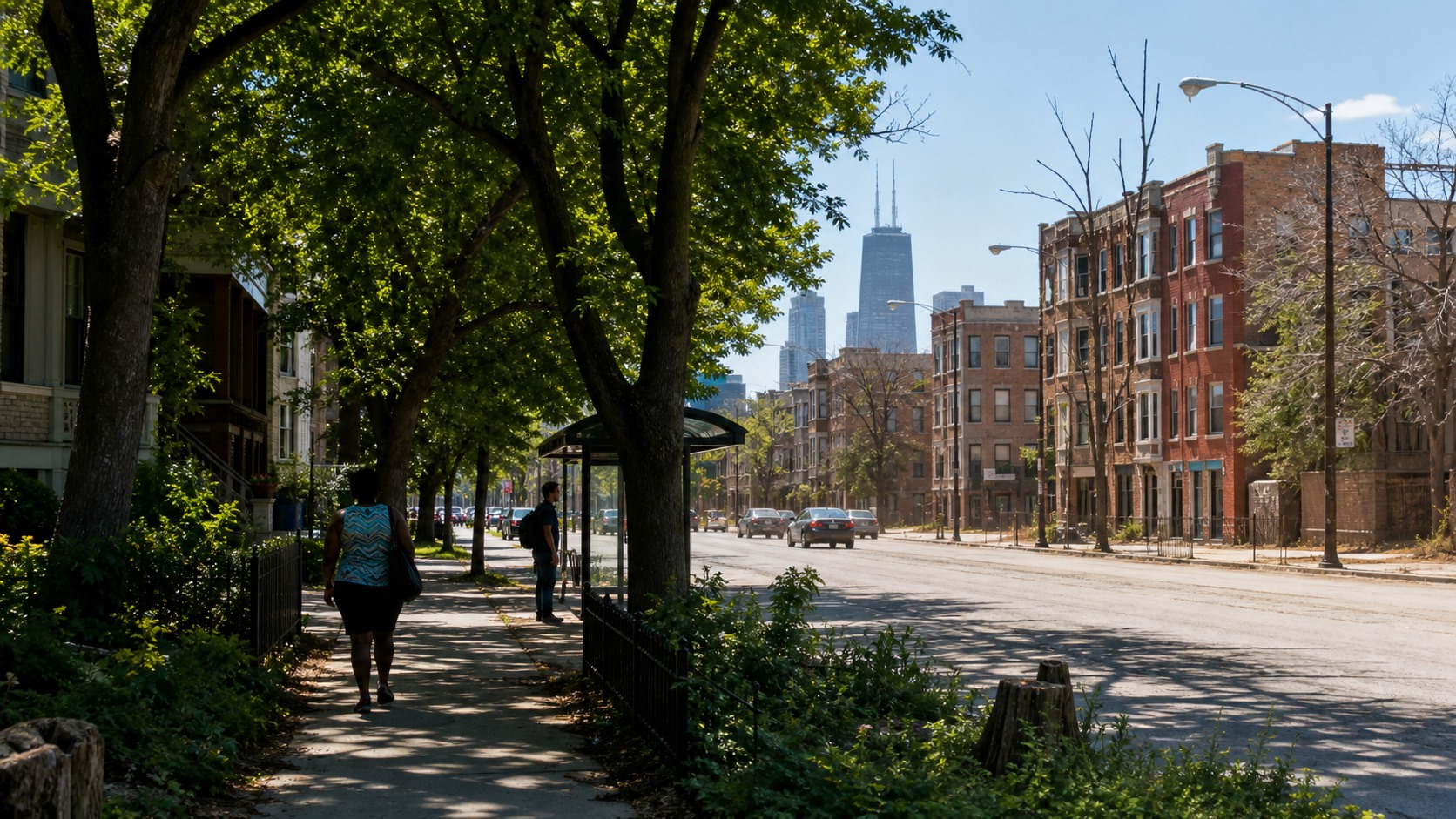
A Northwestern University study compared annual satellite estimates of Chicago's tree canopy from 2011 through 2021 with more than 220,000 death records. Neighborhood canopy decline was associated with higher mortality, especially in hotter South and West Side areas; the observational analysis does not by itself prove that tree loss caused the deaths.
Why it matters
Mature urban trees provide shade, reduce heat exposure, filter air, and support mental and physical well-being. The findings strengthen the case for protecting existing canopy and directing maintenance and planting toward neighborhoods carrying the greatest heat burden, while keeping the limits of an observational model clear.
What to watch
- Whether follow-up studies reproduce the association in other cities and time periods.
- Chicago's progress protecting mature trees and closing neighborhood canopy gaps.
- How survival, maintenance, species choice, and equitable siting affect the benefits of new planting.
Sources & evidence
- Urban tree loss linked to increased mortality, study findsNorthwestern University report published by Phys.org on August 5, 2026, describing the Chicago canopy and mortality analysis and its modeled planting estimate.
- GeoHealth studyPeer-reviewed observational study underlying the reported associations.
Continue learning with ACC
Explore ACC's climate resilience guide