ACC News Brief
Resilience Makassar, Indonesia
Makassar pilot tests reflective roofs for safer indoor temperatures
What happened
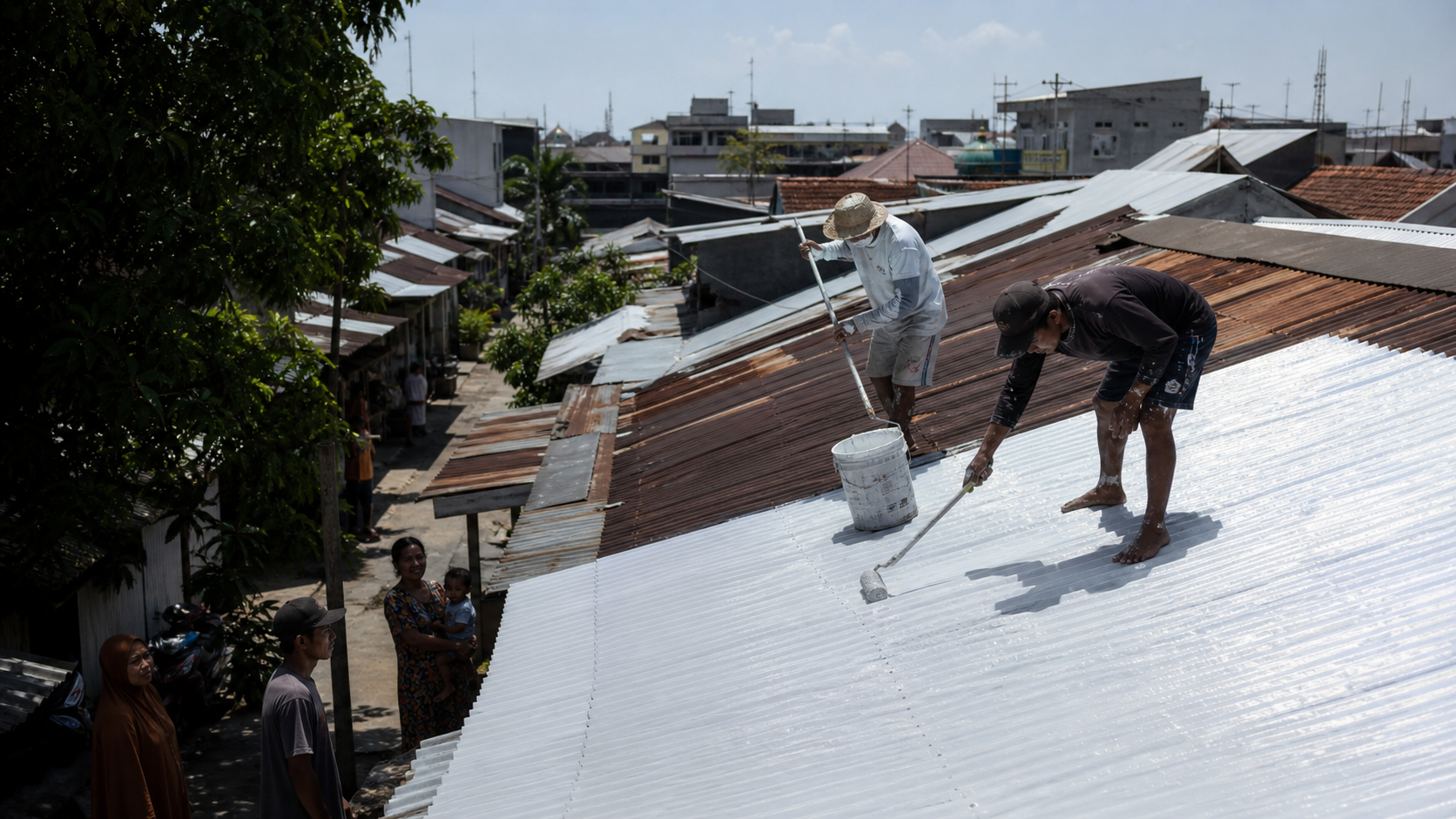
A Stanford-linked pilot in Makassar is applying reflective coatings to a few dozen roofs in informal settlements to test whether a low-cost change can reduce dangerous indoor heat. The project is designed around the potential for indoor temperatures to fall by as much as about 5 F under suitable conditions.
Why it matters
People in informal settlements often face intense heat with limited access to insulation or air conditioning; roughly 40% of Makassar's population lives in such communities. Reflective roofs are promising, but this is an early field test, not proof of citywide performance, durability, affordability, or health benefits.
What to watch
- Measured indoor temperatures before and after coating across different roof types and weather conditions.
- Durability, maintenance, glare, resident comfort, and whether the intervention reaches the hottest homes.
- Whether local results support a larger program without displacing other heat protections such as shade and ventilation.
Sources & evidence
- Report on Makassar's reflective-roof heat pilotStanford-supplied report published by Phys.org on August 21, 2026, describing the pilot design and expected cooling potential.
Continue learning with ACC
Explore ACC's climate resilience guide