ACC News Brief
Conservation Washington State, United States
Active restoration project with preliminary fish-return data - outcome monitoring is still needed
Hood Canal river restoration is rebuilding salmon habitat
What happened
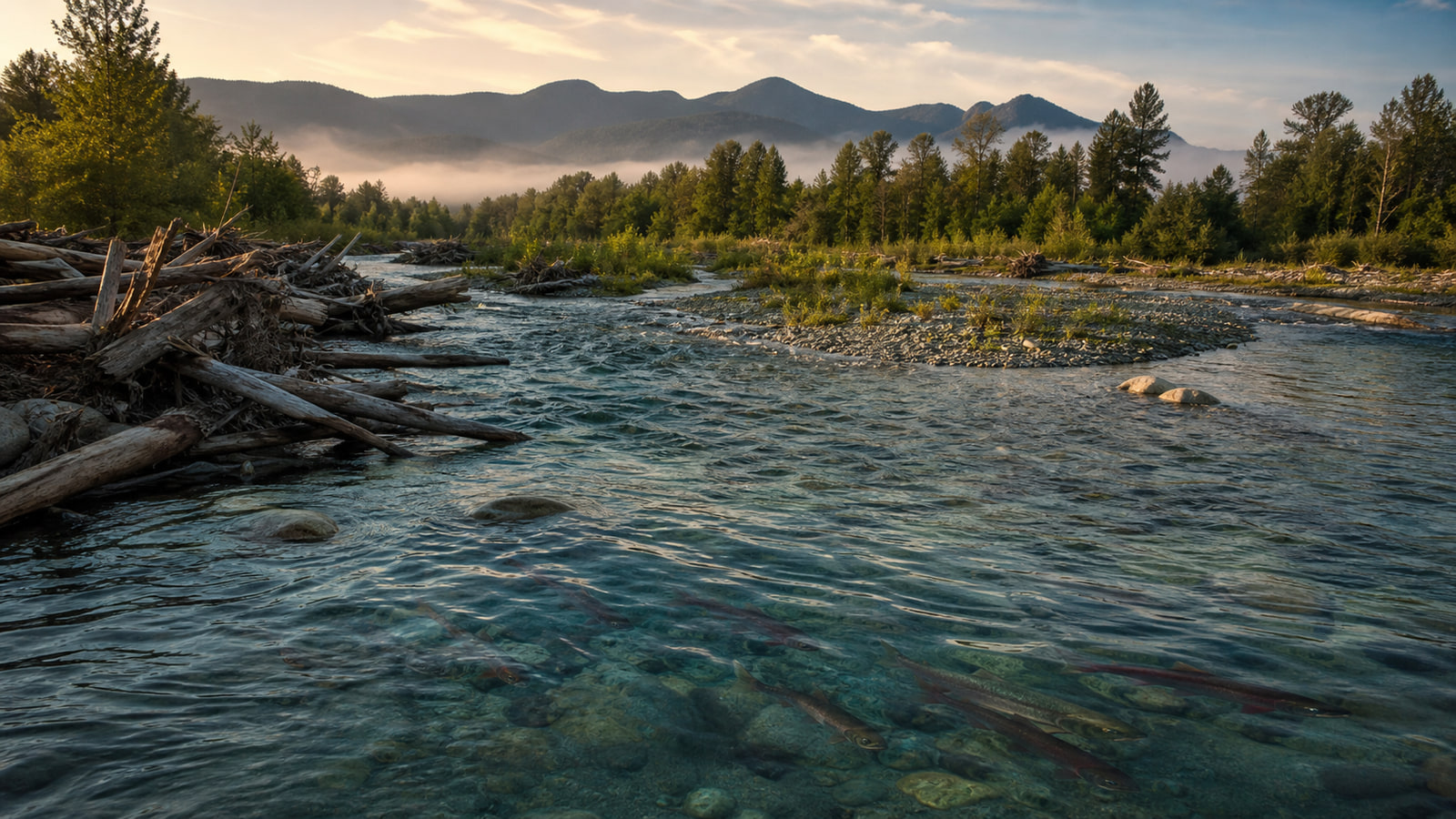
NOAA Fisheries awarded $9.7 million to help rebuild Washington's Big Quilcene River channel and reconnect its floodplain. The Moon Valley project includes a 1.84-mile braided channel, 140 acres of reconnected floodplain, and more than 180 engineered log jams. Preliminary data show average Hood Canal summer-run chum returns rising from about 11,600 fish in 2018-2021 to about 32,600 in 2022-2025, but NOAA says favorable ocean conditions contributed and the current restoration was still being completed.
ACC context
The recent chum rebound began before the unfinished Moon Valley work and NOAA identifies favorable ocean conditions as a contributor. ACC therefore presents the return numbers as context, not as proof that this project caused the increase.
Why it matters
Giving a river room to move can improve spawning and rearing habitat while reducing flood velocity and erosion. That combination can support biodiversity, tribal fishing traditions, and community resilience as warmer conditions create additional stress for cold-water species.
What to watch
- Whether construction finishes as planned and the new channel performs during high flows.
- Adult returns, juvenile survival, spawning habitat, flood behavior, and estuary conditions over multiple years.
- How salmon respond when favorable ocean conditions shift, separating habitat benefits from broader marine variability.
Sources & evidence
- A River Reborn: Restoring a Stronghold for Hood Canal Summer-Run Chum SalmonNOAA Fisheries feature dated August 27, 2026, reporting the project design and clearly describing the return estimates as preliminary.
Continue learning with ACC
Learn how connected rivers, floodplains, estuaries, and oceans support resilient ecosystems