ACC News Brief
Oceans & Water Global coral reefs
Global monitoring assessment - hard-coral cover is not a complete measure of reef condition
Global assessment finds hard-coral cover 9.5 percent below its historical level
What happened
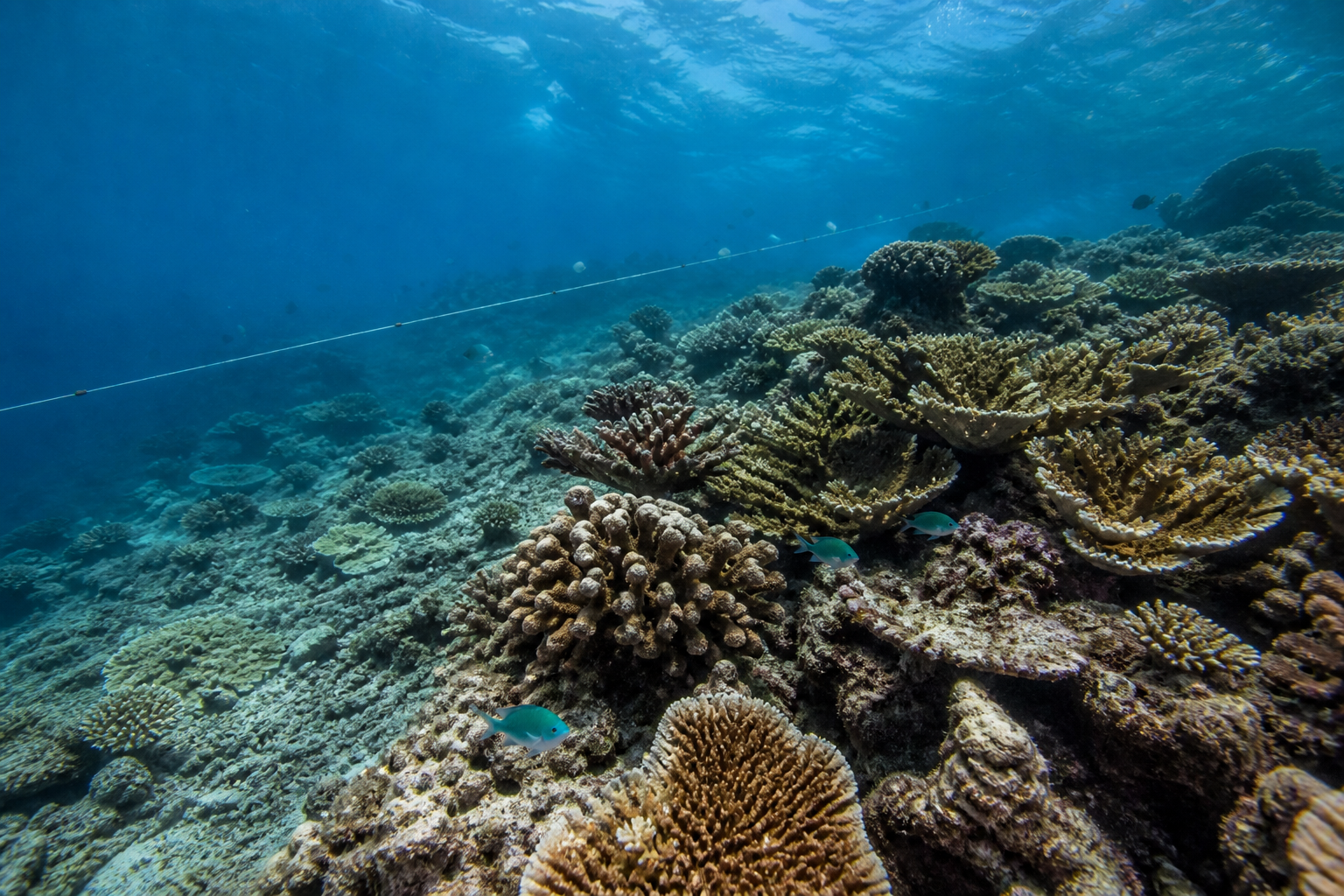
The Global Coral Reef Monitoring Network's new assessment draws on 21.1 million observations from 36,886 sites across 124 countries, territories, and economies. It estimates that average global hard-coral cover fell from 30.2 percent in the 1980-2009 reference period to 27.3 percent in 2020-2024, a relative decline of about 9.5 percent. Climate-driven marine heatwaves are identified as the primary global driver, while pollution, overfishing, and coastal development add local pressure.
ACC context
Regional patterns differ: four of 10 assessed regions show long-term decline, four show no net change, and two show increases relative to the reference period. The full global raw dataset is not public because contributors supplied data under sharing agreements.
Why it matters
The report also finds roughly 6 percent relative recovery in global hard-coral cover from 2017 to 2019, showing recovery remains possible when disturbance eases. But global bleaching events are now occurring roughly every five to six years, shortening the time available for reefs to recover.
What to watch
- Future GCRMN updates on global and regional hard-coral cover after recent bleaching events.
- Local action on water quality, overfishing, and coastal development alongside rapid emissions cuts.
- Improved access to comparable monitoring data while respecting contributor agreements.
Sources & evidence
- GCRMN 2025 report release and key findingsGlobal Coral Reef Monitoring Network release published August 31, 2026, summarizing observations from 1980 through 2024.
- Status of Coral Reefs of the World: 2025 report hubGCRMN report hub providing the assessment, methods, regional results, and supporting materials.
- New report paints worrying picture about future of coral reefsUN Environment Programme explainer published September 4, 2026, connecting the assessment to climate and local pressures.
Continue learning with ACC
Explore how marine heat and local pressures affect ecosystem resilience