ACC News Brief
Resilience Louisville, Kentucky
Follow-up urban-heat model — projected tree cooling has not yet been observed
Louisville heat study maps large neighborhood gaps and modeled tree-canopy cooling
What happened
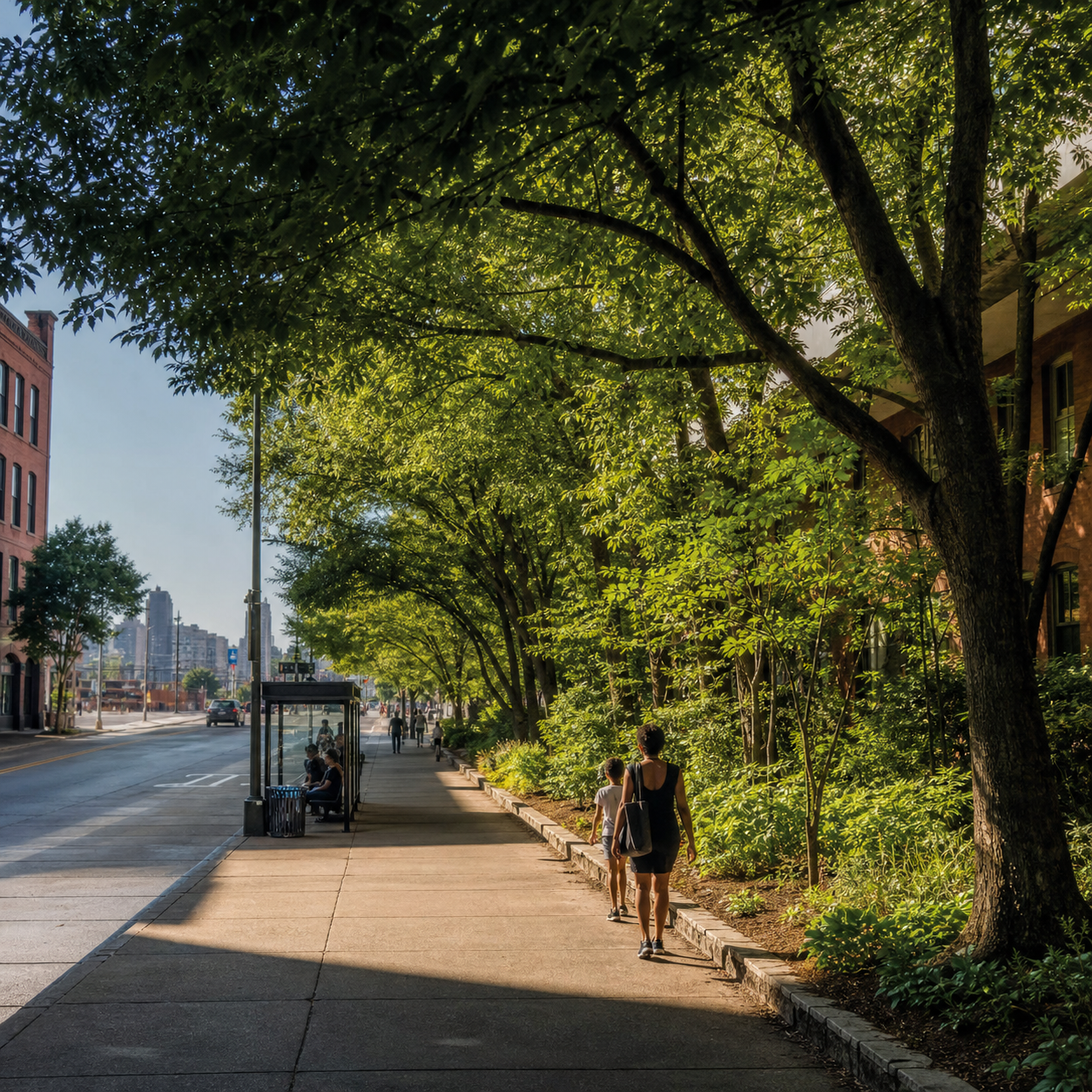
A University of Louisville and TreesLouisville follow-up study used climate models to map hourly summer temperatures across the city's urban core. The release says about two-thirds of neighborhoods had hotter afternoon conditions in 2024 than in 2016, and some neighborhoods were about 20°F hotter than well-canopied areas on a typical hot August 2024 day. Planting trees in half of available sites was modeled to lower high-afternoon temperatures by 1.8°F on average and by as much as 7°F in some neighborhoods.
ACC context
ACC preserves the difference between measured or modeled baseline heat patterns and a future planting scenario. Trees can be part of heat adaptation, but they work alongside housing, public health, mobility, shade, and reliable cooling protections.
Why it matters
Neighborhood-scale heat maps can help cities target shade, trees, cooling access, housing protection, and health resources where exposure is greatest. The tree-canopy results are modeled scenarios rather than temperatures already achieved, so planting, survival, maintenance, water needs, and equitable distribution will determine real-world benefits.
What to watch
- Measured temperatures and health outcomes before and after targeted tree planting and other heat-reduction projects.
- Whether investment reaches neighborhoods with the highest heat exposure and least existing canopy without increasing displacement pressure.
- Tree survival, maintenance funding, water availability, species choice, and cooling performance during future extreme heat.
Sources & evidence
- UofL, TreesLouisville release updated Louisville urban heat mitigation studyUniversity of Louisville release dated September 1, 2026, summarizing the follow-up study, its neighborhood heat maps, and modeled tree-canopy scenarios. The reported cooling values are projections, not observed results from completed planting.
Continue learning with ACC
Learn how communities can prepare for heat and other climate hazards